The Museo Amparo presents a retrospective of the work by Teresa Serrano (Mexico City, 1936). The first retrospective exhibition by Serrano ever presented in a museum in Mexico, it consists of works created throughout an artistic career that expands 38 years, including an excellent selection, made by curator Berta Sichel, of emblematic pieces from Serrano’s production.
The exhibition is notable for having only having the necessary amount of works, a clean layout that does not overwhelm viewers, and successfully conveys Serrano’s creative world. The selection allows viewers to appreciate the different techniques and media that she has used in her production, such as painting, installation, video, and sculpture.
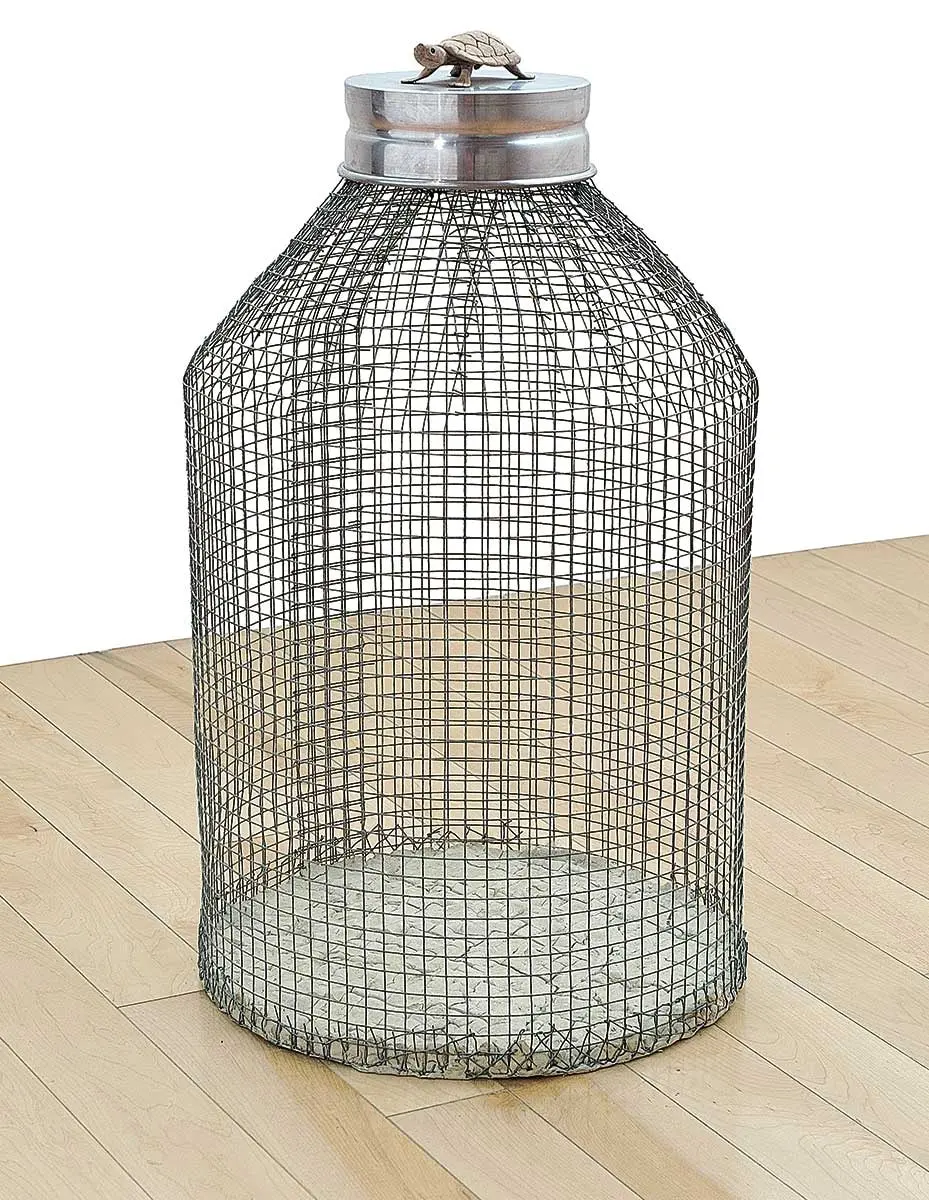
Serrano’s work centers on reflections about femininity, the human figure, and themes associated with the environment. From an autobiographical perspective, the show addresses matters of her everyday life that reveal the intrinsic violence in the social construction of gender differences. The work Autorretrato (Self-Portrait), for example, is a sculpture in which she represents herself as a turtle out of a cage, which suggests her perspective on her social context and her opposition to the status quo. It is a world that discriminates, binds, and limits, and she has tried to stay out of those limits.
Her work also addresses issues associated with her context, such as the femicides in Ciudad Juárez, sexual harassment, and sexist possessive behavior toward women, among several others. All these issues are explored in a sophisticated way through subtle and poetic references that are poignant without resorting to easy or obvious languages.
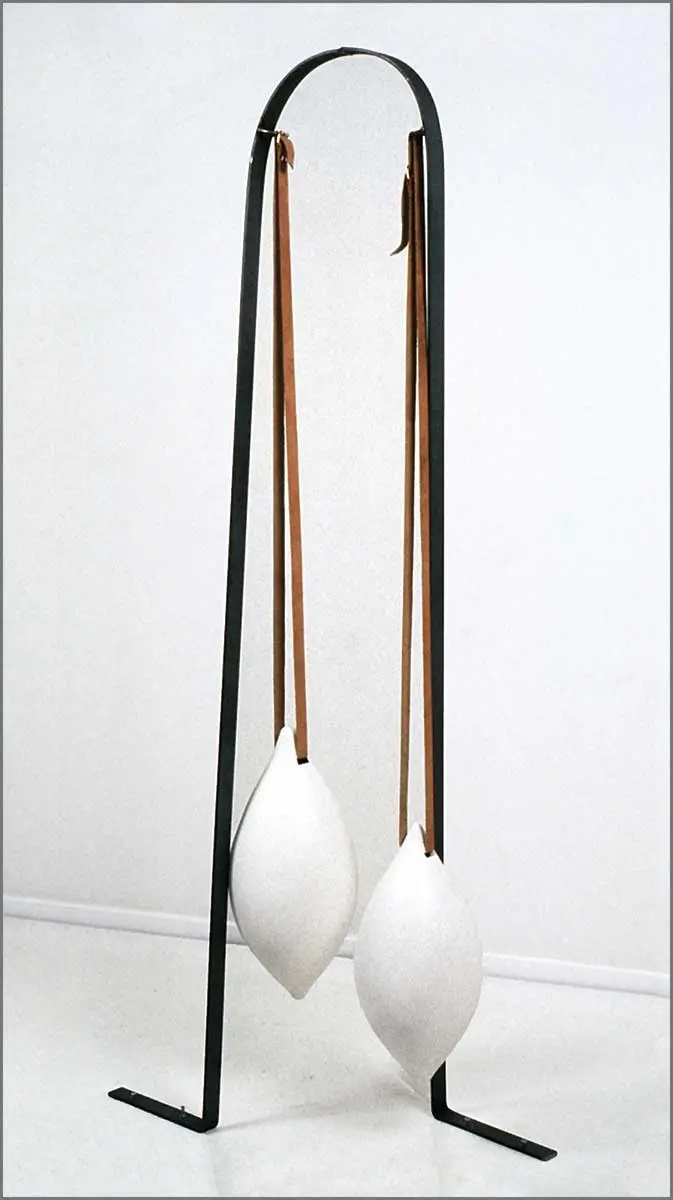
Serrano’s work reflects her rupture with the traditional role of wife when in 1982 she decided to start a new period of her life in New York, where he has lived ever since. In addition, the exhibition includes pieces that reflect on fertility, such as the pieces Diosa de la Fertilidad (Goddess of Fertility) and Cordón Umbilical (Umbilical Cord). These pieces explore the implications of giving life to another being, and the emotional ties that are developed as a result of it.
The symbolic implications in the use of materials are extremely relevant for Teresa Serrano. Hence, many of her works are created with fabric and embroidery. She uses these materials to fashion soft sculptures that clearly reference the female sensuality contained in such activities. This is the case of the Mountains series based on traditional horse pads used for bullfighting. It is a soft material whose sensuality and organic quality contrast the protective function they serve. Hair is another recurring material in this artist’s work. It is a constituent element of the piece that is used to build enigmatic, evocative, and haunting works that invite reflections on the body and on the abject materials that she employs.
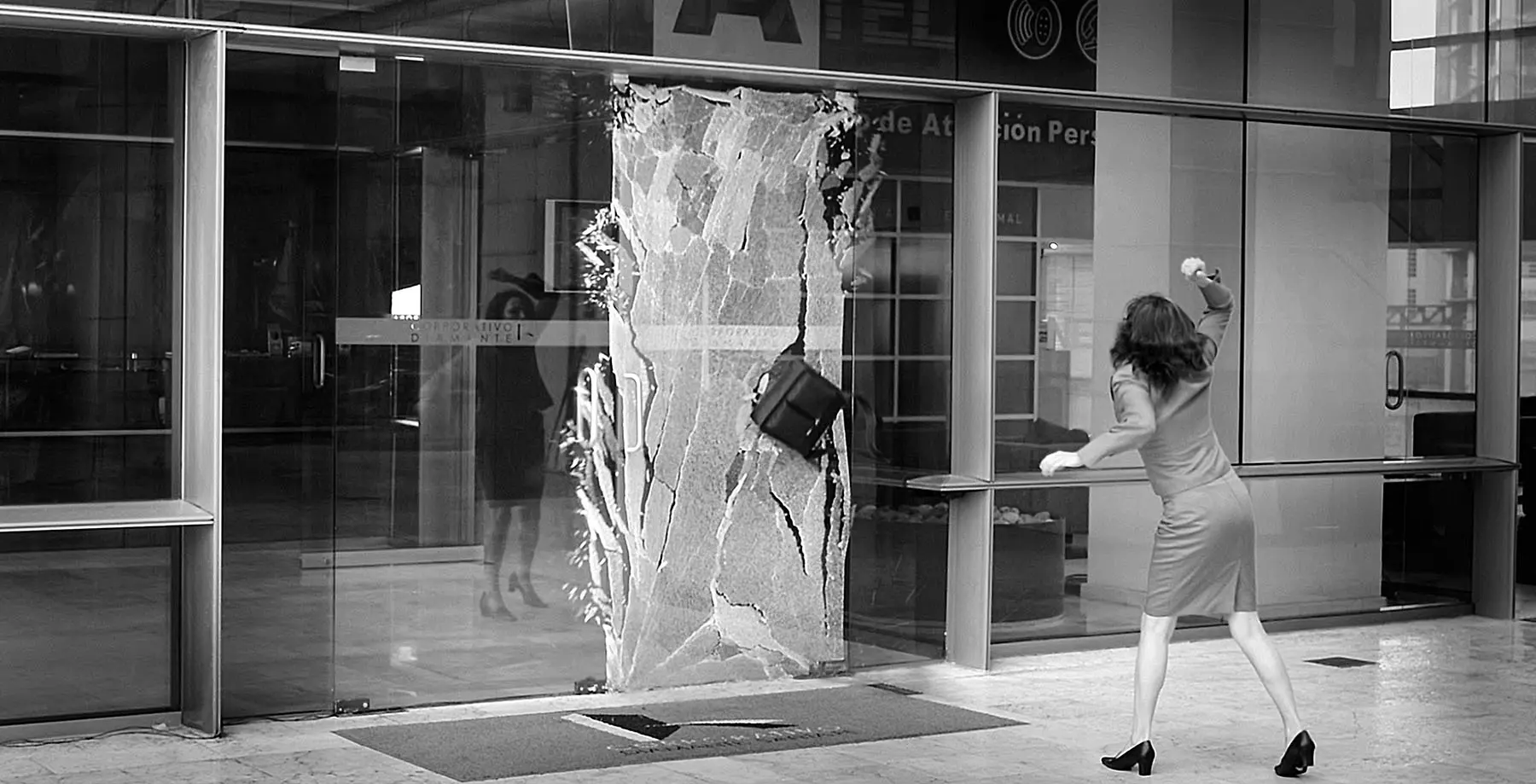
Serrano’s knowledge of film language and of multiple cinematographic references are evident in the video pieces included in the exhibition. Her images address complex issues—such as gender violence—through an exacerbated preciousness which she uses to achieve a disturbing language that invites thoughtful interpretation of images with underlying tensions that become evident at the climactic point. Such is the case of the piece titled Glass Ceiling, which addresses the issue of career advancement among women and the inconsistent and arbitrary cap that is imposed on them and that does not become clear until they reach it. The video depicts the rise of a woman in a corporate building and the manner in which she is lassoed by a modern cowboy. Once the dust has settled and the woman manages to go up, she has been left outside of the building, so he decides to break the glass with her purse. The action suggests the possibility of transforming a system in which gender equality is an issue that continues to be perceived as utopian.
Throughout five exhibition rooms, the exhibition brings together about one hundred works organized around a solid curatorial discourse that favors Serrano’s conceptual explorations over chronological order. There is a large installation in the museum lobby titled Las Meninas (The Maids of Honor, 1993), and the piece Goddess of Fertility (also from 1993) is displayed in the inner courtyard of the museum.
JOSEFA ORTEGA
Master in History of Art and curator.