In a career spanning more than three decades, the work of the Utopía group presents ways of looking at architecture and urban space in Colombian art. Their proposals, far from seeking a real concretization by means of constructive process, propose a playful dimension through the exercise of design in architecture.
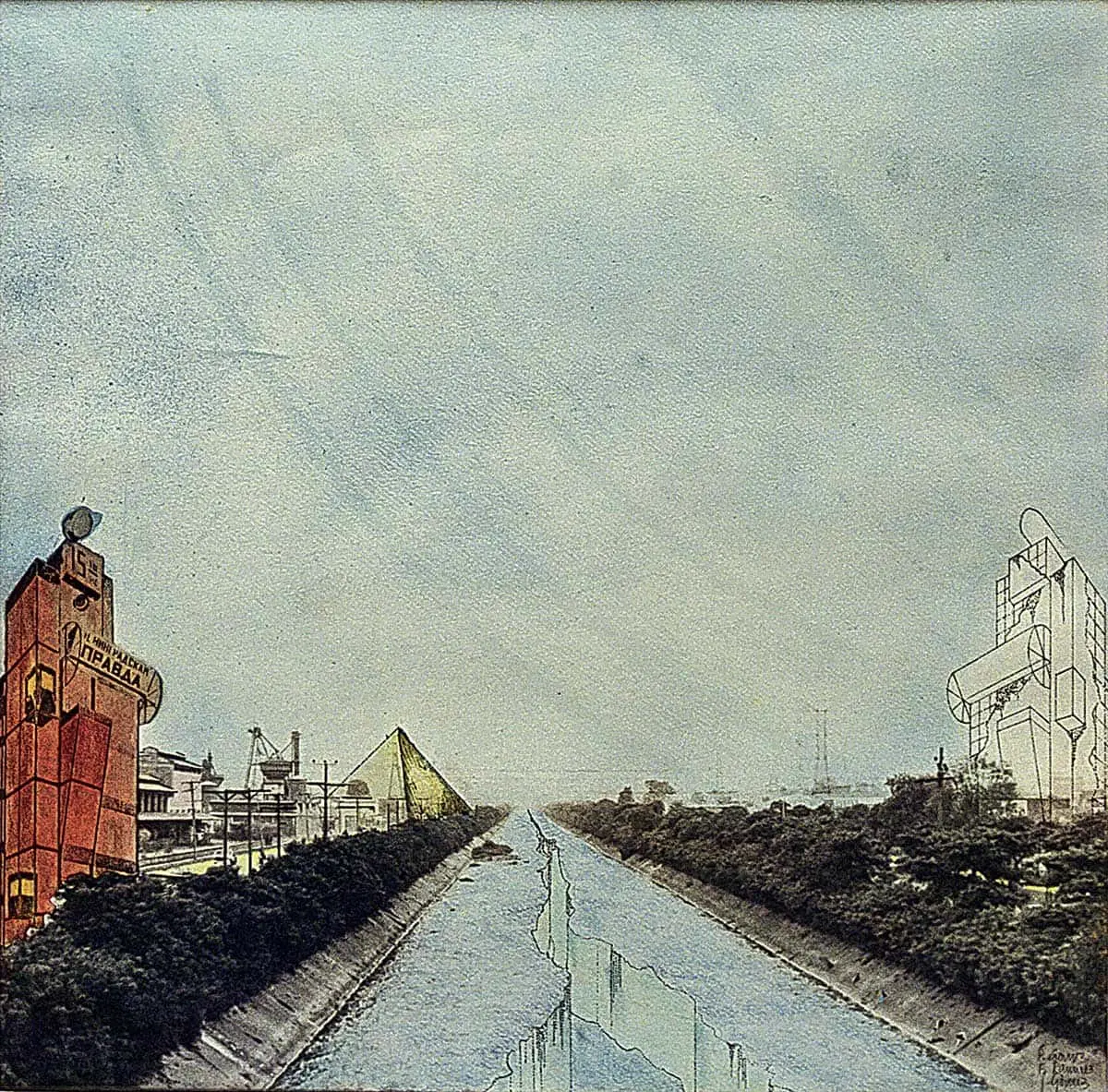
The collective formed by architects Ana Patricia Gómez, Jorge Mario Gómez, and Fabio Antonio Ramírez has developed a methodical body of work in the artistic field, even more so if we are to consider them as pioneers in the introduction of the language of architectural design into the domain of the arts. Their beginnings can be traced back to 1979, when, after an initiative of curator Eduardo Serrano’s, the group was invited to participate in the 5th Atenas Salon, an event then held in Bogotá. The Medellín Architects, as they were known at the time, began their work in the world of the visual arts with critical work on the Medellín River, where they speculated about the river’s potential as an axis articulating the city. La ruta del río (The route of the river), from 1979, established the first approach to a way of conceiving space from a perspective that had morphological and historical analysis as the starting point for the debate of utopian constructive possibilities. This work was comprised of several pieces: a series of eight collages depicting architectural situations around the river; three display tables with city plans registering the situations proposed in the collages; and a spread that showed their interest in finding other means of representation, based, again, on an aerial overview of the city. A significant element here is the way in which the group introduces art-historical and architectural references and has them dialog with the city of Medellín, for example, the walls of Mies van der Rohe’s Barcelona Pavilion, superimposed in large format to Colombia street and the Barrio Triste area of the city; the iteration of the Chicago Tribune building, by Austrian architect Adolf Loos on an industrial area near the river; the inclusion of the Versailles gardens with an agricultural flood; or the confectioner’s home with David Hockney’s A Big Splash.
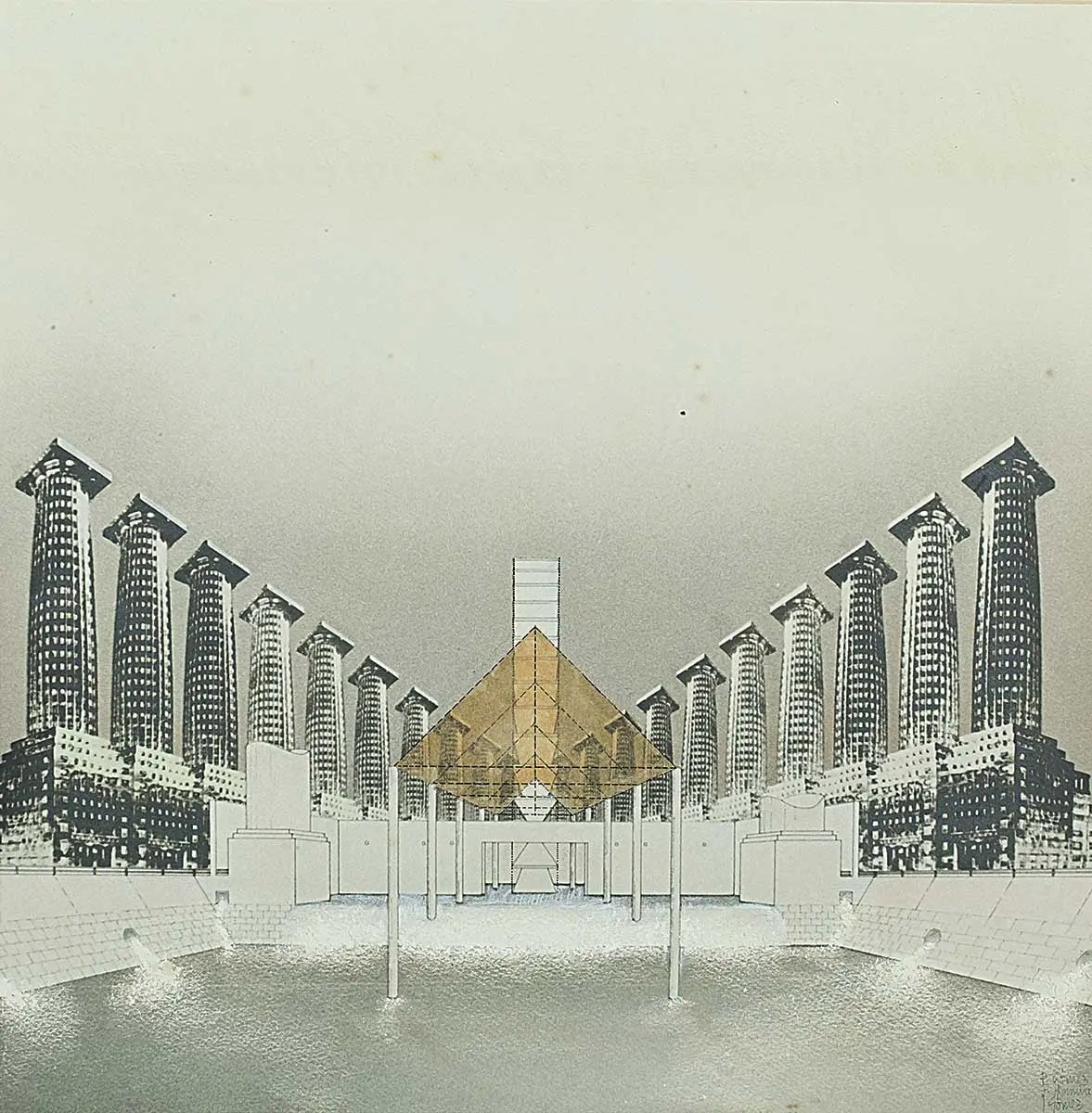
The group’s working methodology would continue through associations for specific events and calls. This methodology is inherent to the three member’s education as designers and architects. We must note that the trio did their post-graduate studies at international institutions such as the Rhode Island School of Design, in the United States; the Architectural Association, in London; and the Royal College of Art, also in London. In the 1970s, these schools were hotbeds for the debate of the relationship between art and architecture, the autonomous role of the city, or utopia as a possibility in architecture. Some of the artists and architects who influenced the positions later taken by the group members were Leon Krier, Cedric Price, Aldo Rossi, Rem Koolhaas, and the Archigram and Superstudio collectives.
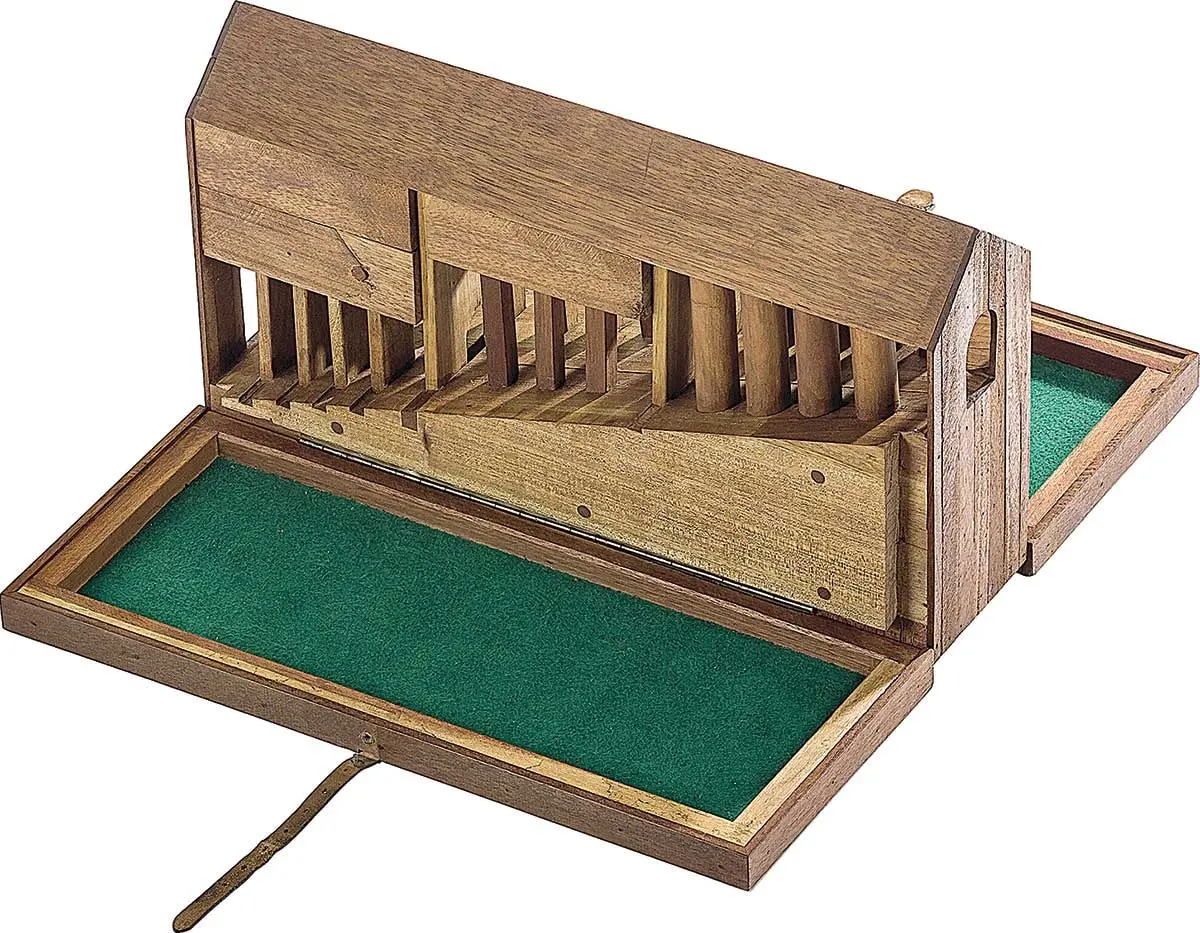
By the 1990s, the group went through a process of consolidation in terms of artistic discourse. The possibilities of space and architecture are established not only as a conceptual strategy for the development of their works but also as part of an indispensable critical exercise around the production of architecture. The work of Utopía, in a significant number of occasions, described indecipherable spaces where they present, through the resource of architectural drawing, constructive fictions, and speculations for such places. At this point, one of their works deserves special mention: La Catedral (The Cathedral), from 1992. There, the group projects the interior of a prison known by the same name, where drug lord Pablo Escobar was held at the time. The desire to learn about the interior of the prison and its architectural design drives Utopía to present fantasies about it, where the vocabulary of architecture again appears through the use of plants, sections, façades, and perspectives. Descriptive strategies such as the one the group presents in La Catedral (The Cathedral, 1992), La isla de los muertos (The Island of the Dead, 1986), or La fábrica de leche para niños (The Children’s Milk Manufacturing Plant, 1992) respond to postulates such as Aldo Rossi’s regarding the description of city architecture. Rossi took ideas derived from disciplines such as structural anthropology, urban geography, linguistics, and the vast field of architectural theory, in order to refer to the city as an architectural production that is autonomous in character.
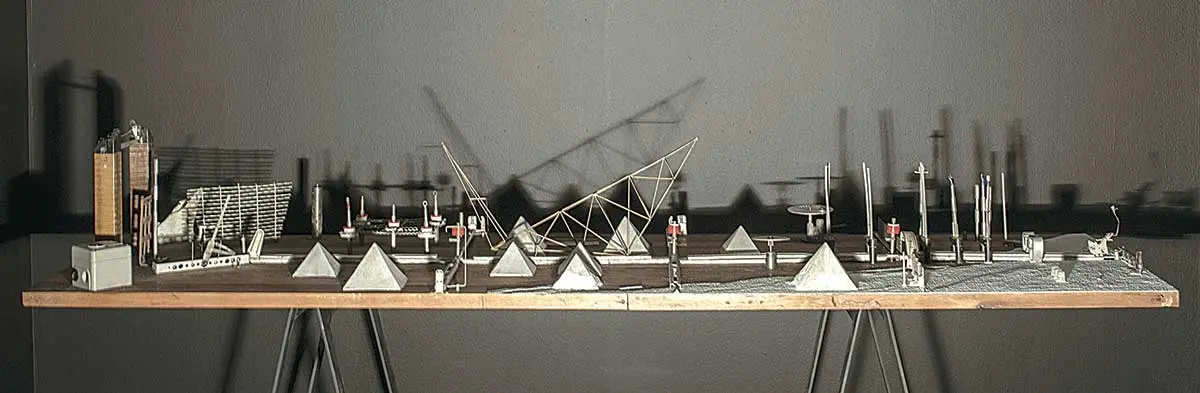
In the work of the Utopía group, an important role is reserved for the memory of places visited and later recreated through photographs, drawings, models, or installations. Proof of these works such as Memorias de Indias (Memories of the Indies, 1989), Memorias de viaje. Cali (Travel Memories. Cali, 1991), or Memorias de viaje. Manaure (Travel Memories. Manaure, 1991), the latter in a language that comes close to the exploratory work carried out in design and architecture to understand the project and the lighting to which it can be subjected, only that in this case light, by producing shadows on the model, outlined the recursive landscape at the Guajira, intervened by salt pyramids, construction cranes, and conveyor belts.
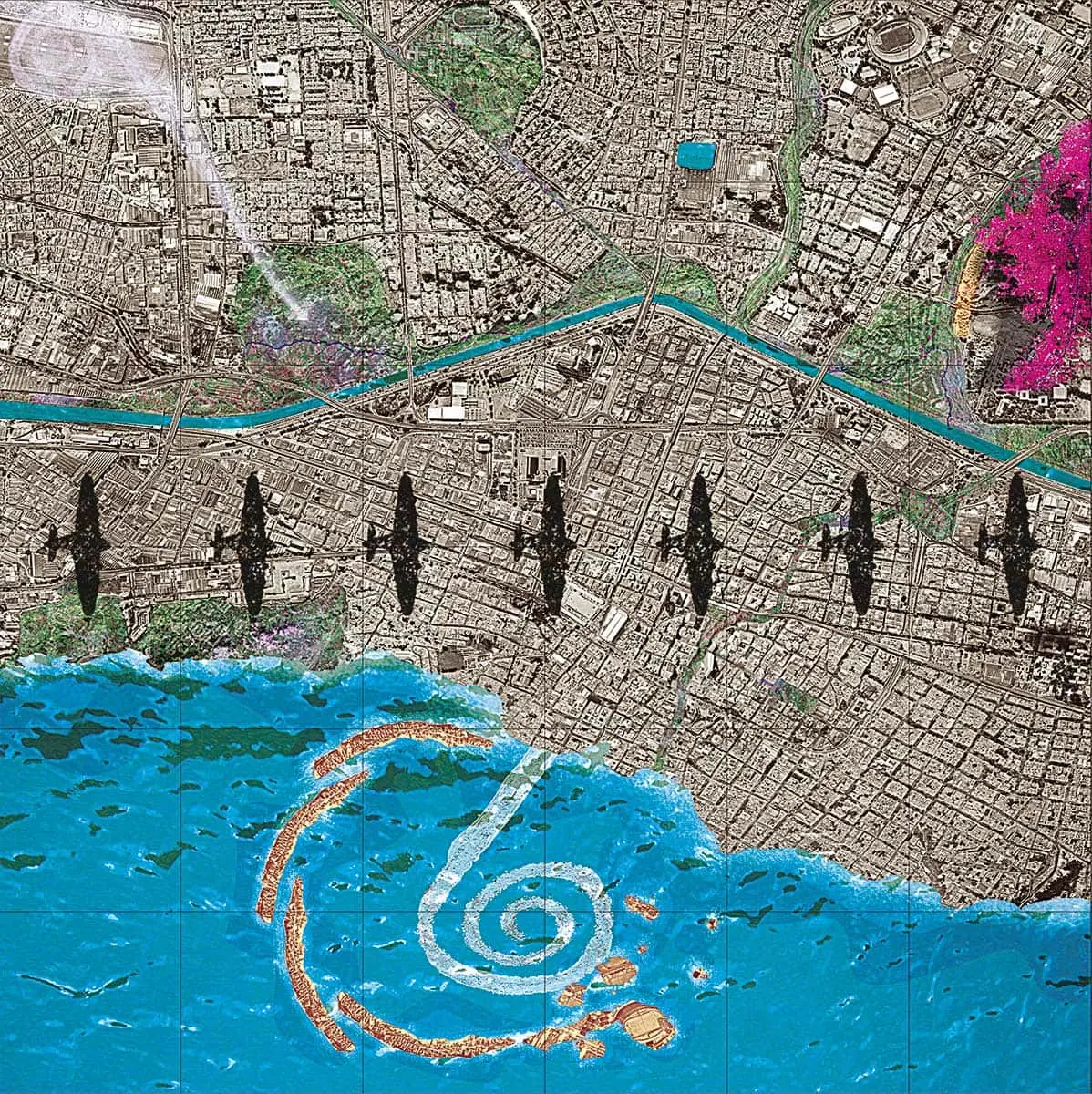
In terms of artistic production, the group created sets of works as part of a variety of exhibition projects. Two of the most relevant among these, the exhibition Inmuebles, presented at the La Oficina gallery in 1999, and Archipiélagos, in 2005 at the Suramericana de Seguros Art Gallery in Medellín. In the latter, the group presented new works such as La ruta del sur (The Route of the South), Deconfección (Deconfection), Islas (Islands), and Configuraciones (Configurations). These four groups reaffirm the practice of aviation as a way of seeing the territory in order to map it and give it new meaning through utopia.
After the Archipiélagos exhibition, the group appeared again in the art circuit only in 2014, with the exhibition Le Corbusier en el río Medellín. Arquitectura, ficción y cartografía en las obras del grupo Utopía (1979-2009) (Le Corbusier in the Medellín River. Architecture, Fiction and Cartography in the Works of the Utopía Group, 1979-2009), at the Gilberto Alzate Avendaño Foundation (FUGA, in its Spanish acronym) in Bogotá. The exhibition was one of the products of the 6th Historical Curatorship Award given by FUGA and the Bogotá District Art Institute, whose winners were Oscar Roldán-Alzate and Efrén Giraldo Quintero. The curators proposed a time-based structure for the Utopía group’s work, without following a strict chronological order. This allowed them to highlight, first, a panoramic of the collective’s production, which up to that point had never been exhibited in its entirety and was one of the most relevant bodies of works about the relationship between art and architecture in Colombia; and, second, the narrative character of the work, where some themes are revisited repeatedly under new circumstances and critical postures. As we explore the group’s work, we notice a process in which aviation, geography, and urbanism are reasserted in a consistent way decade after decade, revealing an interest in the trans-disciplinarity of the creative exercise. One work that reflects this is La ruta del sur (The Route of the South, 2005), which presents South America’s Pacific coastline in dialog with geographic accidents, drug-trafficking routes, walls by Mies van der Rohe in large format and set on the ocean like an aircraft carrier, fragments of Walking City by the Archigram group, and an important event, the superposition of the Medellín map on the geography of South America.
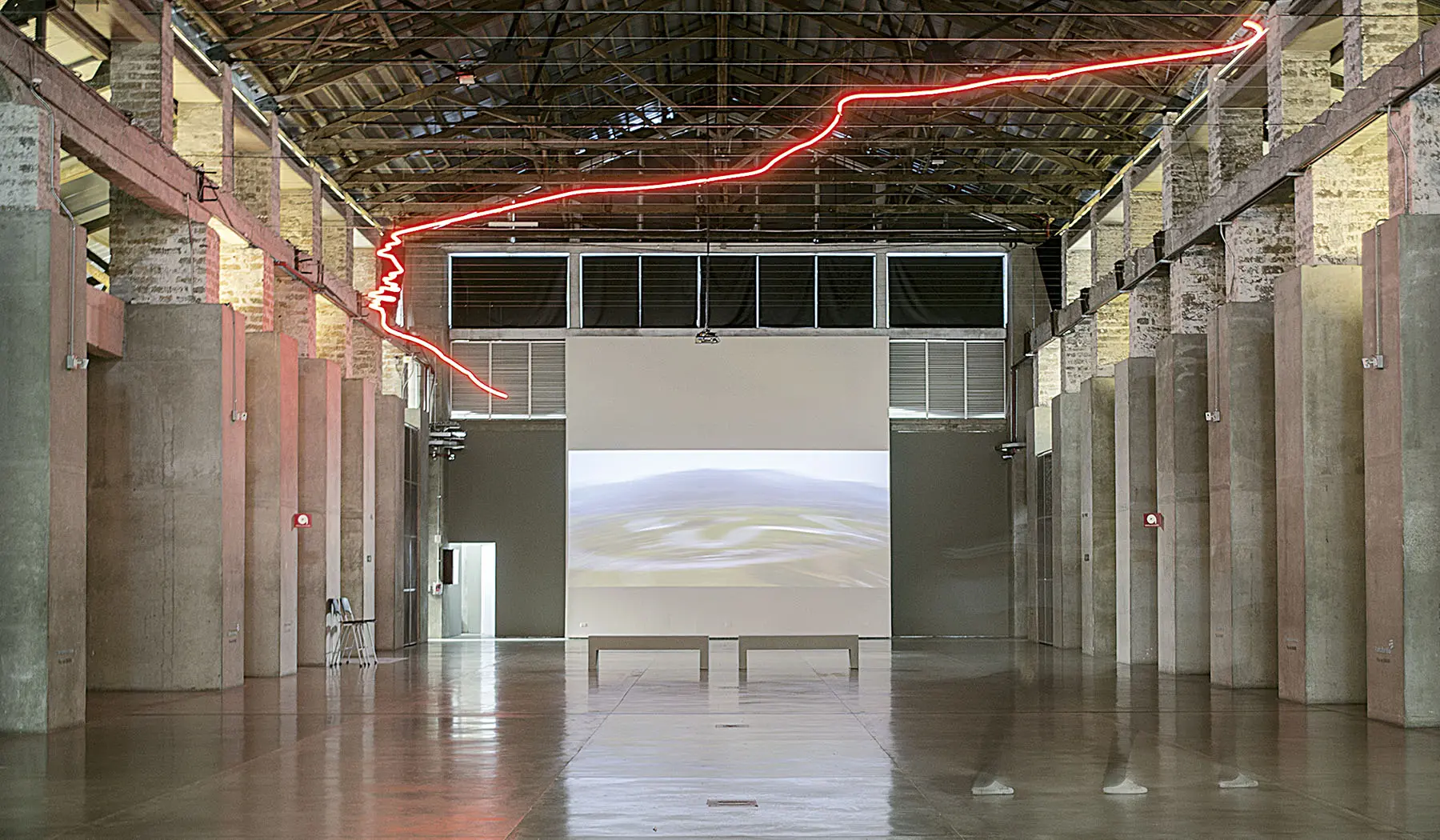
The exhibition Utopía. Entre ficción y elucubración opened in April of this year at Medellín’s Museo de Arte Moderno. This retrospective show allowed us to see again the work of the collective over the past three decades, this time including several works that were not in the Bogotá exhibition. Several elements in this show are particularly noteworthy. First, Ficciones (Fictions), a new work conceived as an installation for the Museum’s central aisle, again proposes a reflection about the Medellín river, which, as we have seen, was the collective’s initial starting point and one of their recursive themes over the years. On this occasion, however, the river is seen from a broader perspective, not only the seven kilometers that pass through the city but also its entire extension, which situates Medellín in relation to its periphery and to the way in which the river, once it traverses the city, reflects human actions and interventions. The installation is comprised of two pieces, a line made with neon lights suspended from the ceiling, and a video depicting five situations surrounding the Medellín River, detected by the group as they flew over the city’s north zone and the adjoining municipalities. This work again brings forth their interest in geography, landscape, and aviation as modes of a concretization in the artistic field.
Secondly, we must also note the curatorial proposal, which from the start confronts visitors with a mise en abyme: as we enter the Museum’s north gallery, we encounter a photograph of the central aisle, printed in large format. Here, one of the works, which is the building itself, reasserts itself as a metalanguage through the image welcoming the visitor. The exhibition is designed in chronological order, allowing for a linear trajectory that dialogs both with the investigation’s analytical categories (lucubrations, fictions, and utopias) and the kinds of works (images, objects, and interventions). In that sense, the curatorship proposes the construction of meaning that moves exponentially, in threes, as this is the collaborative oeuvre of three architects, created over three decades, and cataloged into three types of works. Finally, the exhibition also incorporates some architectural gestures that support the relationship between art and architecture as explored by Utopía.
The group’s oeuvre presents, then, a series of works where the city is the source of reflection and where the pragmatic exercise of architecture detours along tangents that derive to the visual arts field. Nevertheless, it is marked by disciplinary crossings through the use of multiple representational strategies to reflect on space, since a single work can comprise a number of drawings, planimetry, models, and large-scale interventions. It is important to note, finally, that while their strategies were innovative in Latin American art, they would not have been possible without the group member’s direct contact with architects who had already launched into a rethinking of the discipline in the 1970s, and who opened up new models of thought in the arts, architecture, and utopia.
JORGE LOPERA GÓMEZ
Researcher and independent curator. Space and Stage designer, with postgraduate studies in Cultural Management. Master’s Degree candidate in Humanistic Studies at EAFIT University.