The title and content of this edition of the Venice Biennale, All the World’s Futures, were an invitation to rethink the world in which we live, obviously including the image we have of it. An image that is always there, like so many other things we retain in our memory, even as it isn’t always present in our consciousness, like, for instance, isn’t the entire corpus of our language or the languages we are proficient in, which can be brought to bear when we need them and in the ways, we need them in order to communicate, even with ourselves. This is why it makes sense Fredric Jameson’s description of them as “unconscious,” and even more his replacement of the term “image”—given initially by Kevin Lynch in his classic study of mental representations of the city on the part of their inhabitants—with “map”, implying a degree of complexity in representation much greater than what is commonly attributed to a mere image. Among other reasons, because the map satisfies a sea of demands for localization and orientation that are not satisfied by the image, which usually only acquires meaning when it is fitted into or fluidly inscribed in imaginary cartography of the world. If we see pictures of ramshackle homes and sludgy streets inhabited by barefoot children, we immediately think of Africa, or Haiti, or a favela in Bahia. On the other hand, when we see the image of a clean, paved public square, surrounded by iron and glass and traversed by people in business attire, we think of Manhattan, or Toronto, or Frankfurt. In both cases, the map has situated and given us orientation, be it because we are or have been in any of those places, or because we have not.
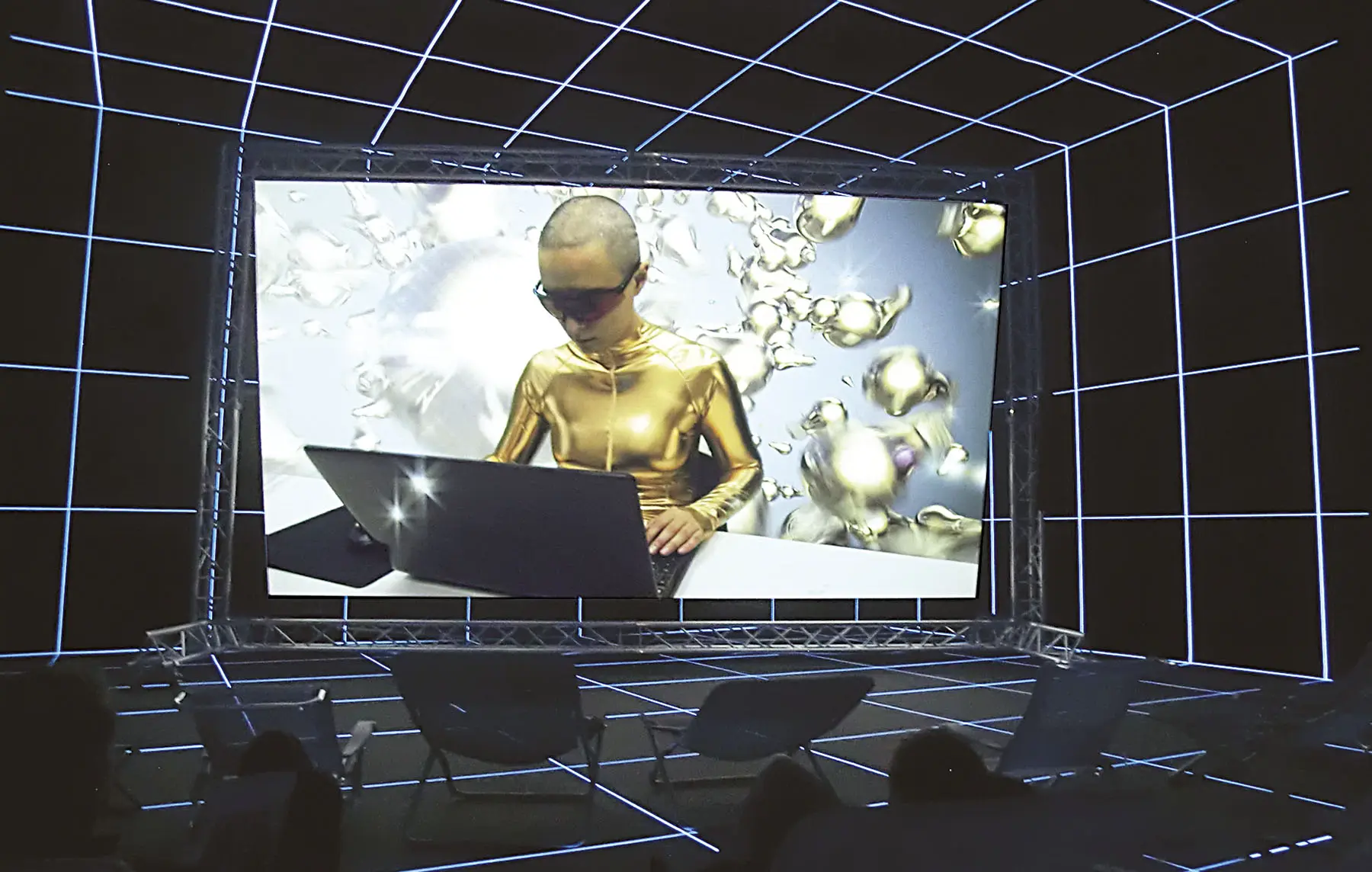
True: the image can contradict cartography to the point of subverting it, as was done, in the history of art, by the images of abstraction (lyrical or geometric) that blur or eliminate the world in order to focus on the task of generating in the viewer purely emotional or sensuous experiences. This is not the case, however, of this edition of the Biennale, which, on the contrary, put the world on display in a truly forceful physical, immediate, and sufficiently inclusive way. We are talking about an event where 89 countries from every corner of the world participated, their gathering for a brief period in a single city resulted in a kind of informal, quorum-less UN assembly, dubbed by Okwui Enwezor himself as a “parliament of forms,” perhaps intending to convey with the metaphor his confidence that the convoked nations would dialog among themselves and with an equally multinational audience through (art) forms and not only (political) words. But, independently of all that, the truth is that this Biennale formed a tightly packed image of the contemporary world, which shook the standard image of the world, the world of the news if you will, by interrogating or giving nuance to some of its most unmovable certitudes. Among them, the one related to the status of nations, both those participating in the Biennale and those that didn’t (or decided at the last minute to pull out, as in the polemical case of Costa Rica). Nations are no longer what they used to be—say the cartographers enrolled in the cause of globalization—as they are being overcome, and thus seriously diminished in their attributions, by supranational organizations and treaties that mold and condition their actions and their existence. All that in reference just to the economic, political, and military realms, because if we refer to the specific spaces of art and culture, it also becomes obvious that it is impossible to speak of national culture in the strict sense, the sense in which from the Eighteenth to part of the Twentieth Century we spoke of a German, French, British, Spanish, or Russian culture. Even these formerly celebrated cultures have seen their identity markers undermined to the point that we would need to see them as “hybrid cultures” that include in their current composition exogenous elements that until very recently were entirely alien or strange to them. Among the national pavilions, we could deem “historical”, such hybridizations were evident in the case of Germany, where the curator, Florian Ebner, invited intervention by Jazmina Metwaly and Philip Rizk—a couple of artists living and working in Cairo—who paved one of the galleries with cement tiles shipped from their studio with the intention of bearing a mute, lapidary (if you will) testimony of the interviews they had with a group of Cairo workers, both employed and unemployed, about their living and working situation after the coup d’état that put an end in Egypt to the “Arab spring”. Tobias Zielony, another artist invited to participate, is German, but his artistic project, using a variety of media and strategies, was intended to give greater visibility to the leaders and organizations of African political refugees in Germany, whose outstanding activism is little known in their own countries despite being directed toward an acknowledgment of the difficulties suffered by these countries, the cause of the exile of so many of their citizens. Hito Steyerl—the fourth artist invited to the pavilion—was born in German to a family of Japanese background, but rather than identifying with the culture of this or that nation, she has decided to critique the very concept of national culture. Indeed, she is the author of an essay titled The Language of Things—evoked by Ewenzor’s “parliament of forms”—inspired by Walter Benjamin’s enigmatic 1916 essay “On Language as Such and the Language of Man,” which, according to Steyerl, clashes with concepts such as the “national spirit,” breaks with “organicist notions of community and culture,” and situates “translation at the core of a much more general practical issue: how do human beings relate to the world?” Steryerl’s answer in her stunning video-installation The Factory of the Sun is that today, humans relate to the world via an incessant flow of digital images whose omnipresence and virtual omnipotence—I add—affect the very possibility of building a coherent map of the world.
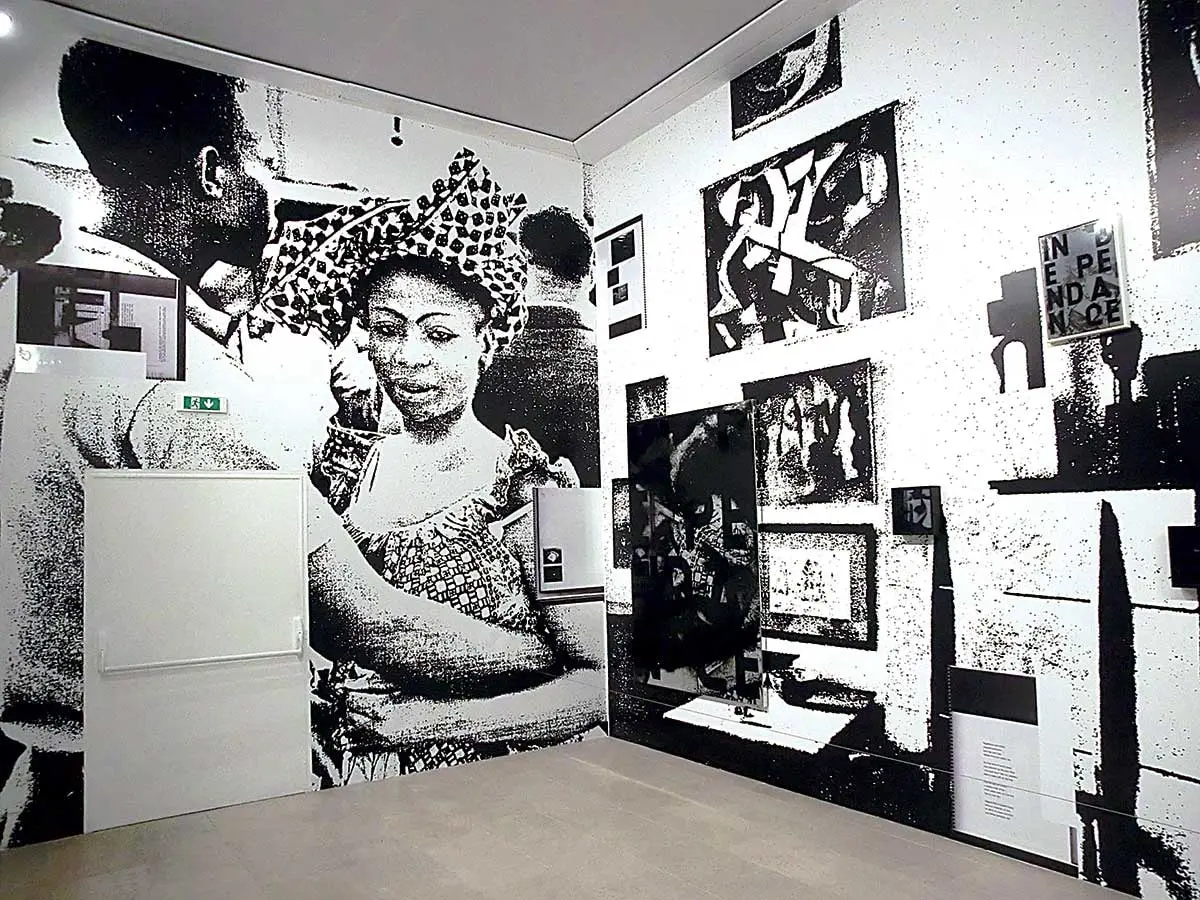
The organizers of the Belgium pavilion made a decision even more radical, allowing Walloon artist Vincent Meessen and curator Katerina Gregos to present Personnes et les autres, an exhibition exploring the classic duality of identity and otherness, with the participation of a dozen artists from Africa, the Americas, and Europe, who interrogated in their works the history and the present of what the curator calls “the colonial modernity”—the same modernity that found in the conquest and colonization of the Congo a still terrifying example. Belgium, by the way, exists under the constant threat of dissolution, given the majority wish for independence and eventual union with the Netherlands among the Walloons. And Brussels, a Francophone capital in the midst of Walloon provinces, is today the virtual capital of the European Union, a supranational organization concentrating many of the sovereign powers that used to be the exclusive attribute of its member states.
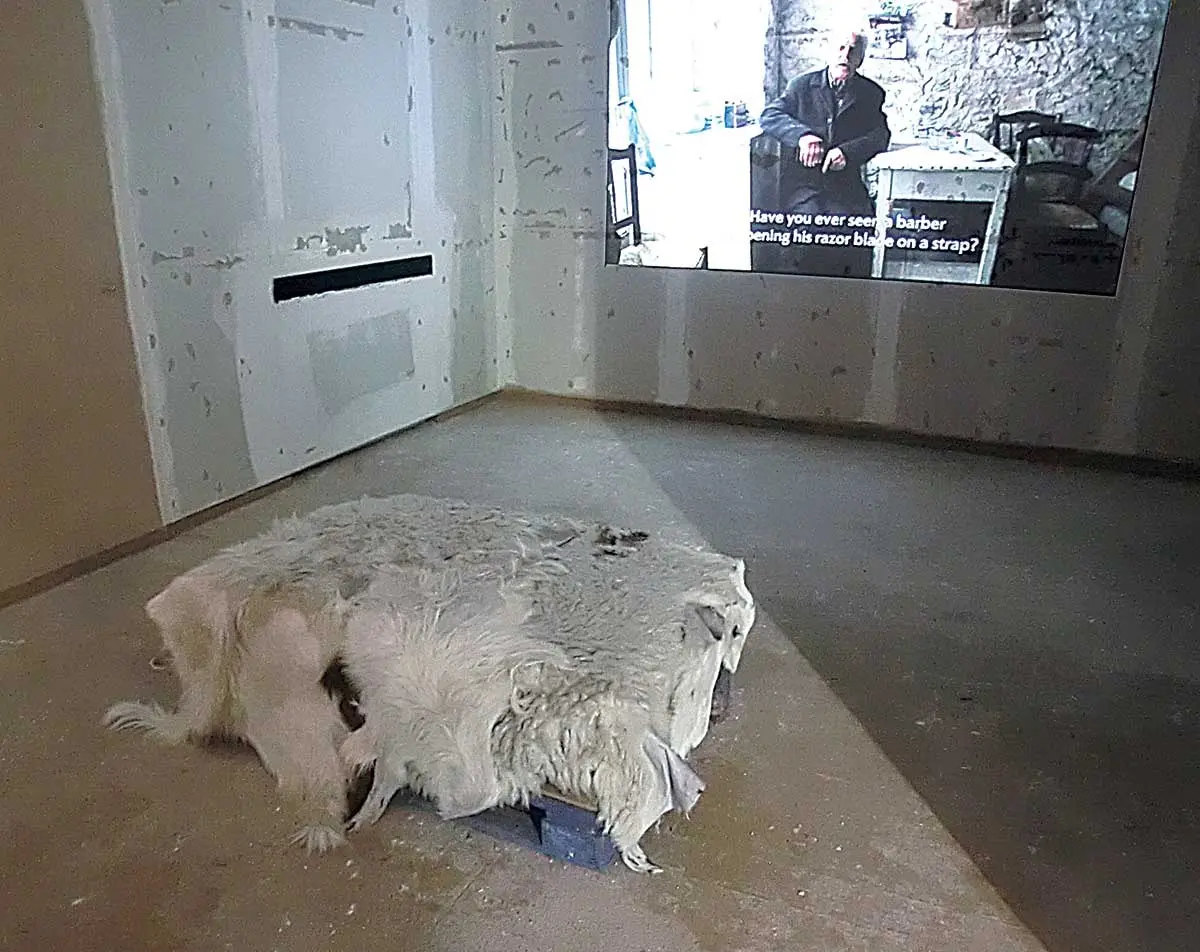
In fact, Maria Papadimitriou’s intervention, titled Agrimika, Why Look at Animals? and centered on the move to the Greece pavilion of an old taxidermy workshop, gave rise to interpretations that connected it directly with the country’s extreme economic and social crisis, caused by the implacable policies of fiscal austerity forced onto Greece by the institutions of the European Union, thanks to the sizable cession of national sovereignty previously agreed to by the country’s politicians. For instance, the interpretation put forward by Spanish critic Miguel Cereceda, who, worried about the international consequences of the Greek crisis, wrote that “Papadimitriou’s proposals starts with the observation of animals that are not entirely domestic nor entirely wild, and nevertheless live in human company. The Greek population seems to exist like those animals, known in Greek as Agrimika, in the context of the European Union. Not entirely wild, not fully domesticated. The artist has left the pavilion’s walls deliberately unfinished, the paint chipped and dented, in order to show their wounds left by prior exhibitions; our reading of it, in the international context, stalked by predators like the IMF and the European Central Bank, inevitably includes the conviction that ‘they will flay us’. Without a doubt, this gives the work a profound poetic and political meaning.”
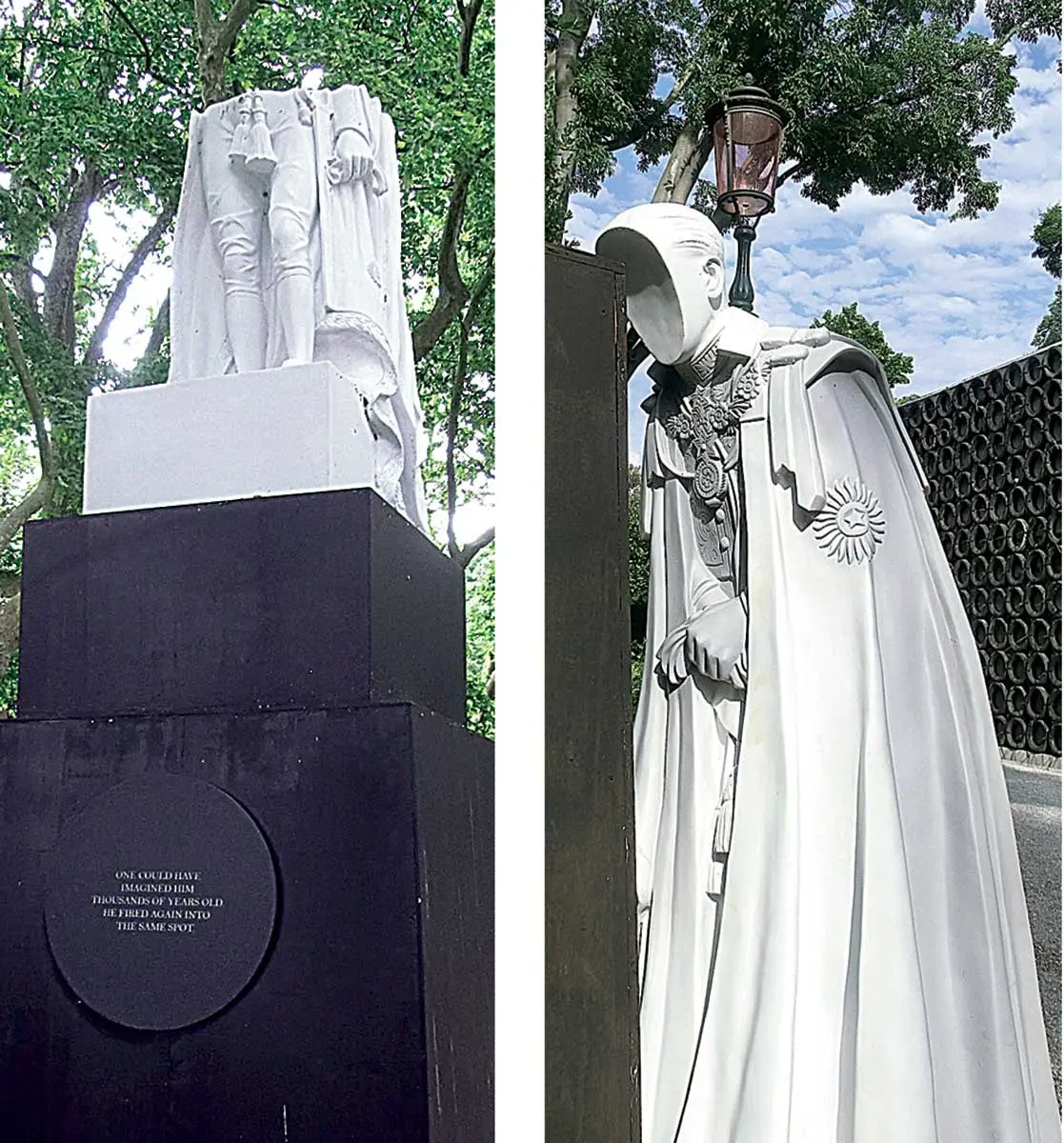
An appropriate comment on the lesson about the history and the present of this “colonial modernity” offered by the Belgian pavilion was found in the intervention by Raqs, an Indian artist’s collective. Titled Coronation Park and presented in the well-shaded paths of the Giardini, it featured nine sculptures depicting the same kingly figure, all in synthetic resin and placed on wood-plank pedestals. On the sides of the pedestals were medallions containing not the predictable praises of the monarch, but quotations from “Shooting an Elephant,” George Orwell’s critique of colonialism written when he worked for the colonial police in Burma. These were, in fact, quotations within a quotation, since, as Raqs explained, the project evoked the Delhi square wherein in 1911 Britain’s King George V and Queen Mary have crowned Emperors of India. The precedent for this ceremony was the Nineteenth Century crowning of Queen Victoria as the first British Empress of the vast Asian country. The connection between this project and Vincent Meessen’s at the Belgian Pavilion lies in the fact that the Belgian Congo was not, in the strict sense, a colony, but the personal property of King Leopold II, in the same way as India was initially not a colony but the property of the East India Company, a British concern. Only the Indian Rebellion of 1857 forced the British crown to assume the role of sovereign, depriving the Company of those powers. The evocation of these old stories acquires renewed meaning for those opposed to such international treaties as the one currently in negotiations between the EU and the United States, which imply significant transfers of sovereignty from the Nation-State to multinational megacorporations.
The Polish pavilion presented a bold and imaginative exploration of the history of cultural hybridization. It consisted of the projection, on three screens, of a filmed performance of Stanislaw Moniuszko’s opera Halka, shot following the directions of artists C.T. Jasper and Joanna Malinowska in February of this year in Cazala, a town in the mountains of Haiti. With this unusual performance, its recording, and exhibition, the two artists paid homage to the inhabitants of the remote village, who are mostly descendants of Polish soldiers who arrived with the powerful army sent by Napoleon Bonaparte for the recovery of the colony lost by France after a slave rebellion. Those soldiers, who fought for France because France had promised to free Poland from Russian domination, changed sides once in Haiti and joined the rebel armies that finally expelled Napoleon’s forces. They gained the right to be recognized as Haitian citizens in the 1816 Constitution. Halka, the opera, has its own history: it focuses on the misadventures of a defiant peasant woman seduced and then rejected by a landowner, and after its debut in Warsaw in 1858 became the premier national opera.
The Latin American national pavilions were equally symptomatic of the current state of the national question in a globalized world. The case of Venezuela was especially revealing about the cultural limits of political nationalism. Looking at the photographs and videos exhibited by Argelia Bravo under the title of Te doy mi palabra (I Give You My Word), it was impossible for me not to think about how similar they were to works on exhibit at other pavilions or in other exhibitions included in or associated with the Biennale, from the aesthetic and even conceptual point of view. What was missing in them was that essential differential feature that so clearly distinguished Mexican Muralismo in the art scene of the era. An absence that the organizers attempted to solve, in vain, with the placement of an indigenous canoe painted in ritual colors near the entrance to the pavilion.
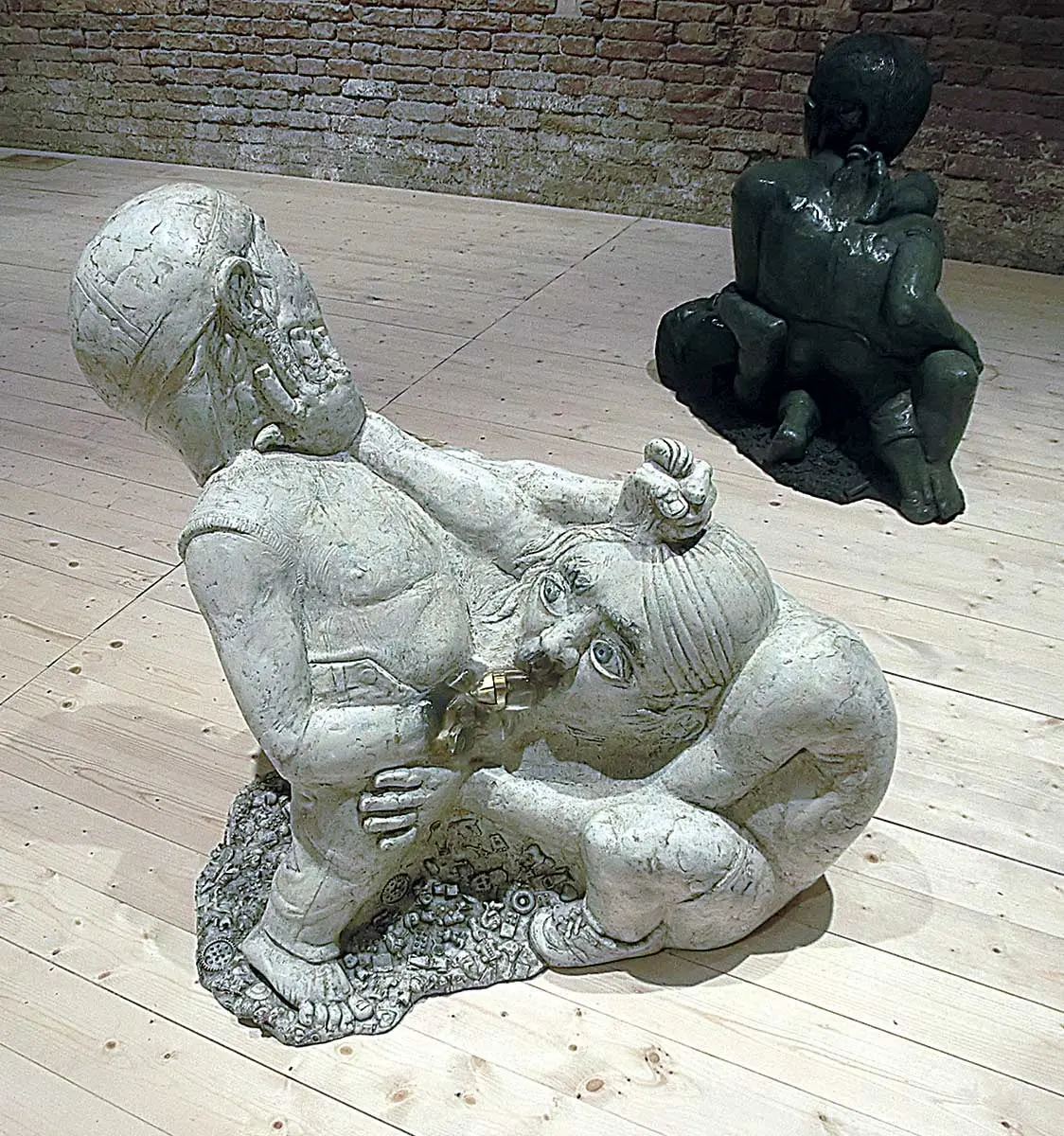
In the Argentina pavilion, meanwhile, it was possible to see a national characteristic. Argentina does have a long abstract art tradition, with the Madí group at the forefront, but it also possesses a significant tradition of social realism associated with national questions, in which the work of Juan Carlos Distéfano must undoubtedly be included. His forceful stone sculptures, grouped under the title of Kinderspelen at one of the Arsenale galleries, come to join the imposing sculptures presented by Adrián Villar Rojas in the most recent edition of Documenta at Kassel, in certifying the decision of the Argentine cultural authorities to move away from all mainstream tendencies and assert a certain national slant in the arts.
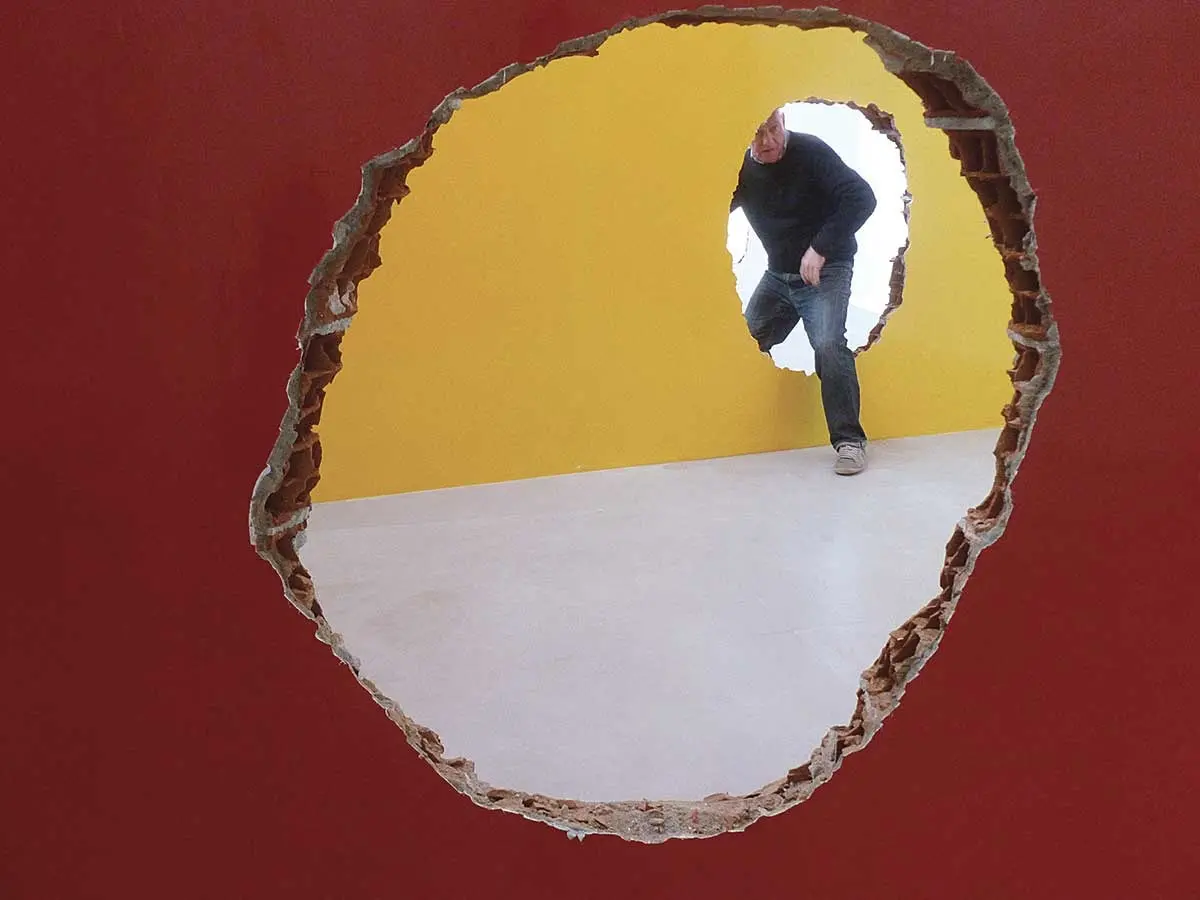
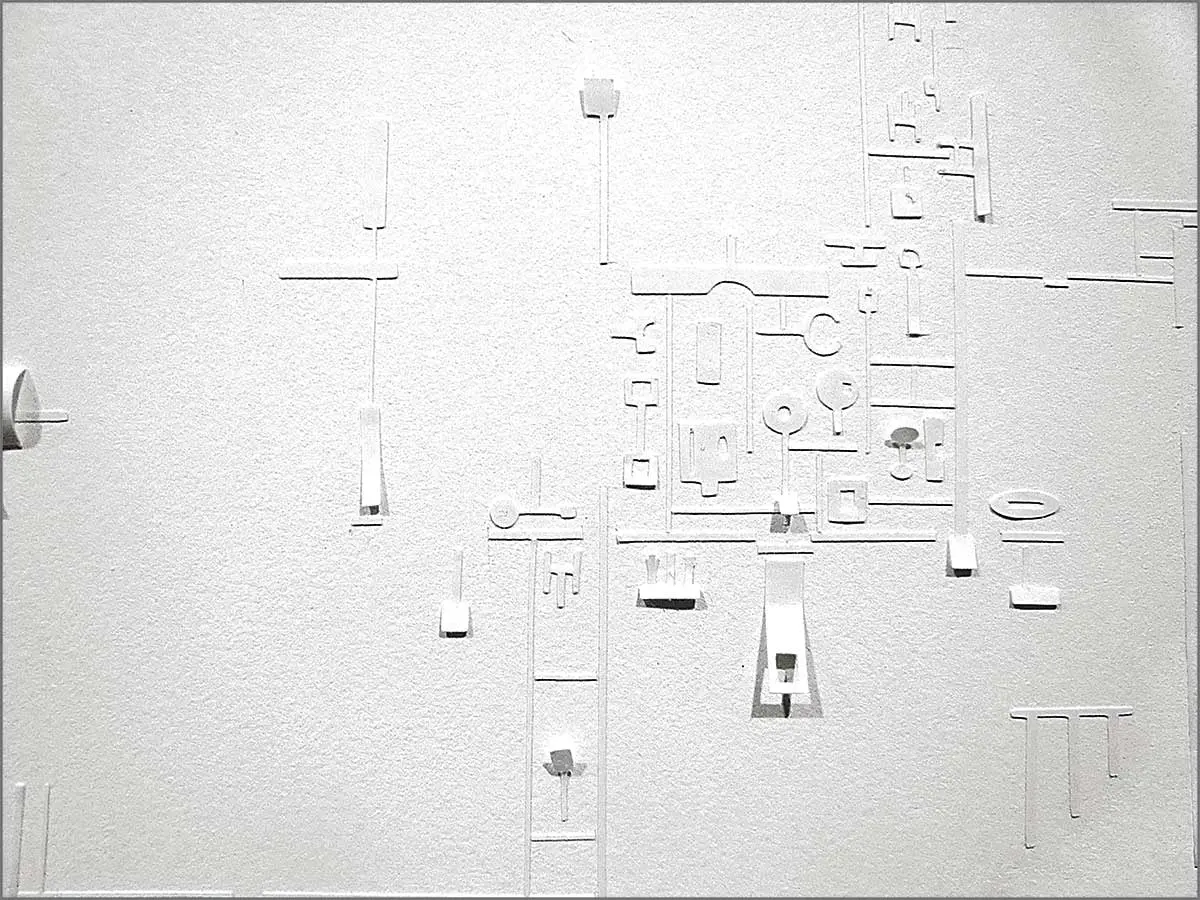
The Uruguay and Brazil pavilions opted for a different alternative. Uruguay reasserted its abstract-constructivist tradition, placing its pavilion in the hands of Marco Maggi, who took over three of the four walls with an exquisite mural work titled Miopía global (Global Myopia) and comprised of 10,000 small, self-adhesive pieces that were barely identifiable from a distance and up close resembled the design of computer chips. In the Brazil pavilion, artist Antonio Manuel presented a spatial intervention titled Ocupaciones/Descubrimientos (Occupations/Discoveries), dominated by broken walls that gave the whole the appearance of a house or building in the process of being demolished.
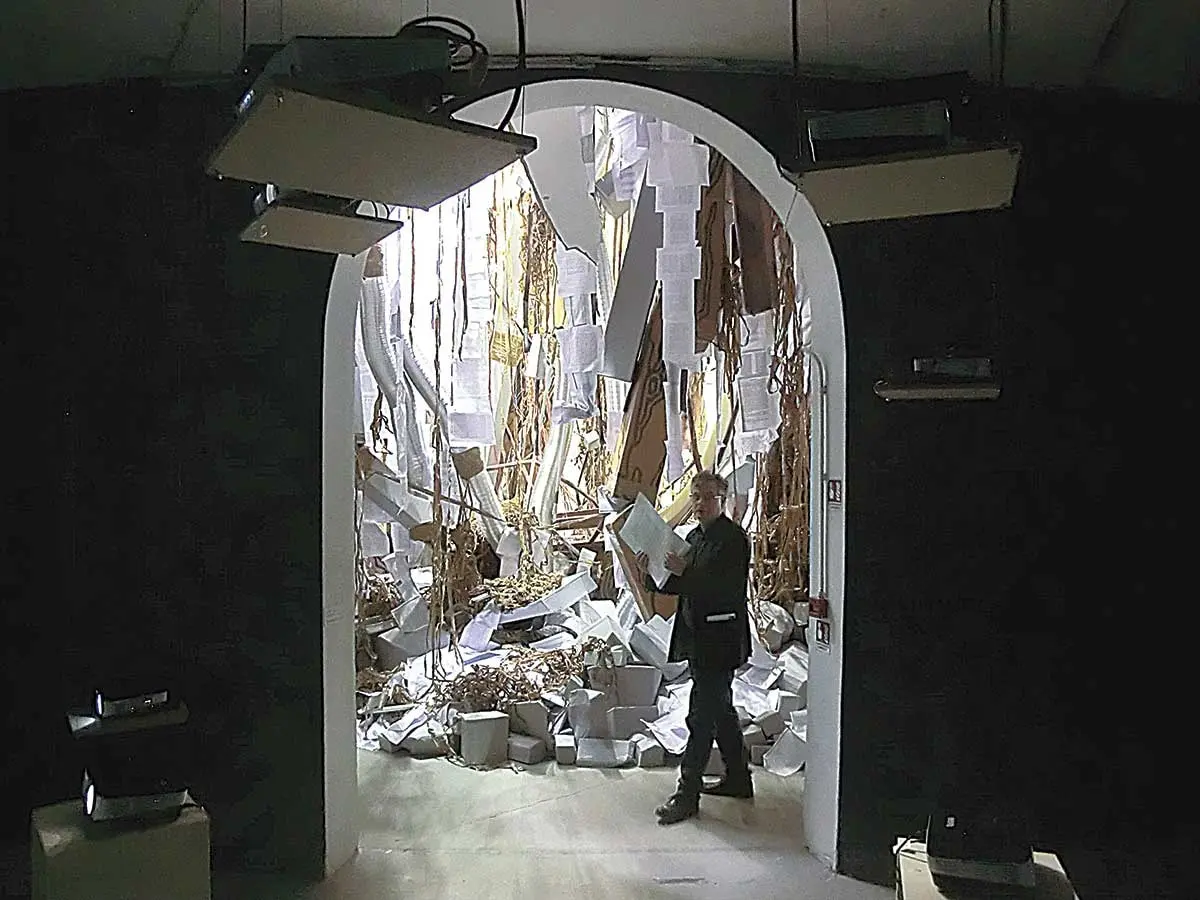
This image meshed well with the Garden of Disasters, one of the three curatorial filters chosen by Okwui Enwezor, the 56th Venice Biennale’s Artistic Director, to articulate his exhibition. The one titled like the Biennale as a whole, with the work of nearly one hundred artists on exhibit both at the Central Pavilion and at the Arsenale. The disorder named in the garden is that which today besieges a world shaken to its core by a catastrophic economic crisis; by the extension and intensity of the wars now tearing apart the Islamic regions from Libya to Afghanistan, Syria, and Iraq; and by an unsettling rise in the geopolitical tensions between the United States, Russia, and China. Many works referred to or evoked these disasters, among them Roof Off, an installation by Thomas Hirschhorn at the Central Pavilion, where the roof of the gallery seemed to tumble down and to carry with it a mess of broken panels and tubes among which one could find boxes of a Greek edition of Plato’s Symposium, the dialog that, among other things, celebrates wisdom. The other curatorial filter was Liveness: On Epic Duration, and it was resolved via the inclusion of great masters of contemporary art: Sergei Eisenstein, Walker Evans, Robert Morris, Robert Smithson, Hans Haacke, Fabio Mauri, Adrian Piper, Pino Pascali, Marcel Broothaers, Chris Marker. Or Italian composer Luigi Nono, whose legacy—represented on this occasion by his celebrated two-part composition Un volto, e del mare/Non consumiamo Marx), which used voice and tape recorders in innovative ways—demonstrated its vitality by inspiring contemporary German artist Olaf Nicolai to produce a great performance.
The last filter, which in truth could have been the first one, Capital: A Live Reading, responded to Enwezor’s firm belief in the need to return to the pages of Karl Marx’s key work for an understanding not only of what is happening in today’s world but of what futures are implicit within it. Enwezor gave shape to this curatorial gambit by opening the Arena, a forum where, over the seven months of the Biennale, a live reading of the three volumes of Marx’s Capital alternated with events intended to allow “artists, thinkers, writers, composers, choreographers, singers, and musicians, by means of images, objects, words, motions, actions, lyrics, and sounds” to invite different audiences to “see, hear, respond, commit themselves, and speak with the purpose of giving meaning to the today’s turmoil”, according to Enwezor. The section was completed by the video projection of a long dialog between artist Steve McQueen and Marxist theoretician David Harvey, and the exhibition of portions of Alexander Kluge’s project of filming Capital. Its title: News from Ideological Antiquity.
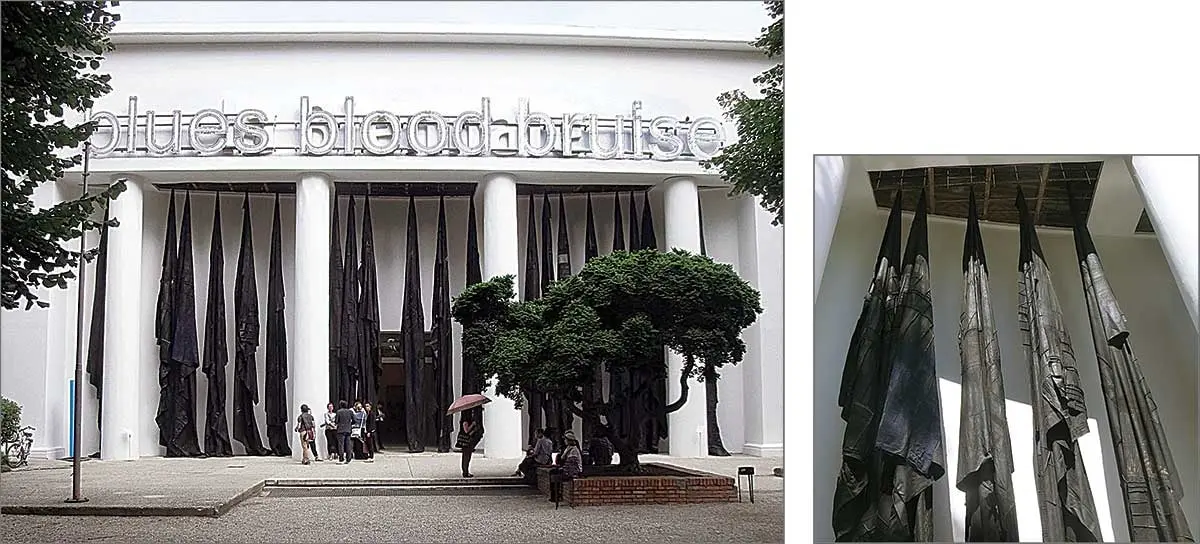
The large black curtains used by Colombian artist Óscar Murillo to block the Central pavilion’s atrium were a clear warning of how black our feature could be if we do not care for it.
* Photos by Carlos Jiménez.
CARLOS JIMÉNEZ
Essayist and art critic. Professor of aesthetics.