
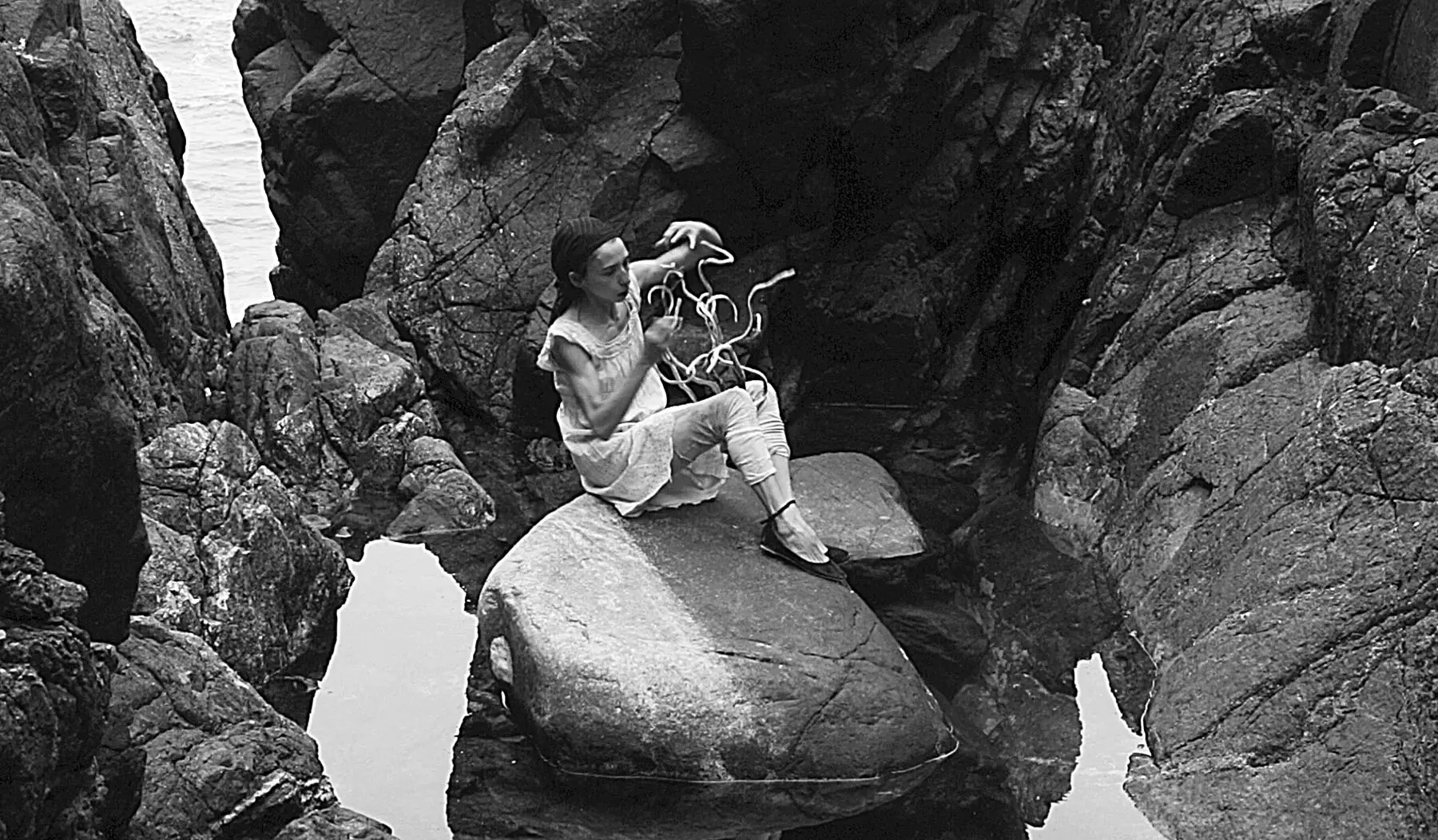
Writing about the work of Carlos Amorales is difficult: it is extensive, multifaceted, and greatly varied, and it readily escapes immediate categorization. In his installations, drawings, performances, collaborative projects, and films, we identify recurring themes and forms, but there are always new concerns, impenetrable symbolisms, unresolved anxieties, and immeasurable universes.
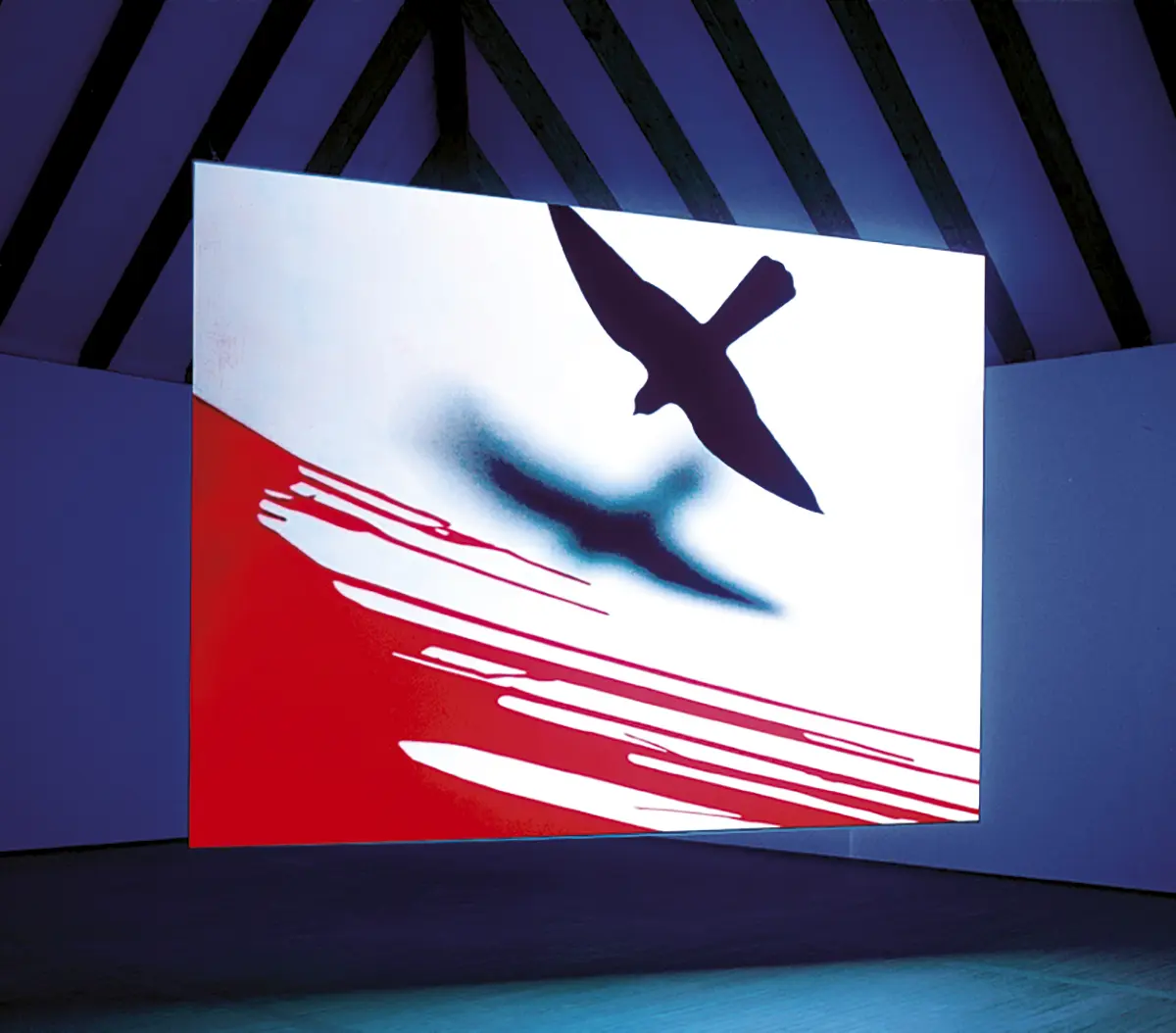
If we had to speak of an agglutinating element in Amorales’ oeuvre, it would undoubtedly be the Liquid Archive, the collection of vector-based drawings he has compiled for decades and used in different projects: these outlines of butterflies, airplanes, skulls, trees, and wolves have been the starting point for animations, installations, and all manner of graphic works. Their very title already involves a contradiction in terms, and the artist’s practice has carried the antithesis to its most critical point. Néstor García Canclini has even talked about it as an archive of the future, rather than the past, “intended not to preserve but to create and recreate.”1 Beyond that, the Liquid Archive is a unique case in which an artist’s graphic vocabulary becomes his work methodology; what I mean is that the deepest foundation behind the Liquid Archive is often active in other aspects of Amorales’ work, even if not overtly. Its mark is found not in what is done, but in how it is done. To better explain the point, I will detail an episode that shows it clearly.
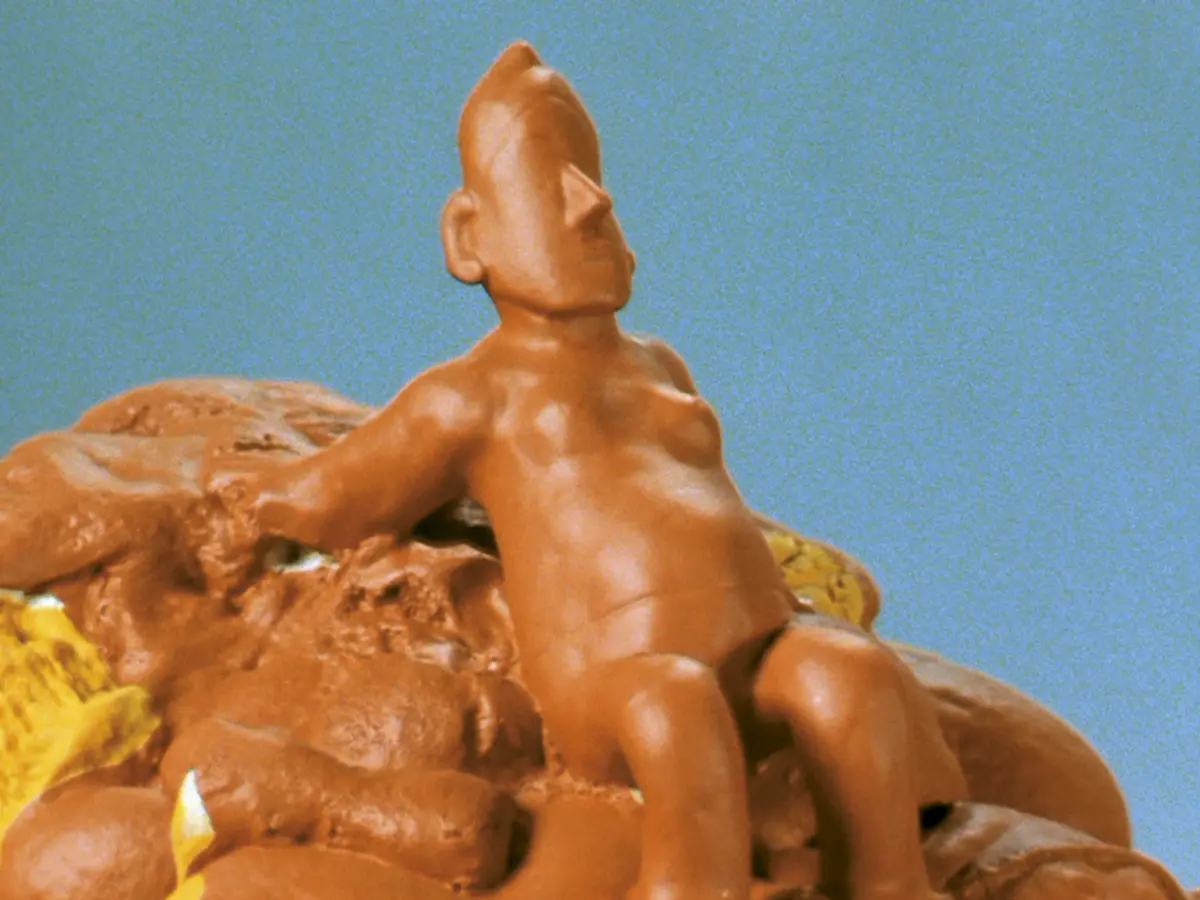
Between 2008 and 2010, Amorales worked with the pre-Hispanic collections of Museo Amparo, in the city of Puebla. It was not the first time that a dialog was proposed between contemporary art and archeology, but it was the only attempt of its kind in Mexico in the context of the Bicentennial celebrations of the country’s independence from Spain. Pre-Hispanic images have played a central role in the visual configuration of Mexico’s national identity; questioning that meaning-making apparatus entailed a major challenge for the artist. As institutionally preserved historical items, the pre-Hispanic figurines he worked with came with restrictions: they could not be intervened directly in any way, and they couldn’t be shown to the public in ways that were not those of a traditional archeological museum. Yet the main difficulty was their resistance not to physical but semantic intervention: how to give a twist in meaning to objects so deeply encased in ideology?

After reviewing the collection, Amorales and his team proposed a new catalog for the items, inspired by their own catalog for the Liquid Archive, where using some images to create others or exporting them between different supports is a common action. Their careful study of the collection resulted in a selection of figures to be replicated. The new statuettes were then bathed in color paint. The final result, the “work proper”, is the video titled La hora nacional (2010), where the colored figures were filmed as stop-motion animations in an anti-epic narrative at a considerable removal from the values commonly attributed to the pre-Hispanic. Amorales has dubbed this masterful operation a “smurfification of the patrimony” (many of the figures ended up a Smurf-blue color). In general, and to simplify as much as possible, we could say that the artist “liquefied” the stone, liberating the pre-Hispanic figurines from the weight of their history.
In countries like Mexico, where a paralyzing cult of the past makes it very difficult to take archeological items out of their display cases and heroes down from their pedestals, a dynamic view of history such as Amorales’ has found few friends. When in 2013, as part of the Museo de Arte Carrillo Gil’s exhibition Notas contra notas. Una exposición en torno a José Clemente Orozco, Amorales used a painting by Orozco as the template for the installation he intended as a tribute, public outcry came quickly. A video—posted to the Internet by the museum—showed Amorales tracing the outline of Orozco’s painting as it was held by the institution’s staffers; soon, social media exploded with condemnations of the artist for endangering the revered master’s work, demands for the resignation of the museum director, and even cry for criminal charges to be brought. The point is that, in an exhibition built around such a cult figure as Orozco, the last thing people expected is to have one of his paintings used in that manner for the construction of another artist’s work.
But Amorales’ problematizing vocation goes beyond his struggle against national stubbornness. Looking back into his beginnings as an artist, we find that his conflict with patrimony (what is inherited from our forefathers) transcends the historical and political dimensions and enters into the domain of individual identity. In his earliest works, Amorales “ceded” his identity to others via performative gestures such as the signature of contacts for the loan of his personality, or the use of wrestling masks. After all, the creation of his pseudonym, Amorales (a hybrid of his two family names, Aguirre and Morales), in order not to be known as Carlos Aguirre, the name he shares with his father (also an artist), is nothing else than a challenge to the Law of the Father. Along the same lines, we should read perhaps Supprimer, Modifier et Preserver (2011), which documents the action of printing France’s Civil Code in graphite and distributing it to lawyers around the country to have them delete, modify, or retain the laws they considered essential for their professional practice and for the French legal system in general.

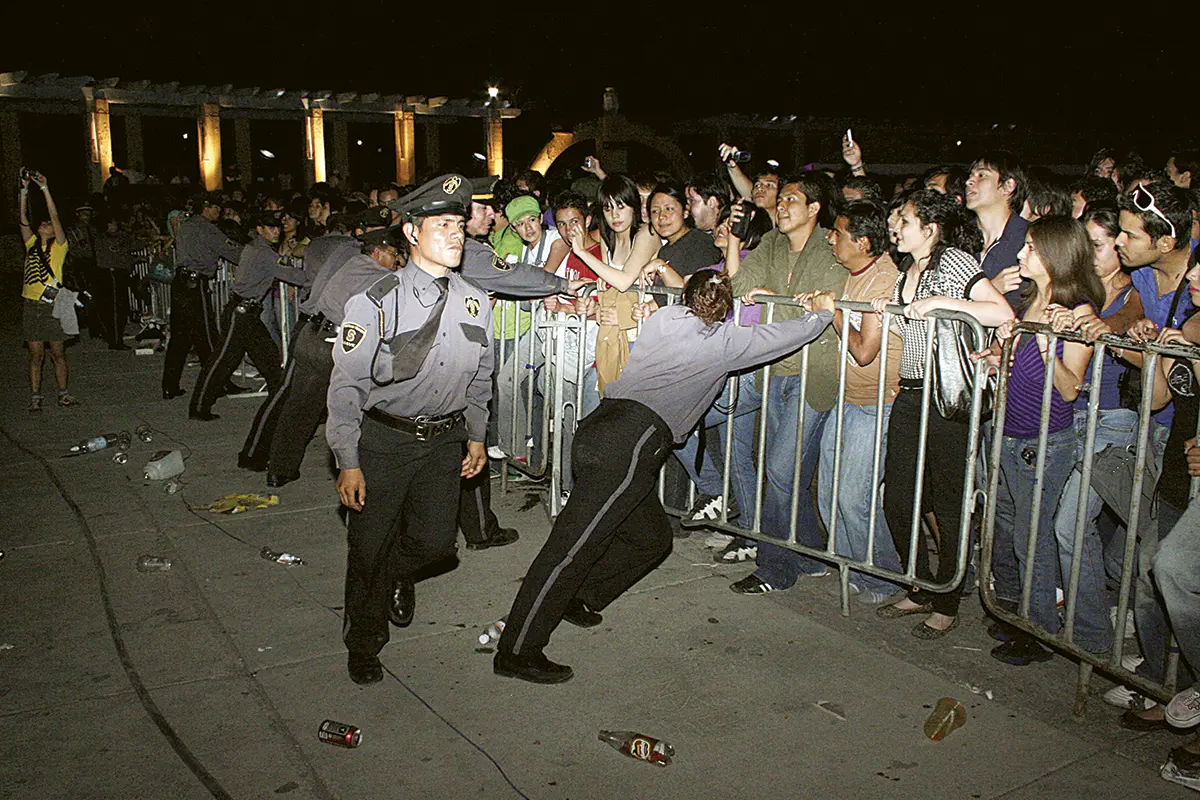
In general, any pretext suffices for Amorales to give free rein to his desire to question the status quo. In 2003 he launched the Nuevos Ricos music label (the name translates as “The Nouveau Riche”), a crazy experiment in collaboration with composer Julián Lede, “Silverio”, and designer André Pahl. The label was established to promote the work of European and Latin American electro-rock bands and to foster exchanges between them. They sought to create an effusive environment, and the profile of the bands they represented was highly performance-oriented: they needed to be able to generate catharsis by means of dancing and excess. Each intervention was conceived as a total event: the sound was as important as the general ambiance. The stages, the performers’ costumes, and the label’s band graphics again incorporated the “liquid” imagery.
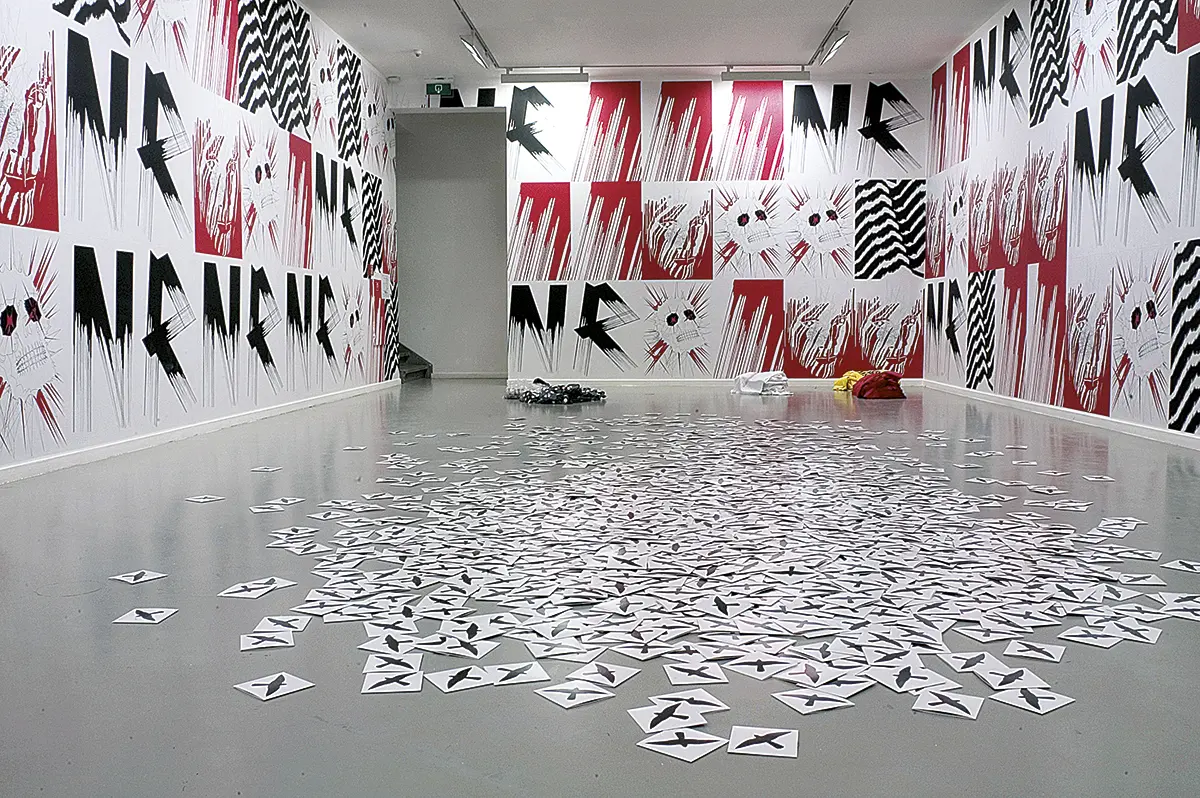
Nuevos Ricos was never animated by political pamphleteering, but their broad conception of the political sought to drive forward a certain atmosphere of collective anarchy by means of sonidero-type raves (in Mexico, sonidero is the name given to people who entertain with music at popular social events). The custom is for masses of people to take over the streets for hours during a neighborhood dance, with the sole purpose of having fun and dancing. More than a work of art, Nuevos Ricos was an expanded cultural movement. It operated for six years both inside and outside—at a more popular level—the established circuits of international art. One day it was taking part in an academic forum at Harvard University, the next day it was dancing in the streets of Ciudad Juárez. In both contexts, the event in question was opportune and enriching for the audience, with whom it communicated seamlessly.
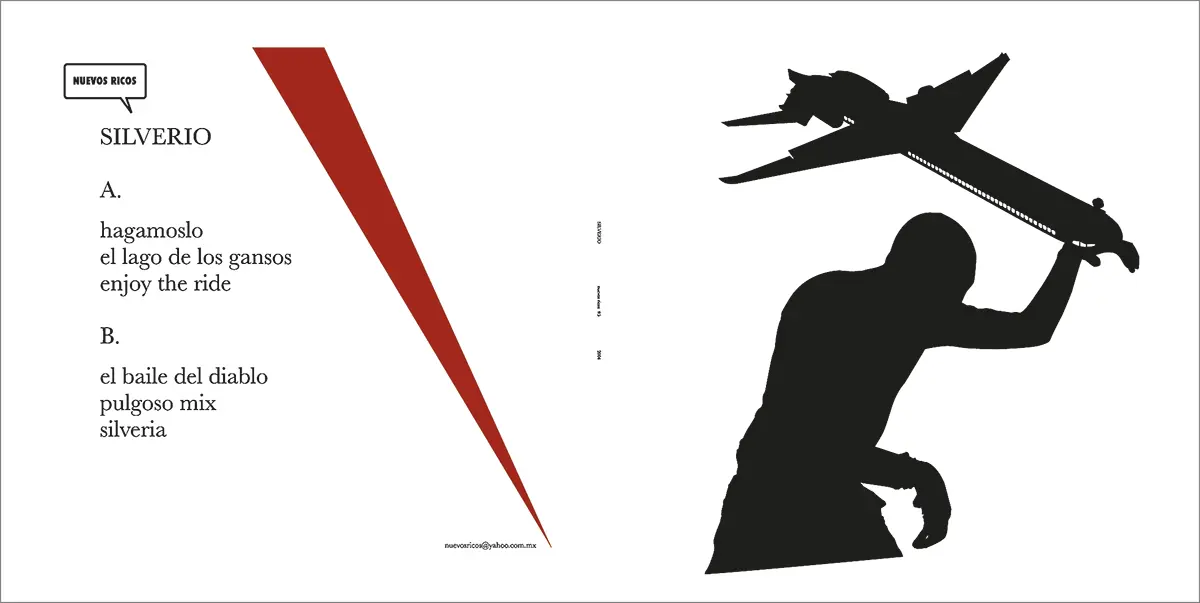
In an anti-establishment vein, the Nuevos Ricos did not have commercial intent, and they offered their music and their album covers for free download. In fact, if they were able to take root in popular taste it was precise because of this incursion into the powerful music market. It was not via big labels or transnational production houses but via the piracy network. Pirate distributers downloaded the Nuevos Ricos content and pressed it into CDs for sale (even adapting the original graphics), taking it into segments of the population with no regular access to digital media. Amorales has admitted that the modifications made to his covers by the pirates were improvements, and this is why, in an ingenious twist of meaning (and of the market), Nuevos Ricos decided to pirate the pirates by buying the CDs massively and reselling them in Europe as “cool” objects. This chaotic situation revealed how outdated are today’s notions such as authorship, creation, and intellectual property, in the framework of cultural practices increasingly more heterogeneous and promiscuous.
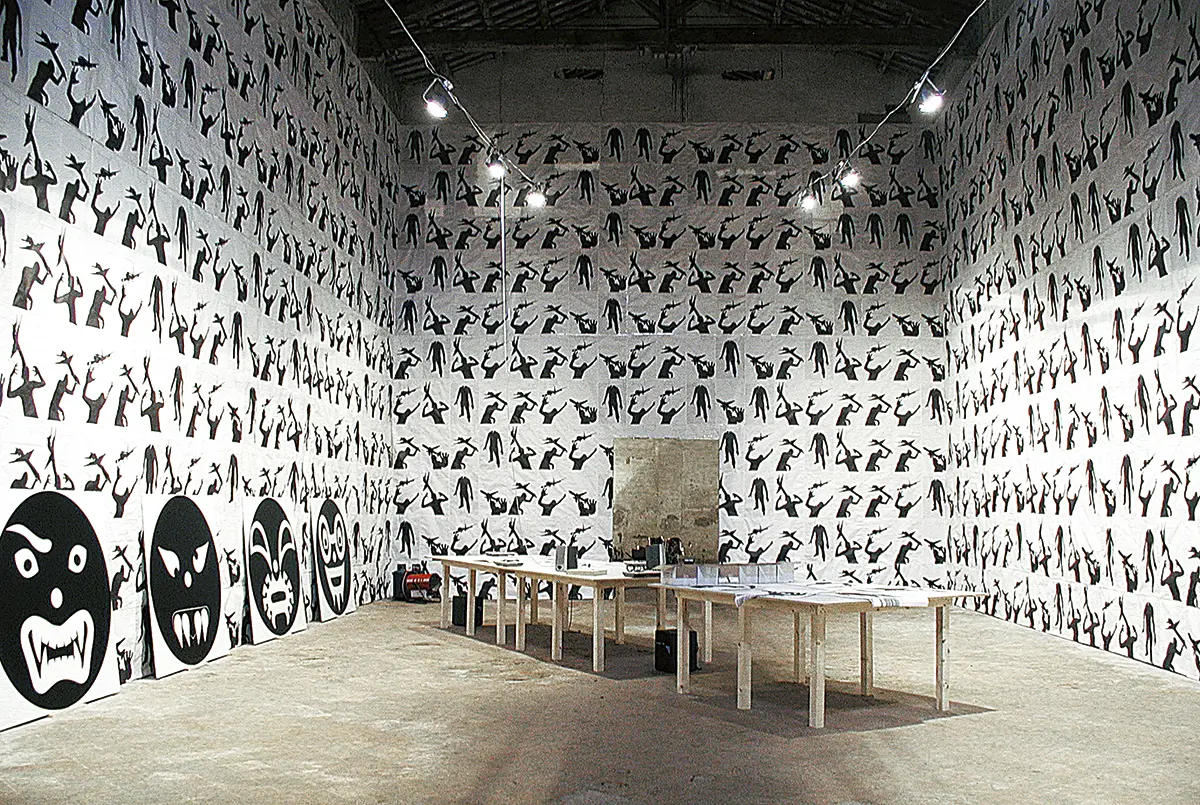
The best part of this whole episode for Nuevos Ricos was, undoubtedly, the failure of the non-profit as an artistic ideal. It is interesting that Amorales, for all his skepticism, saw at one point potential for cultural exchanges outside the market. He was probably more interested in the experiment than in the result, and even though it is often repeated that this is an era without utopias, their ghost remains. In recent years, the banality of such ideals has become another key concern in Amorales’ work. For The Man who did all Things Forbidden (film, 2014), Amorales carried out deep research into Chilean avant-garde poetry of the period before the 1973 military coup and during the dictatorship, exploring the intricate drives between the political and the aesthetic in contexts of social urgency.
The film was inspired by Chilean writer Roberto Bolaño’s 1996 novel Estrella distante, which dramatizes the incongruence of extremist positions in politics and poetry, and, ultimately, the obscenity behind the avant-garde itself. In the novel, literary groups supporting the socialist government of Salvador Allende are infiltrated by the aviator and poet Alberto Ruiz-Tagle/Carlos Wieder, a far-right ideologue who ends up betraying or killing many of them. In the film, however, there are no direct references to Bolaño or his character. Amorales revisits the artistic avant-garde and established an allegorical connection between their iconoclastic impetus and that of the film’s protagonist: a man who did everything that was forbidden in his tribe. Can ethics be sacrificed to aesthetics? Can there be a revolutionary position based on poetry? Amorales’ answer must be found in the maxims of his “ideological cubism” (the avant-garde he founded), whose manifest was written using fragments of other avant-garde manifests, sidestepping all differences between them. Amorales’ anarchism is also liquid.
NOTE
1. “Carlos Amorales and the Archive of Interruptions,” in Carlos Amorales: Discarded Spider, Nueva York: Yvon Lambert, Contemporary Arts Center, Cincinnati and Veenman Publishers, Rotterdam, 2008.
DIANA CUÉLLAR LEDESMA
Critic and independent curator. Member of the Spanish Association of Aesthetics and Art Theory.