
Peruvian-born artist César Cornejo has dedicated the past two decades to examining the intersection between art, architecture, and socio-political issues. Having lived and worked in Lima, Tokyo, London, New York, and Florida, Cornejo’s work is informed by the immediacy of locality, especially from the organic perspective of the individual. He obtained his undergraduate degree in architecture from the Ricardo Palma University in Lima. Early in his career, his professor, the Peruvian sculptor Carlos Galarza Aguilar (1926-1991), compelled him to combine art and architecture. Later Cornejo pursued his Masters in sculpture and a Ph.D. in fine arts at the Tokyo National University of Fine Arts & Music (with a fellowship from the Ministry of Education of Japan). From then on, his work has expanded its formal interests into an art that reflects community-based concerns and interactions. Much of this latest influence came from living in cities like London and New York, particularly working with public projects. In his travels around the world, he absorbs new strategies that influence and redefine his work. For example, from Peru, he developed a sensibility to community-based art with political content; from England, he took in conceptual methods and an interest in the mechanics of media, advertising, and communication; from New York, he adopted entrepreneurial and project-based art formats into his thinking and practices. In general, he combines distinct influences into fluid art processes and concepts.
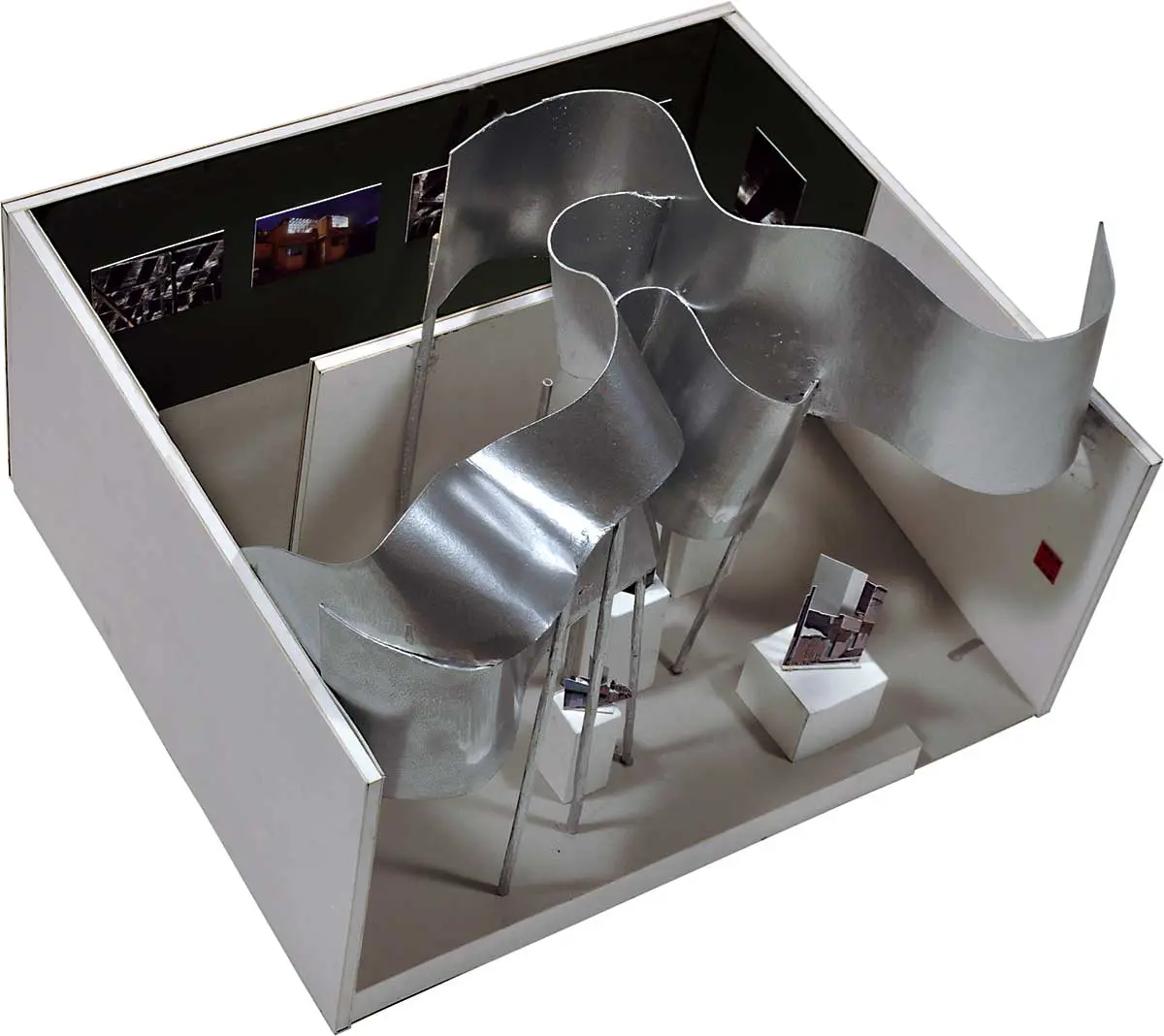
In his first architectural experiments in the early 1990s, Cornejo was searching for a deeper experience of architecture, other than industrial architecture and its production-based methods. According to the artist, the current architecture is understood mainly in practical terms, responding to efficiency rather than intuition. He wanted to find something more ethereal about the perception of architecture, and for this purpose, vernacular architecture had more to offer. In his earlier artwork, exemplified by Habitaciones (1993), he explored the origins of architecture and its relation to sculpture through the notion of the dwelling. For Habitaciones, he was influenced by André Block’s All’ interno dell’Habitacle no.1 and Frederick Kiesler’s Endless House, and the latter’s notion of endless space as a direct connection to the organic body.
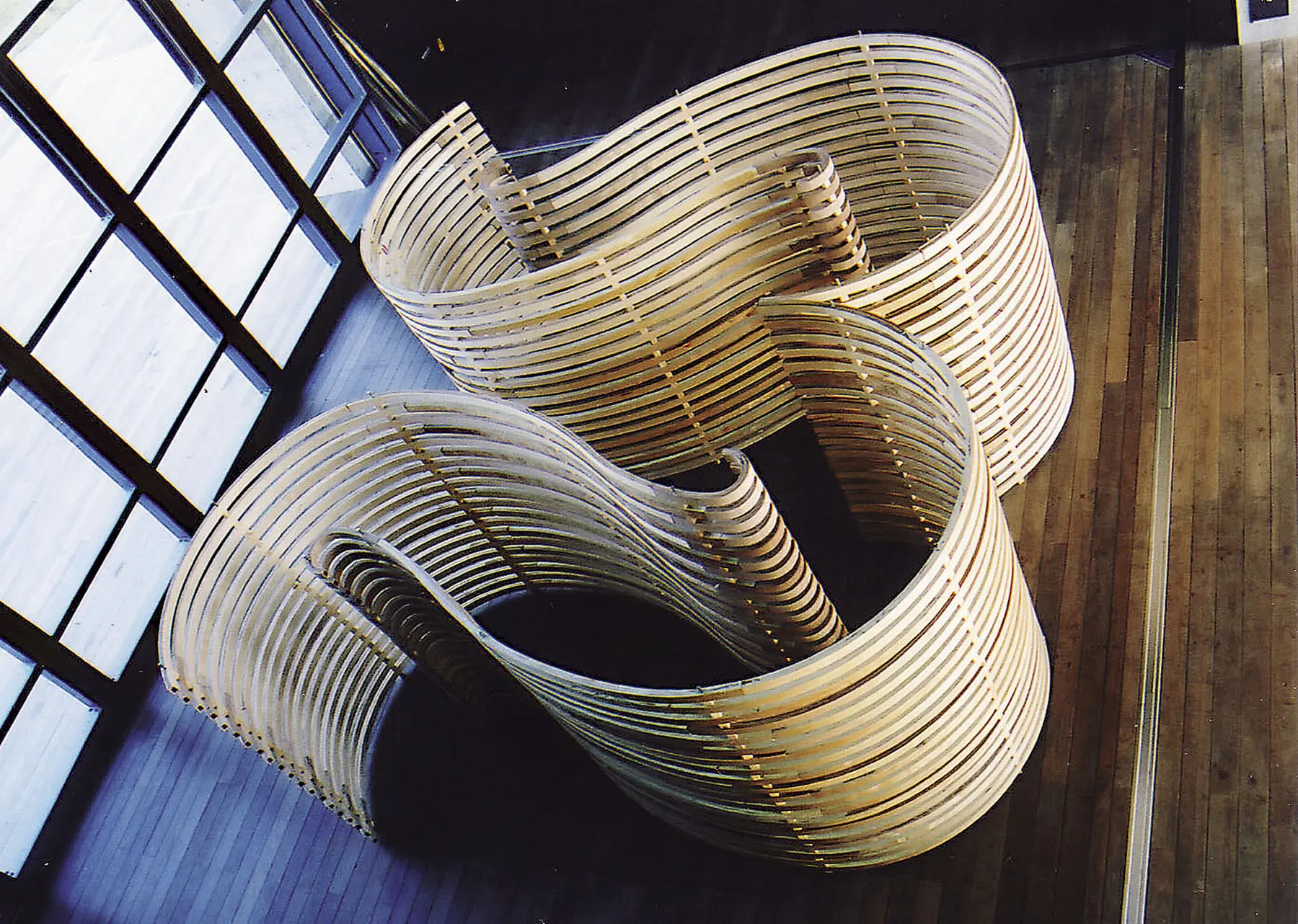
After moving to Japan in 1996, Cornejo continued focusing on the relationship between art and architecture. For his Labyrinths (2003-2004) he built large interactive structures, informed by Zen architecture. Here, continuity and transparency create numerous variations of line and form in three-dimensional space. His first Labyrinth from 2003, exhibited at the Gallery Kobo Chika and at the Tokyo National University of Fine Arts & Music, investigates the subtlety and flow of one’s consciousness in relation to the built environment, an idea drawn from Junichiro Tanizaki’s book, In Praise of Shadows. In the book, the author praises the simplicity of design, and the harmony and flow of nature embedded in our psyche, calling for mindfulness of beauty present in everyday life. The basic line of Cornejo’s Labyrinths is an s-shape line, a sigmoid function that balances out distinct variations into a cumulative harmonious sense of continuity, set by two perceptions of the piece, a close-range view, and a fisheye view. Based on similar ideas of approximation and intuitive reduction, the ancient Greeks already knew that proportion is rendered according to visual impression since we are incapable of perceiving large structures in their complexity of detail. This is why they used the scenographic perspective, which makes large structures appear eurythmic rather than symmetrical, compensating for the distortions of these large-scale pieces when perceived from afar. Gothic architecture had much to add here, with interiors constructed retroactively, it creates a sense of space that gathers disjointed elements into unity. Another interesting reference in Cornejo’s Labyrinths is the Nazca lines and their cosmological vision as a random system organized through our perceptions.
In 2003, Cornejo moved to England, where he started to make projects that involved educational institutions. Circular Temples (2004), a version of the Labyrinths, is a large spiral sculpture based on a grid, with 50 circular curved panels, allowing viewers to walk inside it. The piece is a reference to Borges’ Circular Ruins, a story about a man with a dream who discovers he is himself a dream by someone else. Cornejo’s work also references Tarkovsky’s film, Solaris, from 1972, in which the form of the spiral references to inner, rather than outer space. Similar to Borges’ story, the protagonist of Solaris also becomes a dream inside the entity’s dream. The piece was commissioned by Creative Partnerships of the Arts Council of England and exhibited at the Brodsworth Hall in Doncaster. After the exhibition, Circular Temples was re-commissioned for a community project with the Hill Primary School in Thurnscoe, UK, a school in an underprivileged area of Yorkshire County. The result was a reassembling of the piece based on designs by students, who provided new meaning to the work.
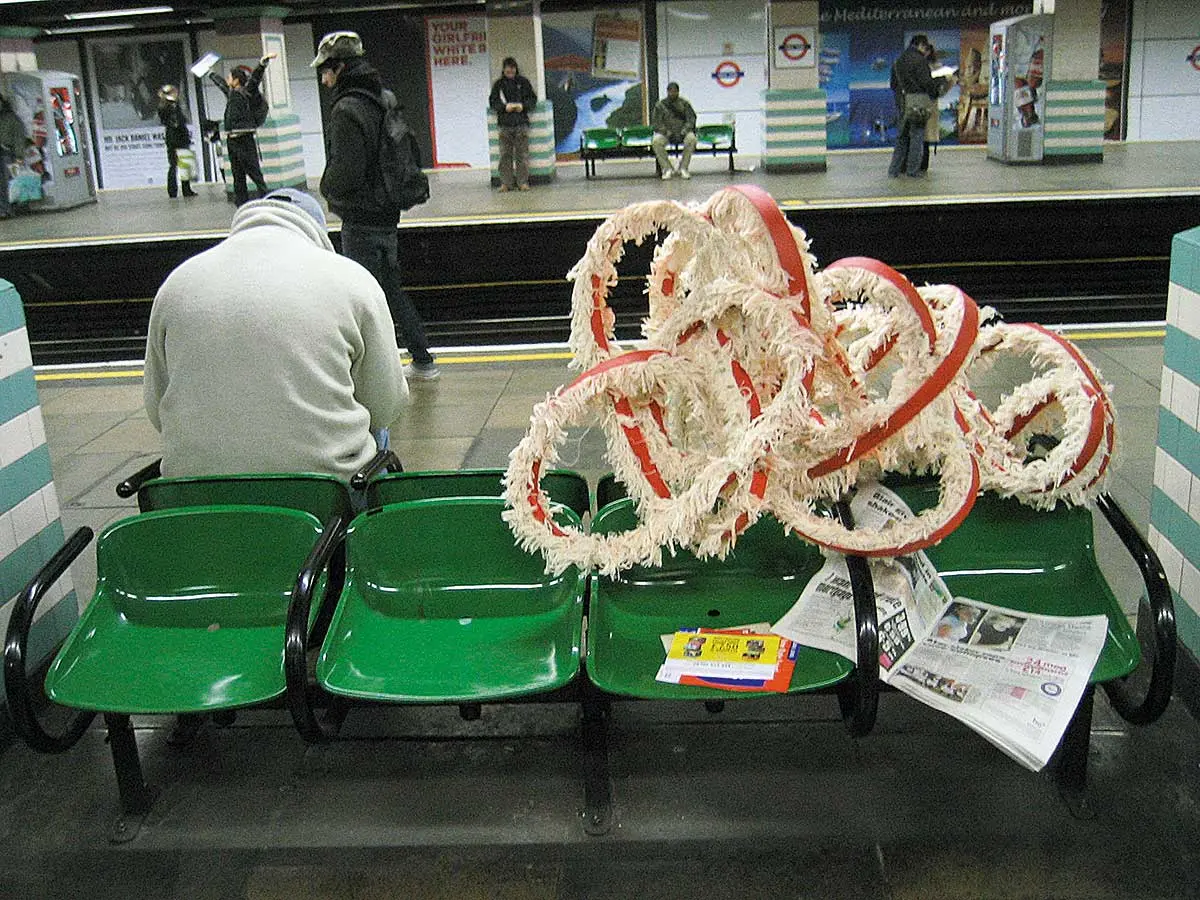
Another piece made in England was Sculpting the Canvas (2006), a series of abstract objects placed in everyday public and commercial areas, creating visual interferences with pedestrians and with the urban scene. The work explores the relationship between painting and sculpture, and how aesthetic language becomes easily a mimetic attribute of the social space. Through snapshots taken in immediate response to the actions, the artist documented the objects’ mimetic responses in relation to surrounding shapes and gestures of pedestrians. This playful interaction with the urban environment also draws on how images circulate our field of vision and how we optically frame them in our perceptions of reality.
Cornejo’s interest in the anti-monument can be perceived through his Menhirs (2001 and 2008), two distinct brick sculptures made to look like organic monoliths. The work challenges the notion of linear progression, attempting to bridge past, present, and future as an atemporal experience. The prehistoric menhirs, however, have a dubious history. Exemplified by the stones of Carnac in Brittany, the Cham des Bondons in France and others found in Asia and Africa, they have been the topic of much speculation by historians and archaeologists, showing that history is more a convention of ideas and facts, rather than something to be looked at as absolute truth. Cornejo’s Menhirs shares this contradictory randomness of historical data but chooses to emphasize the site-specificity of each piece, each measured by the distinct scale and proportion, and each uniquely connected to the architectural and cultural landscape that surrounds it. For Cornejo, the use of bricks evokes the confluences and contradictions between the history of the brick and its symbolic meaning. The brick has a relatively timeless connection with various cultures and societies, having been used in ancient societies in Mesopotamia, in ancient Egypt, Greece, Rome, as well as in Maya and Inca settlements. The brick also has an important role in the industrialization of Western architecture. In Peru, the brick is the main material used in construction, a business that employs male workers from the poor and working classes. Its main element, clay, has been used as a primary material for early organizational practices and technologies, from pottery to plumbing, as well as the most accessible material linking arts and crafts. His Menhir from 2001 is a permanent public sculpture in Montemor o Novo in Portugal. The work interplays with nearby architectural sites, such as the group of monoliths known as the Cromlech of the Almendres, in Portugal, and incorporates architectural materials used in the region of Alentejo, where Montemor o Novo is located, such as bricks hand-made by artisans. The work also has a tangential relationship with the Chullpas, pre-Incan tombs erected in Peru and Bolivia. Cornejo’s Menhir from 2008 is a permanent sculpture at the APEC Naru Park in Busan, in South Korea, and it stands tall and timeless in contrast to the modernist urban setting of surrounding skyscrapers.
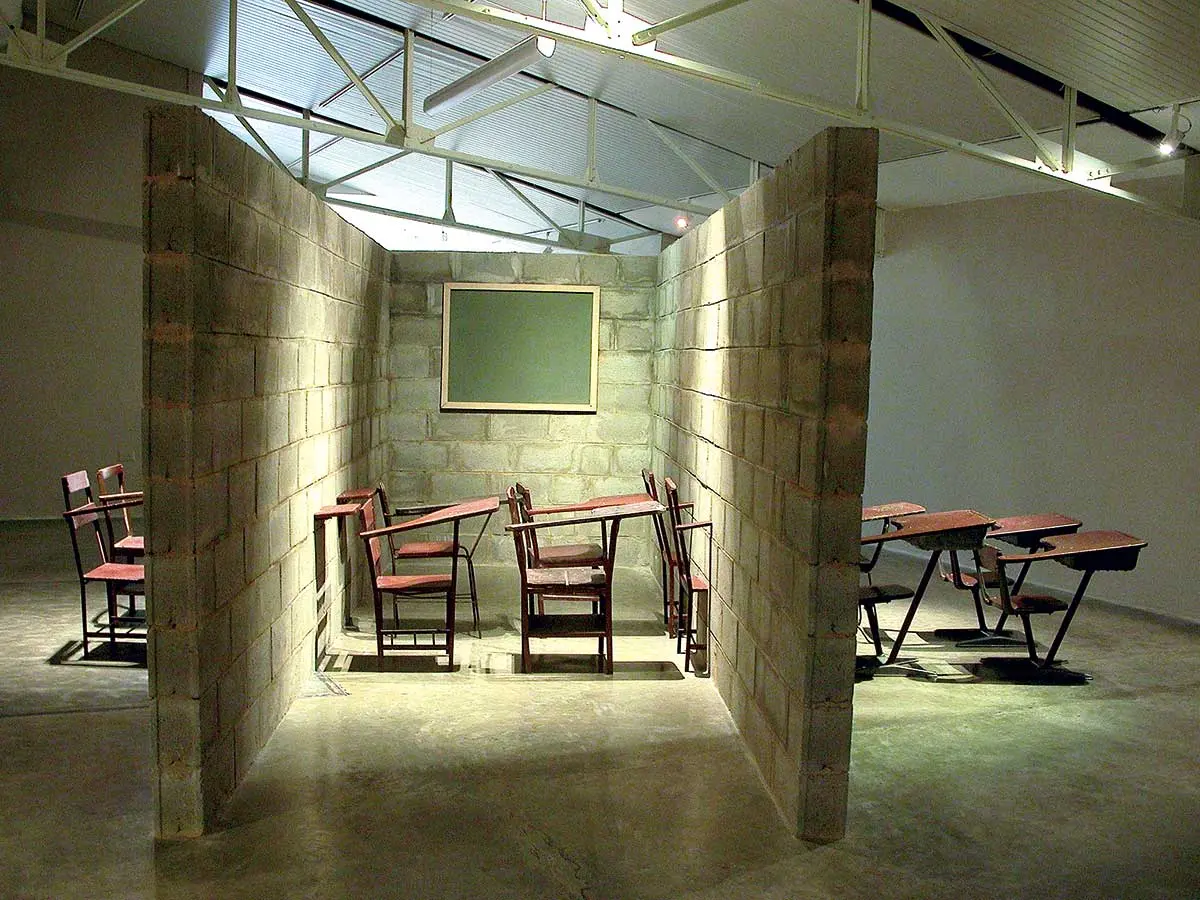
The Same Old Story (Siempre la Misma Historia), from 2004, is an installation comprised of 14 classroom desks in a u-shaped classroom built of cinder blocks, with the desks lined up across the walls. The position of the desks alludes to the lack of communication imposed by the sterile classroom architecture. The work also addresses the problems of educational institutions in Latin America, highlighting the incompatibilities of governmental policies with the real needs of the population. The architecture represents the politics of the state, while the desks represent the people. In Peru, as in many other Latin American countries, many public schools are limited to an institutionalized style of architecture, imposing a shining façade that privileges appearance over real resources and planning.
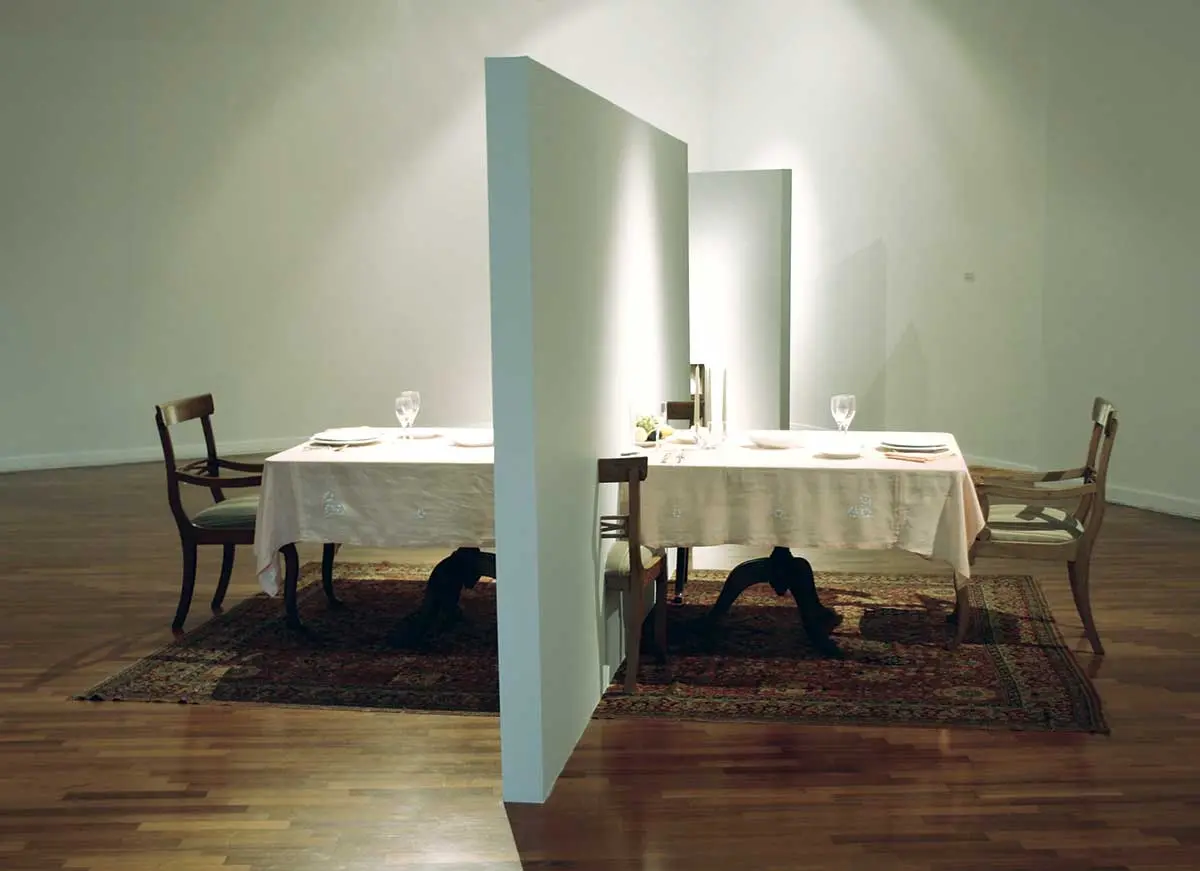
In A Private Matter (2005), Cornejo installed four sets of furniture placed in distinct angles of the gallery. The furniture, which includes a Luis XV sofa, are objects and memorabilia from the artist’s childhood home in Peru, except for a hospital bed, borrowed from the hospital where his father died. The four pieces of furniture are each placed within a 60 degree-cone of vision, limiting the visual field to the intended object or object relations. This prioritizing of sight follows a sequential priority that comments on social behavior determined by spatial conditions and divisions. The sequence begins with the dining table, moving to the sofa, known in Spanish as ‘conversador’ (conversation chair), then to the bar, and finally to the bed. The work also highlights the importance of scenographic architecture as a stage where one’s field of vision is prioritized by an ideal image, and anything outside of this field becomes a blind spot. This references how structural divisions in architecture foster strict and alienated societal norms, limiting the dynamics of communication and social engagement in space.
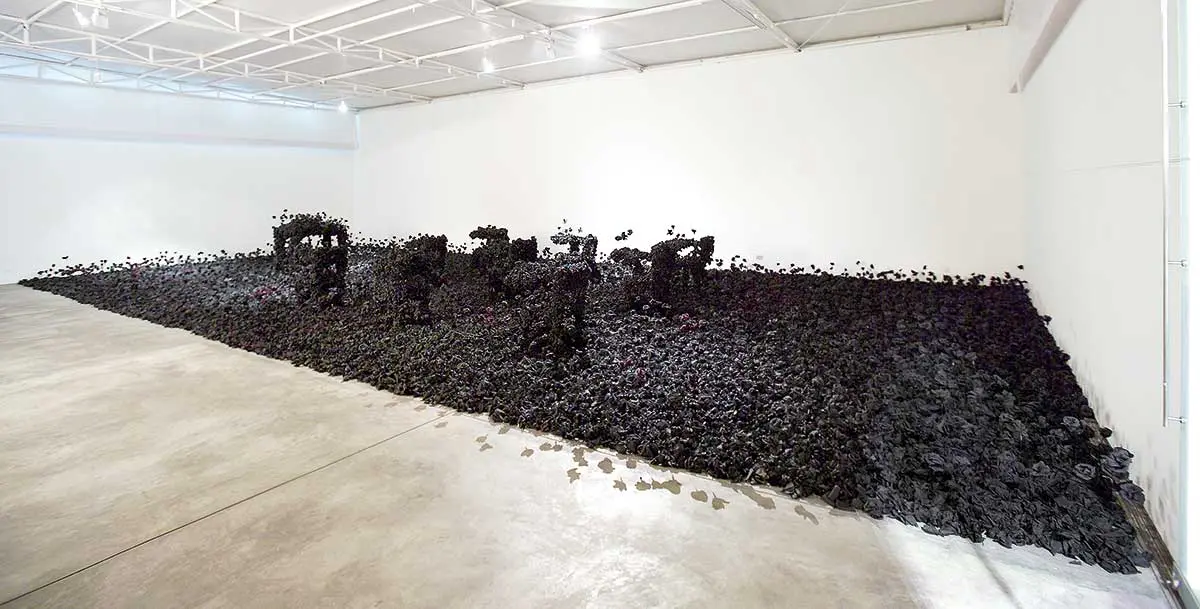
La Cantuta (2005) is an installation made with 60,000 flowers of black crepe and classroom desks from the national universities in Lima. The idea was a response to the kidnapping and killing of nine students and a teacher by members of the Peruvian army in 1992. The victims were from the Universidad Nacional de Educación Enrique Guzmán y Valle, in the outskirts of Lima, known as La Cantuta. Their bodies were found six months later in the outskirts of Lima, buried in clandestine graves. They were accused without trial of being terrorists. Inspired by the local workshops inside the university that make artificial flowers for weddings, the artist gathered more than 1000 volunteers, including students, parents, teachers, and victims’ relatives, who made the 60,000 paper flowers for the piece. The number 60,000 references the estimated number of people who were killed or disappeared by government squads and Maoist insurgents in Peru in the 1980s and ‘90s. Cornejo’s installation became a garden of black flowers and classroom desks. The artist also hired a gardener to place the flowers at Galeria Artco in Lima.
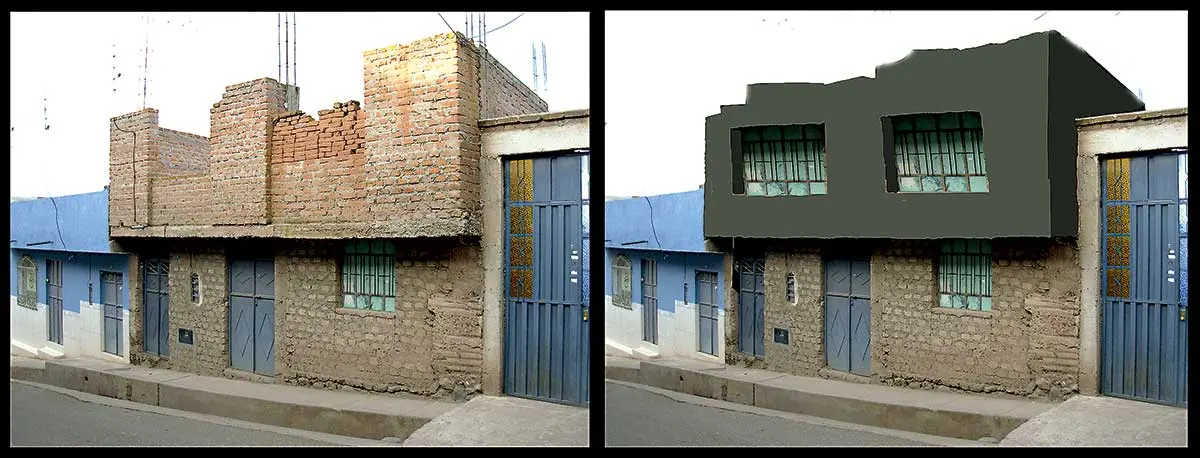
Some of Cornejo’s later works are actions that embody architecture. For his Puno Museum of Contemporary Art (2007-present), Cornejo attempts to improve existing museum conditions by establishing a new idea of museum amongst the members of the working-class community of Puno. Puno is located in the Southeastern part of Peru at the edge of Lake Titicaca, where the Aymara and Inca civilizations originated. With several archaeological sites and folkloric festivities, the area is a fertile ground for tourism. Thus most of its population does not economically benefit from tourism. Cornejo’s project began when he visited Puno in 2007. Noticing that 70% of the houses in low-income areas in Puno were unfinished, the artist proposed to finish one room in each of the selected houses, turning these new rooms into small galleries. In his vision, this would boost the local tourist market, while melding it with the local production of art and culture. Working with non-profit organizations and universities locally and abroad, the project would attract tourism to an area that is excluded from the touristic market. Then, a museum board would train community members to oversee all of its needs, from selling tickets to educating and employing local residents. Cornejo’s idea is to foster cultural access by shifting the players and by bringing art to the lower classes. This would also bring financial, educational, social, cultural, and political benefits to the local community. The dearth of contemporary art museums in Peru represents another important problem in Latin America: that of the importation of culture. In recent decades, the role of contemporary art in many Latin American countries has been to challenge elitist museums and government projects that use local resources to export a historicized and exotic concept of their culture, while importing foreign culture for local consumption. This leads to a lack of resources for local cultural venues, ending in aborted or forever pending projects. The Museum of Contemporary Art in Lima, for example, has taken more than 40 years to be completed, partially because of the strategy of copying ideal models often interrupted by changes in policies, internal political rivalries, and lack of resources. According to Cornejo, the modernist architectural model of most museums reinforces distinctions of power in society, becoming hegemonic instruments that perpetuate ideas of power, discrimination, and exclusion. Some museums in Peru are challenging this old model. El Museo de Arte de Lima (MALI) for example, initially known for its exhibitions of neoclassical and regionalist art, in recent years has adopted a more transcultural approach and is very active in exhibiting contemporary art. For Cornejo, however, the issue is more than just opening up the old modernist model, but in fact, changing it altogether, by bringing the museum to the streets, and to low-income communities, something continuously attempted by contemporary artists since the 1960s. To create contemporary art in the houses of low-income residents entails a bigger plan than just more inclusive methods of showing art: it attempts to demolish the old ideals of art as created by the institution, bringing new realities to art making, art shows, the value of art, and expanding the dialogue of the arts, and something key to the museum, according to Cornejo is fostering alternative economic models for community development.
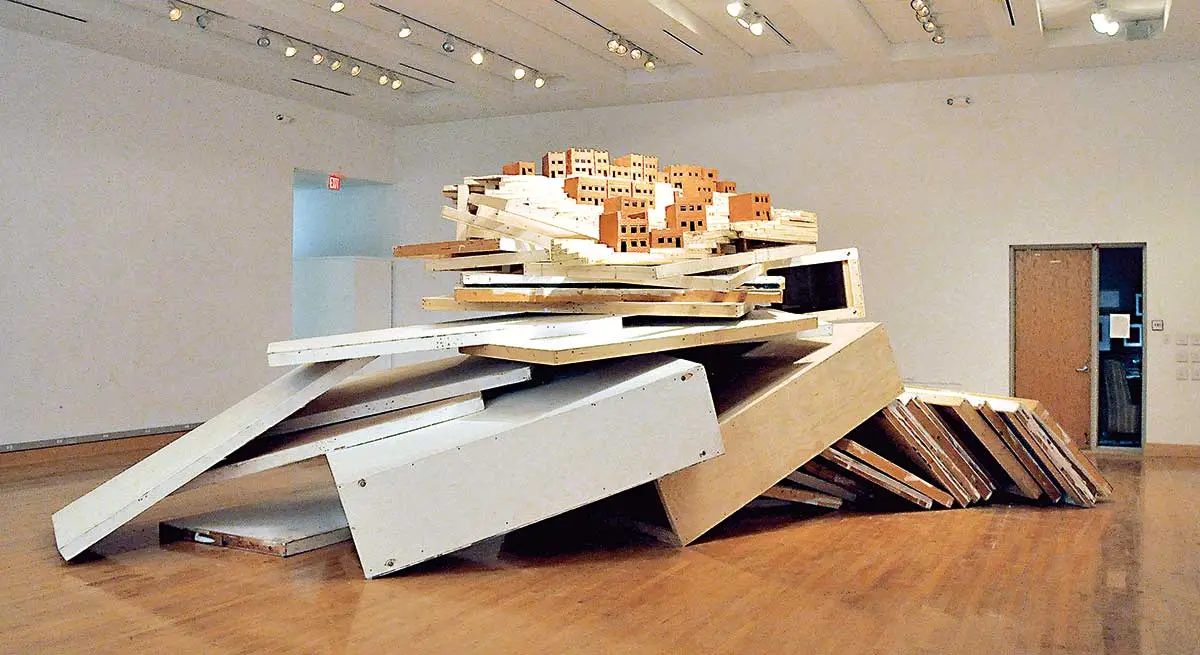
Museumorphosis Part 1 (2008) and Museumorphosis Part II (2008) are parts of a twofold installation in dialogue with the Puno Museum of Contemporary Art. The work comprises numerous miniature brick houses on a circular soil ground and a photograph of the Guggenheim Museum in New York. The photograph serves as a critical reminder of the practice of museum exportation, a corporate concept that equates art with other franchising businesses in developing countries. A large drawing of the façade of the Guggenheim Museum is placed as ground under the miniature houses, reinserting it inside the houses and in other parts of the fictional community, which can be seen through a mirror on the ceiling. This reused of pre-existing artistic elements in new ensemble comments on both the politics and the economics of space, appropriating leftover pieces of the Guggenheim façade as a way to reinsert its landmark value. In 2009, this work transformed into other versions, including Museumorphosis Part III and Museumorphosis Part IV. In Guachimali (2010) the artist revisits the museum idea by appropriating elements from the Puno Museum of Contemporary Art into a house in transition before becoming a hotel. Cornejo renovated the room where the security guard was staying, providing a closet, since his clothes were hung on nails on the wall, a bookshelf, and painted the room with the color chosen by the inhabitant of the space. In exchange, he gave Cornejo permission to build a mezzanine for an exhibition room. The final project resulted in an exhibition in this newly built gallery, with photographs of 15 guard stations found in the nearby area, and a sculpture of the station as a building. The show was part of a larger exhibition, with 15 other works by local artists shown in the other rooms of the house.
Cornejo sees the direction of his work as a system that redefines social relations through decentralized, intuitive, and creative exchanges. The fact that he has always resisted identifying as either an architect or an artist shows that his approach is somewhat in-between, neither purely object-oriented nor simply as a conceptual appropriation of the social environment, but instead, as an attempt to replace institutional models with aesthetics of resistance.
DENISE CARVALHO
Assistant Professor at The Institute for Doctoral Studies in the Visual Arts, Portland, Maine.