
“Light, more light”, demanded Goethe as he lay dying. From the biographical circumstance in extremis of an Enlightenment representation of humanity to the rarefied contextualization of the present epoch, the outline that emerges, not without turbulence, allows to better understand how that Light of the World (a literary reference to Halldór Laxness and the title for the 22nd Curitiba Biennial) inscribed interrogations of aesthetic order and also others in a broader spectrum (socio-ontological) pertaining not only to Brazil but to the international context as well. When the general curatorship (Teixeira Coelho) announced, at the exhibition’s public opening and for all the authorities in attendance, the need for light as clarity, discernment, revelation, a necessary counterpoint to the shadows and plagues of the era as they loom over the current historical scene, it drew a clear picture of the conceptual starting point, art’s obligation to “respond”—read also, to illuminate and enlighten—with its linguistic weapons epochal tableaux more peremptory and wretched than is revealed (or disguised) by the systems now factually in fashion (politics of communication/communication of politics; spectacularization of culture/banalization of art). Light, then, as resistance, battlefield, "light against the light", as an enlightened verse by Paul Leminski had it, brought to bear here also in one of the Biennial’s most significant exhibitions in order to illuminate other things.
Light as metaphorical projection, symbolic reality, aery, and spiritual sign, but also as a specific territory, as matter—and immateriality—fills artistic media. Not in vain, besides the light found as a motif and presence in historic-genre works (pictorial iconography, above all), over the course of the Twentieth Century it conquered its autonomy, a different fate, or, in other words, became matter-language. And a perceptive phenomenology that reaches us today, extending into the pathways followed by works that insinuate or demand a degree of interactivity, not always with good results, let it be said. Light as mystery and strangeness gives light-based art a semantic levity—a nakedness, Teixeira points out—that relieves itself of sociology, or of narrative’s corollary, another not-just-verbal fashion. Having light as its focus and matrix, this Biennial feeds into two possible fronts: works and poetics solipsistically focused on their spiritual positivity or visual self-centeredness, self-referential, with expansive representational freedom; and others that can offer certain negativity, a shadow, in sum, a contrast with the associated purity of light that embraces the terrible. The Biennial does not bring forth as much that imbalance of forces; it tilts more towards the former than the latter, which is indeed an option, despite the chiaroscuros of the world.
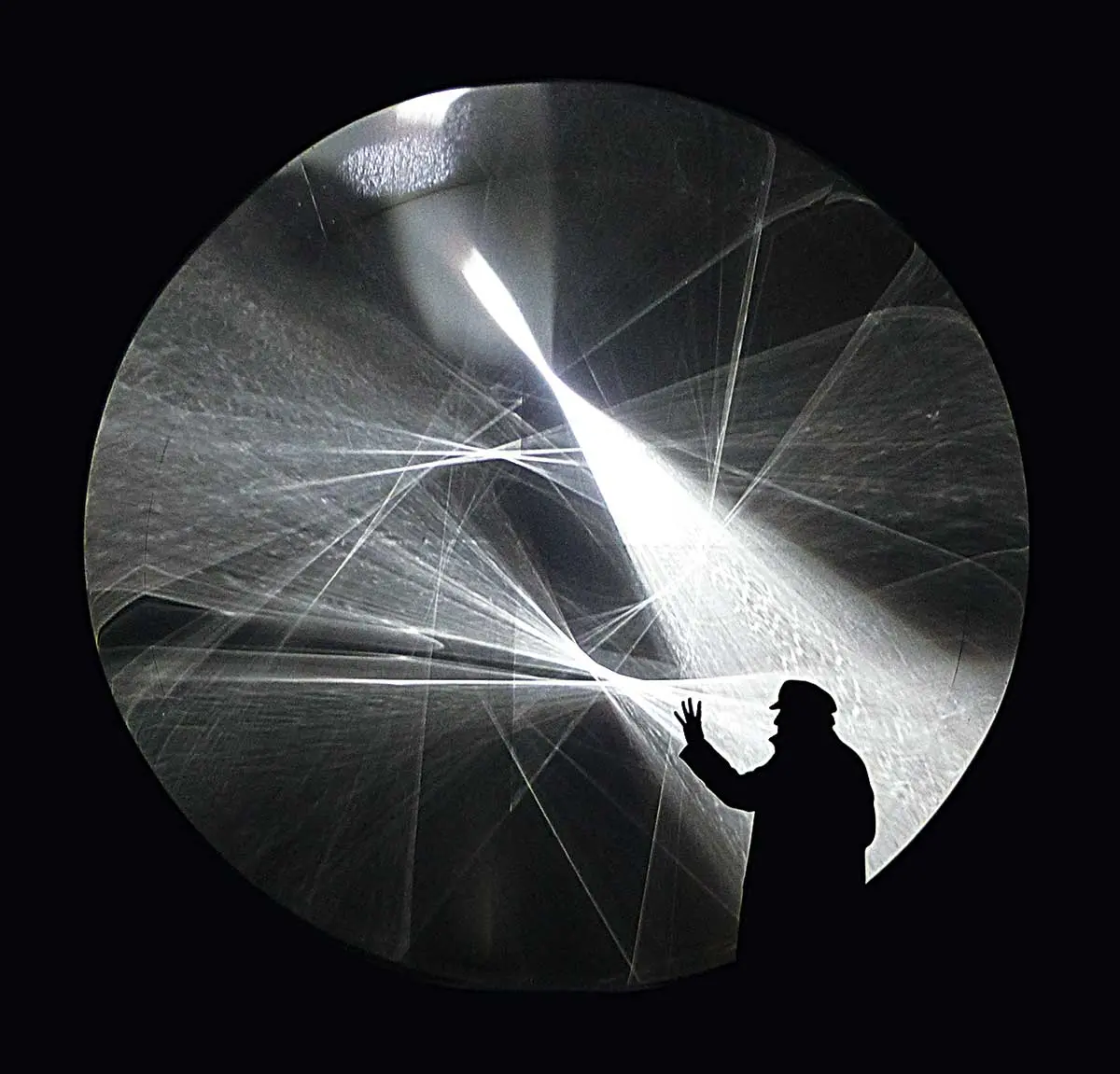
In that sense, works that de-materialize representation win in quantitative terms. And it is no doubt significant that the artist’s honored is Julio Le Parc, with a highlighted presence at the MON (Museu Oscar Niemeyer), featuring paradigmatic kinetic-art masterworks that retain their emblematic adventurousness in terms of perception, visuality, and mirage-like qualities, although, to be entirely truthful, the original fascination is already part of a contemporary culture where interactivity seems more a consumer expectation than a sensorial experience (public situations inclined for self-portraiture with works of art are a cost of history). In spite of all that, Le Parc’s works retain their luminous being intact as an independent cipher and reference, as an immense circle underscoring a spirituality-worthy visual: Continuel Lumière Cylindre, 1964-2014, is an immense kaleidoscope offering visions that border on revelation.
Light and motion from an Argentine master in order to expand the visual metamorphoses, something that also encompasses our own passage and presence, and which is explored in the insinuating works of Yumi Kori, Jeongmoon Choi, or Helga Griffiths. These proposals have darkness as a structural component: in the case of the Japanese artist-architect, a shadow of light functions as an antidote to our excessive illumination, her visual ecology erodes space—architecture—and leaves behind the sensation of being suspended in a blue-tinged semi-darkness. In the Korean artist, an immense geometric network outlines the space using cotton threads and ultraviolet light, creating an appealing and strange environment of visual perplexity, the representation of which seems to be a deception to be touched and entered; it is a luminous penetrable. The German artist builds a personal portrait—her visual DNA—in a large-scale installation (Identity analysis, 2003), where the use of fluorescein (in a large number of test tubes) makes mirrors shine with ultraviolet light, a highly contemporary imbrication of art, science, technology, and nature. In fact, the triad art-science-technology and the dyad virtuality-spirituality permeate this biennial, with spaces being introjected and exteriorized: this is the case with the work of Carlo Bernardini, with its geometry projected onto the MON’s façade to re-read Niemeyer’s architecture (it being the case that inside MUSA we encounter more captivating works in their points-tracings).
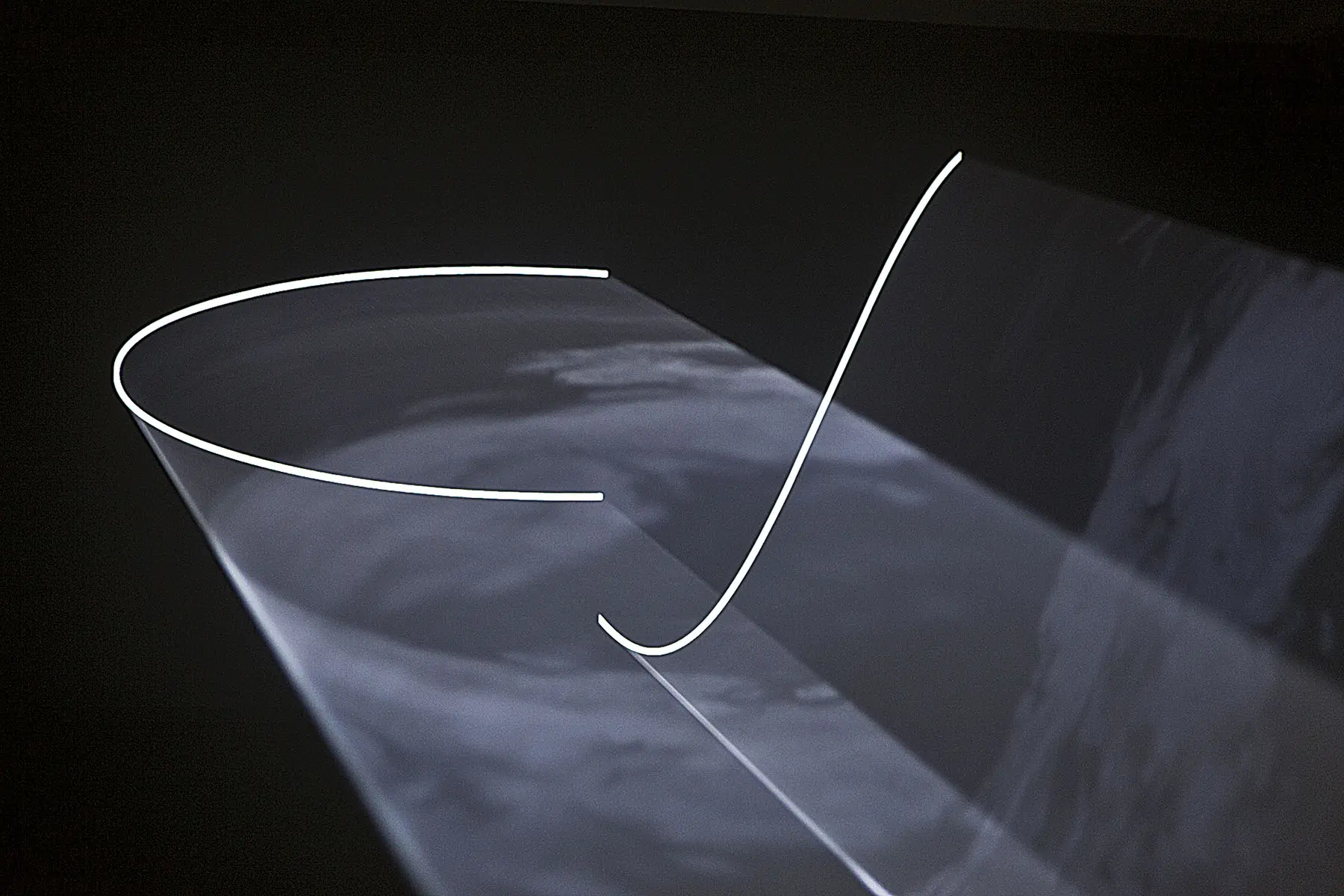
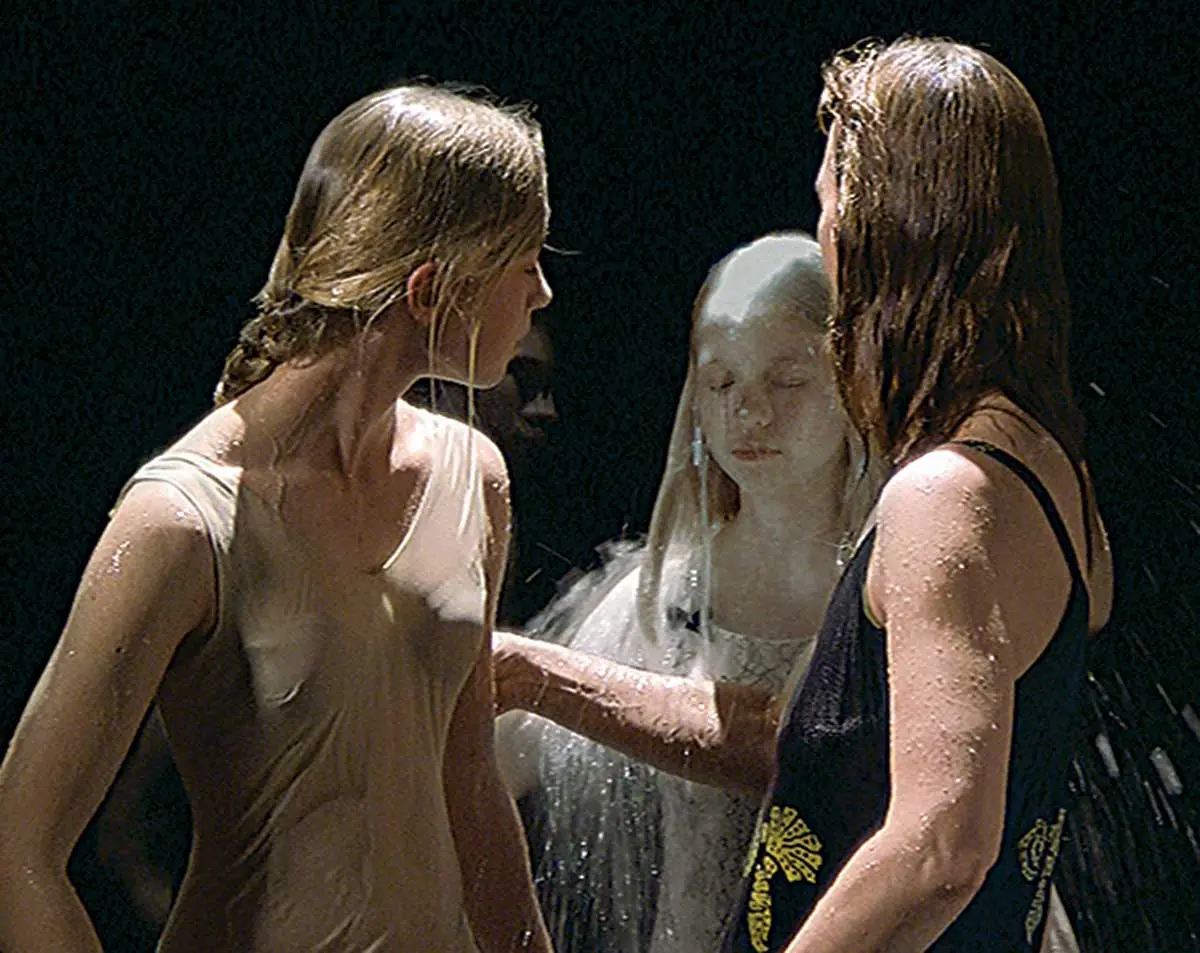
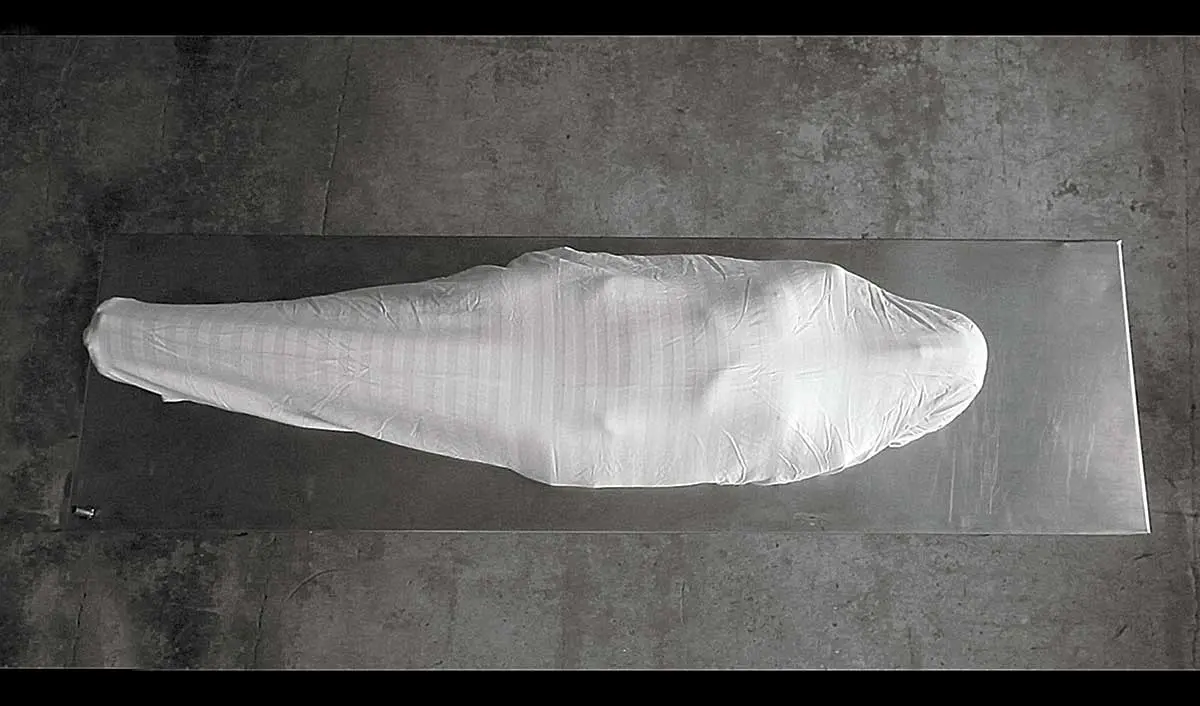
Exhibited at the latter museum is Sem título (Fondly to Helen), from 1976; Dan Flavin’s reclined neon tube, with its minimalist staging, resembles an icon, one of the biennial matrices. Its luminous incandescence in different colors (blue, yellow, and green), as ascetic as it is pugnacious, functions as a visual magnet, always more interested in spatial than in temporal magnetism (here location is more important than motion, in the same way as less is more valuable than more). Doug Wheeler, with different use of neon and associated elements (transformer, acrylic lacquer, transformer), inverts the situation, or, better yet, articulates a field of light that resonates with sublimity, and where minimalism is expanded into an environment, an experience of abstract sensations, ideas (emptiness and plenitude reaching for each other). Somewhat similar is one of the biennial’s key works, Anthony McCall’s 2006 You and I (Horizontal), exhibited at the BRDE. It is a kind of film, drawing, sculpture, and installation were light, blurred (like visualized dust) and projected, acquires materiality and motion, a permeability that asks to be embodied. The continued drawing’s demand for slowness, “the slow revelation of structure” (in the British artist’s own words), is what materializes our perceptual relationship. The same occurs with Three women, Bill Viola’s 2008 video, which, without anything but contemplativeness intervening, offers itself up as a captivating mystical piece filled with classical references (and prefers not to call attention to its high-tech component): its transfiguration, rooted in Christianity and mediated by the water-light visual equation, takes up the transcendence of encountering a portal, a passage in the life-death cycle. Well-suited to the context in which it is exhibited, the Metropolitan Cathedral, this religious exploration is a landmark for the Biennial. In turn, Karla Solano, a Puerto Rican artist, presents another metaphysics of light via a video ritual of the relinquishing of life and aspiration to the eternal light, as present in some faiths: a nude that is a spiritual boundary, at Museu Alfredo Andersen.
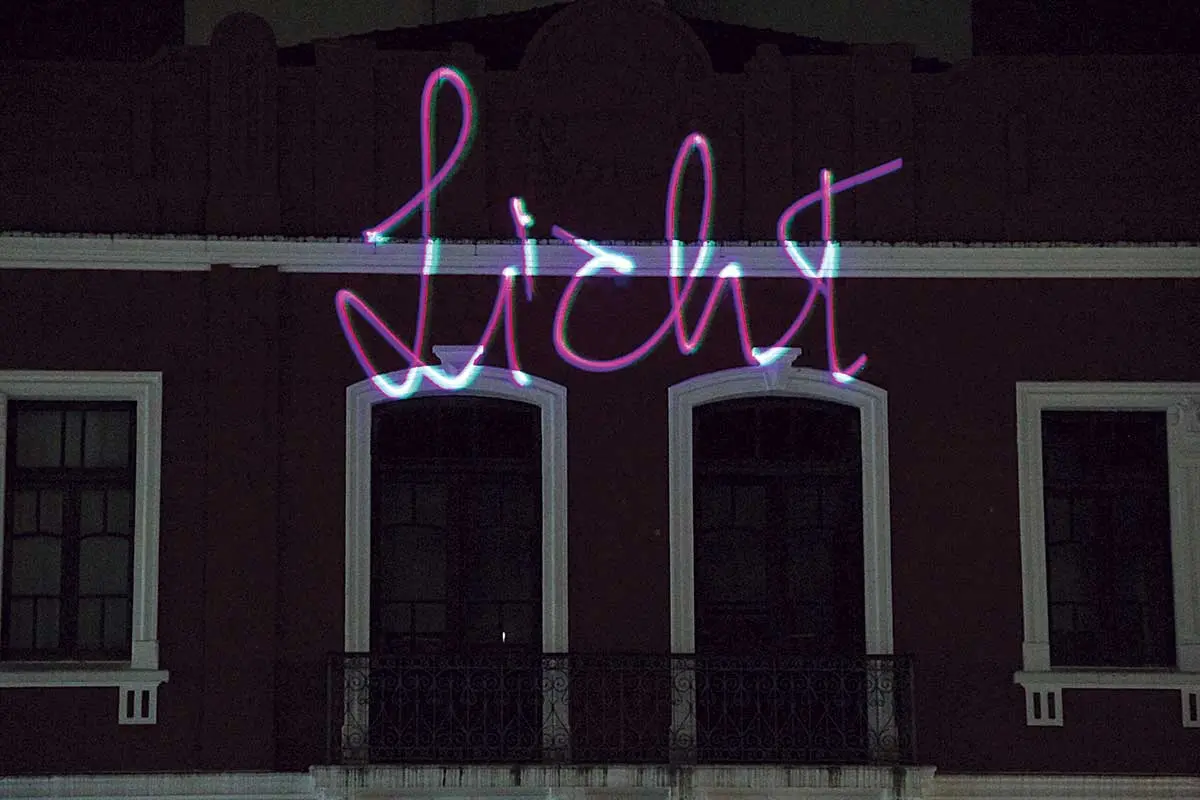
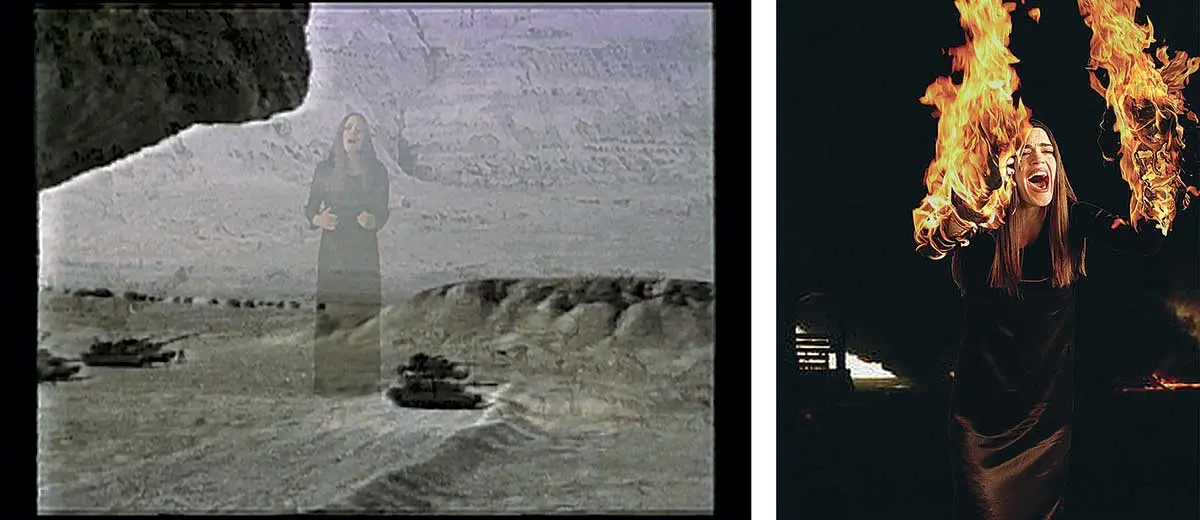
In a different aesthetic range, also inside the MON space, here are two contrasting counterparts: Eliane Prolik’s Red Ahead, from 2015 de Eliane Prolik, an installative red abyss using emergency lights and video possessing radiance and tension, urban and corporeal symbolism it is perceptual, physical immersion; and Shirin Neshat’s Issar (2003), a light-based video of destruction, a visual allegory where the sacrifice of war is invested with negative dimensions, the light of fire and terror. In fact, although the bulk of the biennial tilted above all towards light-based works, an undeniable reality but in no way a determinant or complete picture, the aura of the epoch is translated not only by those works that contain the lightest in their formal vocabulary; metaphorical meanings can also flow from other formal, syntactical, linguistic possibilities (the correlate of light doesn’t only mean illumination or revelation, and some of the works lacked precisely that spiritual requirement, that leap). This happened in other exhibition contexts, such as the Museu de Arte Paranaense, MuM (Municipal Museum), MUSA, FIEP, and around the city (be it in interventions, performances, or the contributions of galleries and alternative spaces, which made it possible to showcase a younger and more local production—something that in fact should be expanded, along with the provision of general information, in order to make the biennial more porous to the city).
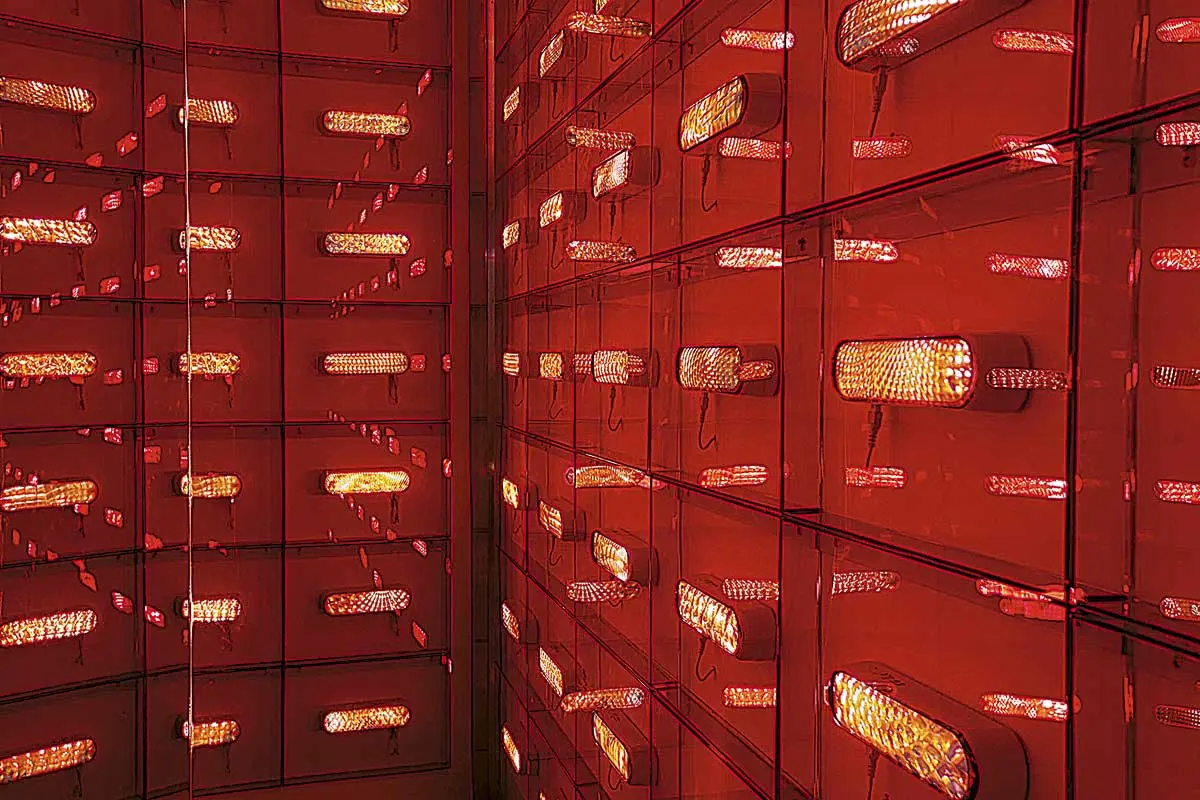
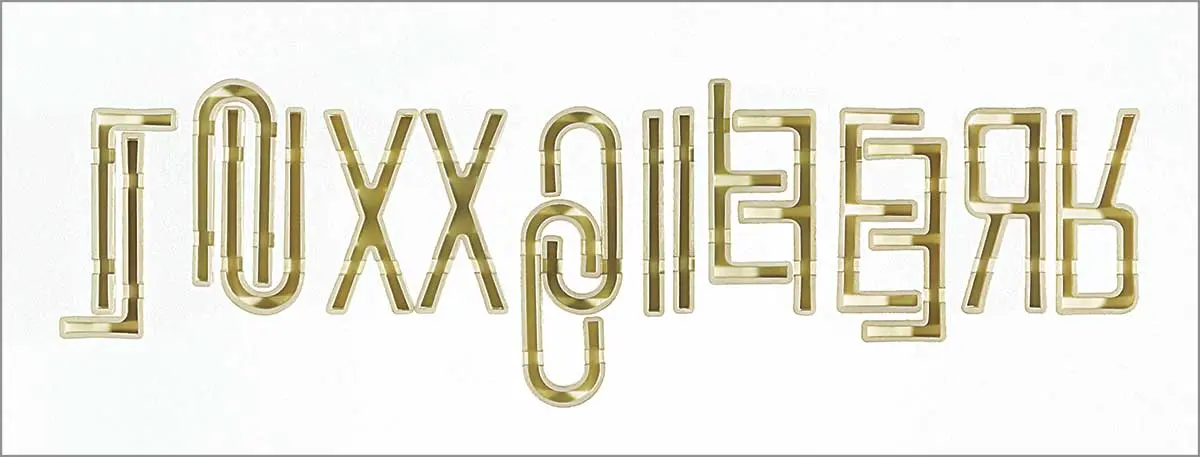
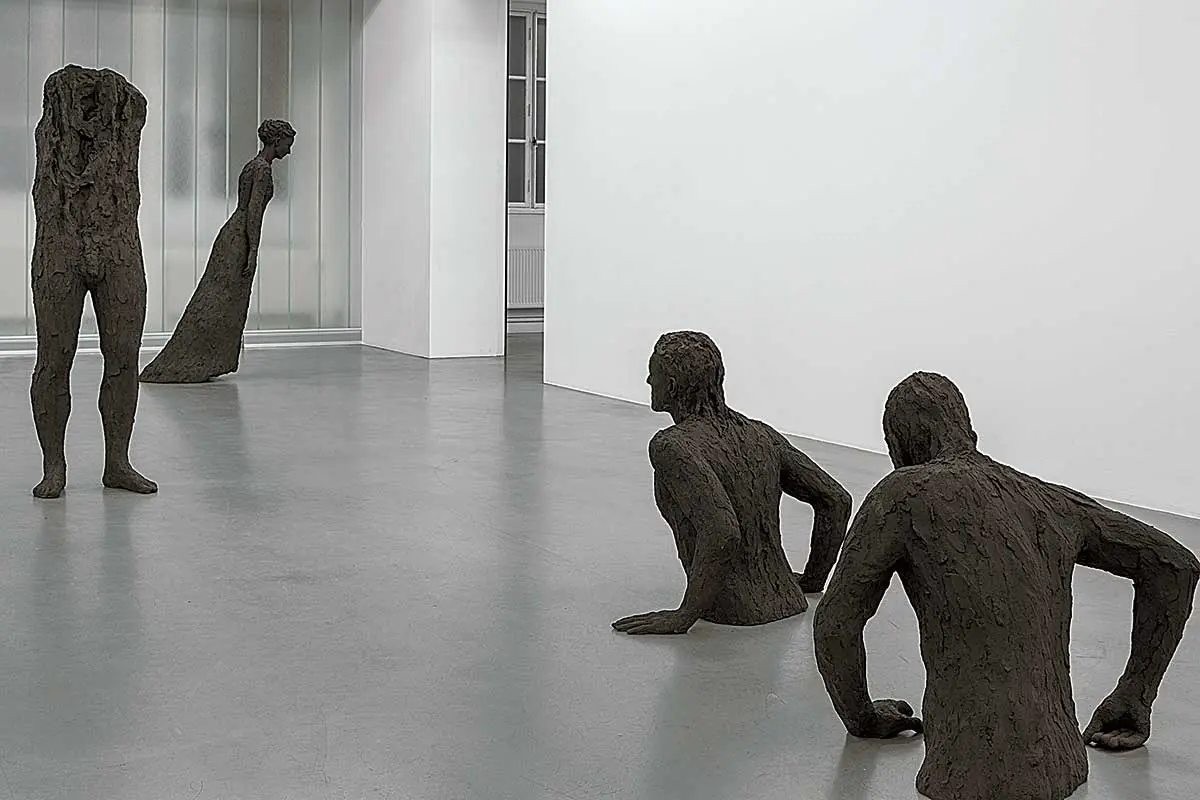
Light beyond the consecrated spaces of art, as is the case with Vagaluz, by Regina Silveira, a nighttime urban stroll with the multi-language calligraphy of the word “light” inserted in the streets, on the pages of buildings. The artist presents the same idea at the MON, with Limiar as a spatial fissure that allows us to glimpse the word “light” in its Babelian form, but not in its reality. Also in the general domain of writing, and now inside MUSA, the formerly obscure artist Odires Mlàszho puts his finger where light hurts with his typography of the word Luxcifer (2015), a visual poem with opposing neon’s that explores the hidden side of lights, its contradictions, and paradoxes, the shadows of the fallen angel, ever so close to our earthly dwelling. Here, art—always hampered in its naming task—establishes an imagetic perplexity. As in the unequal space (FIEP) that houses the work of Iván Navarro (curated by Leonor Amarante), where (socio-political) gaps and silences rival light-effect sensationalism, subvert it, like a black box guarding a dark history (with Pinochet at the back). To that underworld-light region belongs Ghosts (2014), by Lars Nilsson, an installation of incomplete anthropomorphic sculptures, made in a kind of plastic that resembles black clay, representing beings deprived of light, deeply contemporary zombies.
A somewhat confrontational situation is made explicit in Light vs. Light, curated by Adriana Almada, which follows paths more heavily loaded with worldliness, with grounding connections, where light is more part of a journey, a not-so-radiant itinerary that is nevertheless full of life. This explains the presence of works with a different experience of light, almost threatening or latent with contaminated or subverted life, by Alejandra Mastro, Ramón Esono Ebalé, Manuel Chavajay, Constance Pinheiro, or Marcelo Moscheta (respectively: futile rituals of photo-negative celebration; an illuminated, labyrinthine drawing that plays with distance; a video about life and death submerged in Lake Atitlán, Guatemala; a cloud-ship of unexpected terror in a public beach; and carbon images of ghostly trees in an already absent forest).
At MuM, meanwhile, there is a unique exhibition: What is That Light? (curated by Daniel Rangel), its title borrowed from a song by Raul Seixas about the light that comes from the sky. In the relationship between art and spirit, light is mediation and energy between human beings and the divine. And that “invisible light” explains the division of the show into three modules that mean “image”: Eykons, Magus, and Reflexum. Anchored in religiosity, Eykons is more rhetorical and redundant, despite stellar presences like Mario Cravo Neto, Rubem Valentim, Samico, Adriana Varejão, Ayrson Heráclito, or Pablo Lobato, for instance. Much more interesting is Magus, freer in spirit and devoid of any religious determinism of the sacred (also, fewer works and more poetic ones, all indispensable: from Xul Solar to Tunga, from Walter Smetak to Bené Fonteles, from Bispo do Rosário to Ricardo Carioba). O Grivo’s sound imagination; and Antoni Miralda’s always hybrid proposal of signs and flavors.
Inasmuch as art always demands a different light, it perhaps reconstructs the light of a lost unity. But it is not only the art realm that presents such a demand (2015 is even the Year of Light, per UNESCO). As an event, this Curitiba Biennial (and this is the Brazil’s City of Light) situates itself in the dilemma of its own circumstance: what it means to illustrate, to thicken the light of art in contrast with other luminotechniques—and not Illuminations, as Benjamin would have it—that are certainly banaler, instrumentalizing, or simply reifying. As a creative, spiritual force, art always has the light of the firefly—meaning and light already explored by Georges Didi-Huberman—and it projects an intermittent light not intended to obfuscate, but its opposite.
ADOLFO MONTEJO NAVAS
Poet, art critic, and independent curator.