
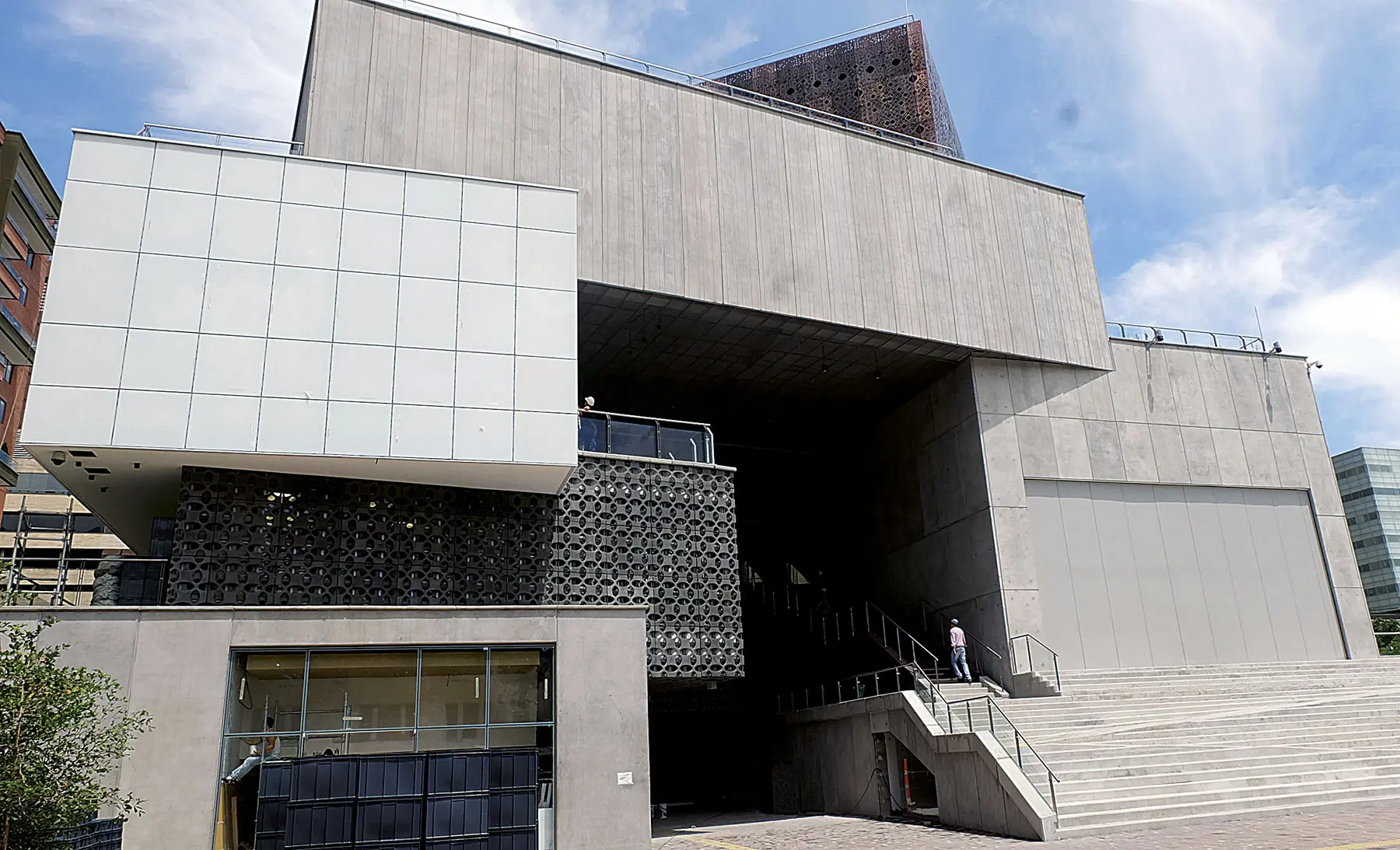
With nearly 10,000 square meters and a history harking back to 1978, when it was created on paper, the Museum of Modern Art Medellín has established itself as one of Latin America’s cultural institutions with the greatest projection and growth. The second building in the museum complex, located since 2009 in the Ciudad del Río sector, right at the center of Medellin’s metropolitan area (after more than 30 years in Carlos Restrepo, a working-class area close to the city’s public universities, the only ones offering Art programs at the time), was inaugurated last September 2nd. At the Carlos Restrepo location, the museum hosted events like the now-legendary Non-Objectual and Urban Art Colloquium (1981), the Arturo and Rebeca Ravinovich Salons (1981-2005), and the donation of Antioquia painter Débora Arango’s legacy to the Colombian nation (1987), with more than 230 works of art, between oils and watercolors, that are today a key patrimony in the country.
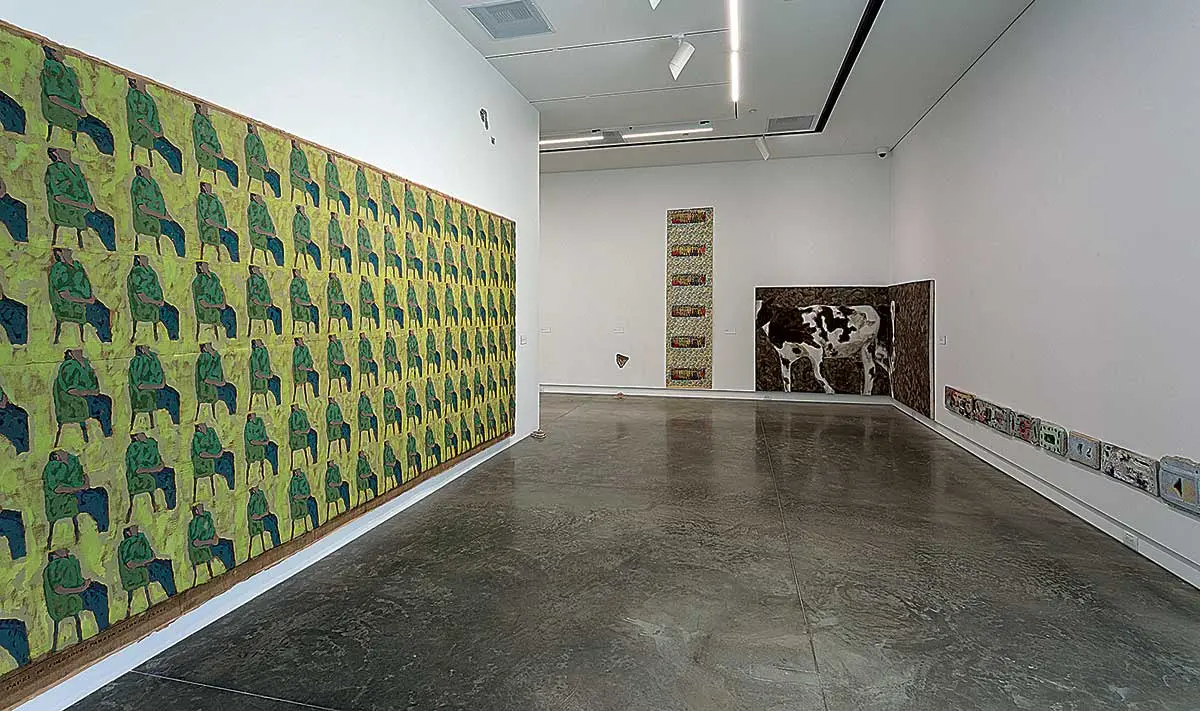
Those who knew the museum during the last two decades of the Twentieth Century could reasonably argue that the MAMM is today no longer what it once was and that it is not at all what they visited back then. The impression is not limited to physical space. The museum went from a modest but agile container, greatly empathetic with its urban and social surroundings, to imposing and solemn, even dramatic facilities, very professional in all respects—which has resulted in partnerships with international institutions and galleries that made it possible for local audiences to witness exhibitions by such artists as Sophie Calle, Carlos Garaicoa, and William Kentridge, as well as the production of national and regional artists with the highest degrees of quality.
From its inception, the Museum of Modern Art Medellín skirted the normative tenets of the museum institution. A well-aimed combination of fronts, among them disciplines such as architecture, film, and design, along with new art expressions such as video, installation, and body art, outlined a way of being and doing that validated the MAMM’s unique identity. Over time, and as is natural in this kind of exercise, the institution’s warehousing capacity began to be overwhelmed; there were several attempts to widen or expand it, always associated with the addition of square meters to its architectural program.
It is a common occurrence for challenges to the museum institution to be connected to the transformation of its spatial conditions: expanding its capacity, adding square (and, of late, cubic) meters to accommodate the aesthetic experience of contemporary art, on occasion as though the very meaning of cultural offerings resided in size. To this one should add that it is not a mystery for anyone that a large organism consumes more resources than a smaller one; thus, the key to success after expansion in a cultural entity is, for sure, the ability to match the addition of square area to the financing of their programs, in a directly proportional relationship to what exists and, in the case of the MAMM, generating new resources to strengthen the collection.
The expansion, as the institution calls the second phase at Ciudad del Río, is a building of notable complexity in its volumetric proposal. Five levels and an underground parking area complement the improved Talleres Robledo, an industrial one-story construction where one of the city’s iron-and-steel concerns operated since 1939 and which per a recent urban-reordering plan was to be given to the community to house a cultural initiative by its proprietors, who at the time covered the adaptation costs.
In contrast, the expansion refers to conceptually and symbolically to the spontaneous growth of housing developments on Aburrá Valley hills, something known to urban-studies specialists as “spontaneous architecture” or “architecture without architects.” The overlapping of blocks as an accumulation of containers and an exterior circulation plan that emphasizes the pubic disposition of the institution were used by the architectural studio Control G (Medellin) and 51:1 (Lima) to provide the MAMM with solutions to its most pressing needs: greater space for its reserves, galleries for the permanent exhibition of its collections, space for its educational projects, and an auditorium for film and living arts, the expressions that gained the MAMM its initial renown.
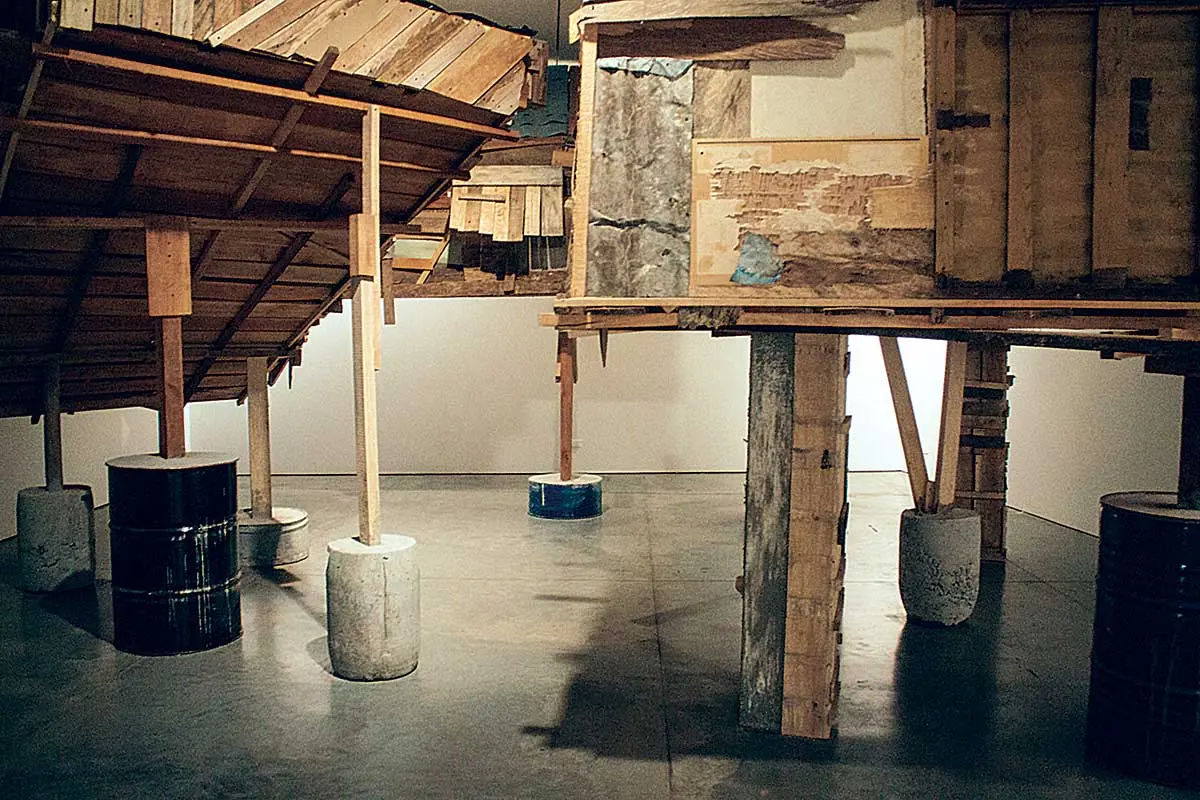
With six formal exhibitions and three unconventional projects, as well as a considerable program that reactivates its vocation for and commitment to the audiovisual languages of film and video, the MAMM debuted its new cultural offering to the region and the country. In this new scenario, Talleres Robledo is defined as the space for temporary exhibitions and projects. Curated by Yara Sonseca Mas (Spain), José Antonio Suárez Londoño presented Muestrario (Sampler), a selection of drawings, seals, engravings, and notebooks with high aesthetic qualities that are the fruit of a sustained and dynamic exercise, where reality and fiction imbricate to produce one of the most outstanding bodies of work in the contemporary Colombian scene. The museum’s C Program, which has become more solid over time, had as its guests the Bogotá-based duo of Román Navas and Henry Palacios, who, in dialog with curator Inti Guerrero, presented a kind of architectural takeover of the special projects room, now renamed C Room. Inside, a construction on stilts invites viewers to think about space as a result of the dwelling contingencies on which the immense majority of Latin American citizens find themselves. The place both oppresses and attracts. At the Foundry Room and the remaining gallery, the curatorial essay En y entre geografías (In and Between Geographies) turns on the recurring question about the different notions of territory and map and the complex relationship between the local and the global and is traversed by the multiplicity of modes of connection between the inhabitants of this part of the hemisphere, all of this as a metaphor for the MAMM’s own condition in its expansion. The museum’s chief curator, Emiliano Valdés, invited local artists like Dora Mejía, Margarita Pineda, and Tulio Restrepo to correlate their own geographies with those of national artists like Nicolás Consuegra and Milena Bonilla, who in turn add their names to names in the international circuit, like Alexander Apóstol and Tania Bruguera.
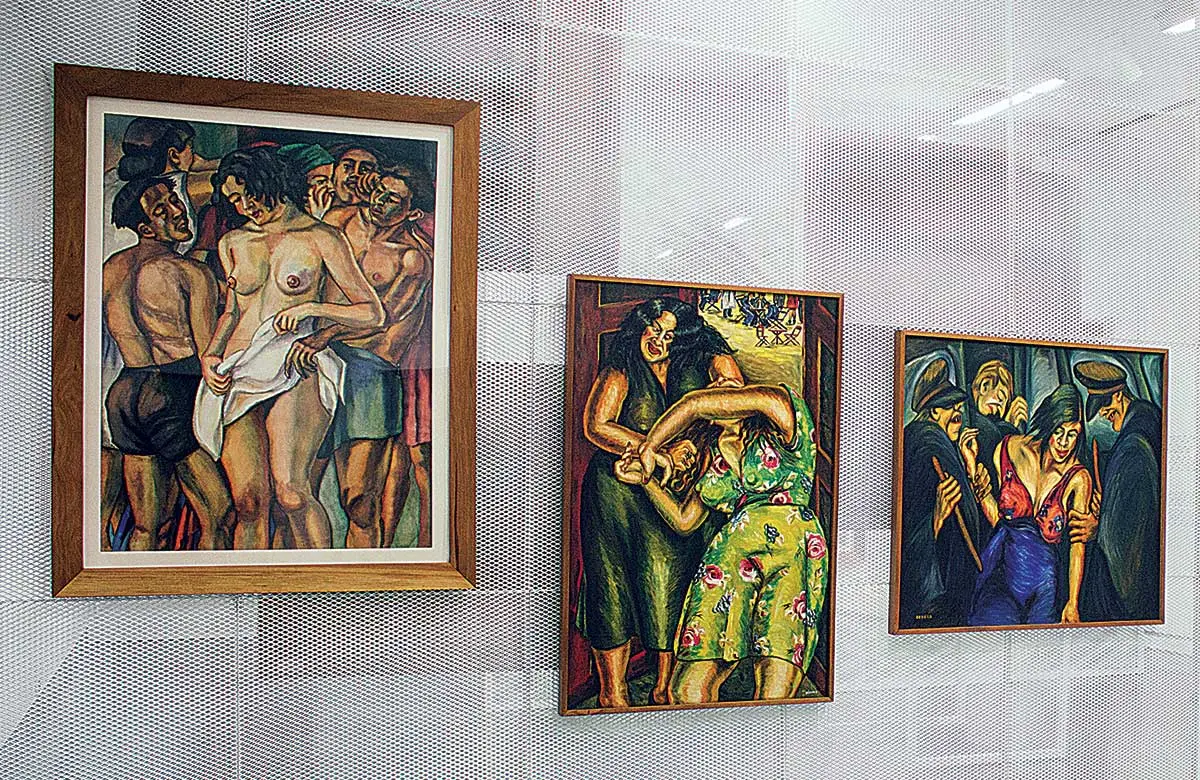
The new building, cleanly connected to Talleres Robledo in its back, is a good example of contemporary architecture not stealing the limelight from art itself, without detracting from its elegance and presence. The expansion’s exhibition galleries are adequate, although smaller of what its volumetry insinuates when seen from outside. Débora Arango’s magnificent work is here, accompanied by the Pan-American Graphic Arts Collection (AGPA, in its Spanish initials) and a small selection of works by artists who participated in the Arturo and Rebeca Rabinovich Salons. The title given to the exhibition is Life in all its admirable force, and it is supported by a novel museographic solution: an interplay of metal trusses serving as supports for watercolors, drawings, and paintings by an artist who escaped any pigeonholing. Without a doubt, this is the museum’s most significant holding, and it is cause for celebration that it has found a space. The decision to give the largest gallery to Débora Arango is a logical one; it was a debt the museum had with the artist and with its audience, and even with itself. In sum, these galleries reconcile the museum with its origins and its history; here is the very essence of what the institution has to contribute, and the standpoint from where it can—and must—speak to its society.
In closing, we must note that Medellin, with its last three municipal administrations, has understood that culture and the arts do play a key role in the social transformation of a city once—at the close of the Twentieth Century—considered among the world’s most violent. Thus, this Colombian city, famous for the deadly memories of drug-trafficking violence and for its social inequalities—both of which are clearly visible in the art it generates—boasts a level of cultural activity that stands out in the Latin American context. It is to be hoped that the challenge is confronted with the same strength that the institution has so far shown in dealing with its own reality; that budgets are expanded in the same way the square-meter area is; and that the hour comes when we can see the production of local and national artists in a collection that speaks of its era and its yearnings.
OSCAR ROLDÁN-ALZATE
Political scientist and independent curator. Professor and Director, Cultural Extension, University of Antioquia.