
Susana Sulic: How do you define the concept?
Kosice: I define the concept as the scientific analysis of the creative process.
Sulic: As WWII raged, you, along with Uruguay’s Rothfuss and Arden Quin, as well as other writers, formed an artistic avant-garde.
Kosice: Arturo, the first abstract art journal in Latin America, appeared in 1944.
Sulic: Rod Rothfuss published “El marco, un problema de la plástica actual” there.
Kosice: In that article, he claims that cubism and abstract art, with their compositions—the rhythms of which are created by oblique lines, triangular and polygonal figures—had implicitly posed the problem of the rectangular frame, which impedes plastic development.
Sulic: That frame, with its orthogonal principle, reduces the work of art to a fragment.
Kosice: As I see it, a painting is conceived as a totality that begins and ends in itself. Rothfuss concludes that such a totality cannot be achieved without a conception of the frame that is integrated into the composition.
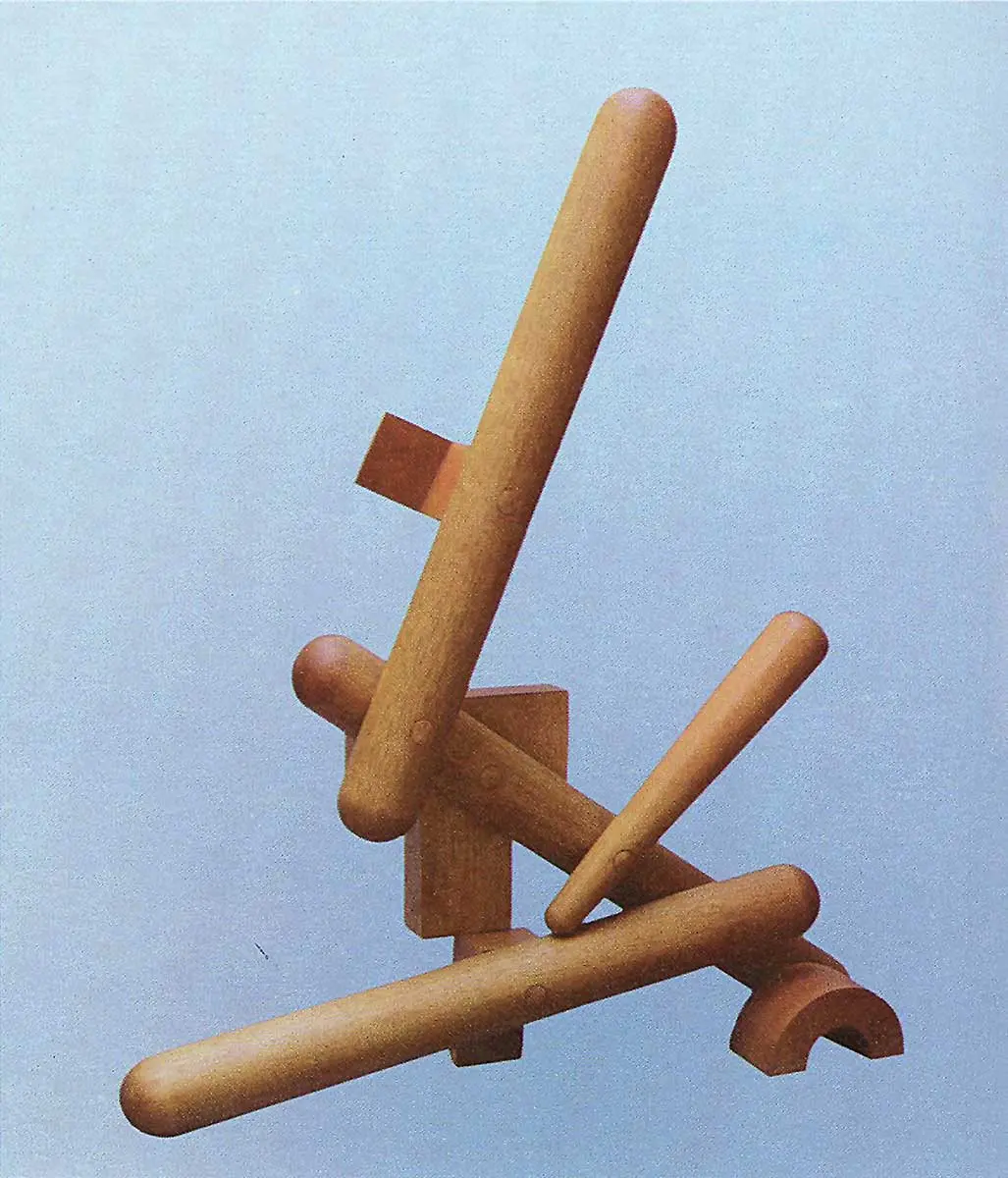
Sulic: In January of 1945, you published the central ideas of the inventionist aesthetics and presented the reproduction of Röyi, the first articulated mobile sculpture.
Kosice: The modular sculpture Röyi signals an intermediate landmark between a manual and a mechanical configuration. It establishes a transition. And it proposes the active participation of the viewer.
Sulic: In what other group did you participate?
Kosice: The Arte Concreto Invención was founded in 1945 and we had exhibitions at the Van Riel and Grete Stern galleries.
Sulic: From the start in Buenos Aires you promoted the integration of the arts.
Kosice: Since that moment we included dance, poetry, and visual arts in the group.
Sulic: Some members have held different views.
Kosice: As you can verify in the texts published in Cuadernos Invención.
Sulic: According to historians, the contributions of Madí placed Argentina at the vanguard of the arts in the 1940s.
Kosice: That began with Arturo, in 1944, continued with the Concrete Art groups, and leads finally to Arte Madí.
Sulic: Damian Bayon called it “the Battle for Invention”.
Kosice: The launch of Arturo is significant because of the debates it promoted in Argentina’s art scene.
Sulic: Röyi, your first articulated sculpture in wood, may have been inspired by Torres García’s wooden toys.
Kosice: What makes this object strange is not only its shape but also the way in which it was conceived and the many possible combinations offered for its manipulation by the viewer.
Sulic: Along with other artists interested in the expressive possibilities of abstraction, you focused on the concept of the invention.
Kosice: Thus the more general name of “inventionism” was given in 1945 to the movement. The various groups came from there.
Sulic: You had decided to question European constructivism of the 1930s in order to open up new perspectives.
Kosice: This artistic tendency appeared in Argentina under the influence of Kandinsky, Mondrian, Malevich, Torres García, Vantongerloo, Herbin, Lissitzky, and others.
Sulic: A veritable battle began then, driving forward the movement as a whole.
Kosice: With Madí, Argentine culture moved its clock forward, but against time, like the revolutionary movement. Their declarations and overtures are integrated into the reality of the country only in partial ways.
Sulic: You date your Estructuras lumínicas in 1946.
Kosice: That same year, Fontana launched in Buenos Aires the Manifiesto Blanco. The debate around the origin and use of neon in art history gained new currency.
Sulic: The Madí group exhibited for the first time in Paris, in the 1948 New Realities Salon. This movement was among the rare ones represented as such there.
Kosice: Biedma, Delmonte, Diyi Laañ, Lorin Kandor, Pereyra, Rothfuss, Uricchio, and I exhibited work at that time.
Sulic: Madí presented articulated paintings, modular and transformable sculptures.
Kosice: All the non-figurative, concrete, and independent artists came to exhibit at the New Realities Salon.
Sulic: Given the historical conditions in which the works were created, and their importance, the process deserves special analysis.
Kosice: Madí marks the beginning of a new stage, a futurist moment that suggests a shift in consciousness.
Sulic: Do you acknowledge that the word Madí comes from the first two syllables of materialismo dialéctico (dialectical materialism)?
Kosice: The name “Madí” comes from a deformation of the Republican motto in the Spanish Civil War: “Madrid, Madrid, no pasarán” (Madrid, Madrid, they will stop here)
Sulic: In a 1979 text, you noted that the term was “an act of pure invention”, and that, as such, had no particular meaning.
Kosice: Just like the term Dada, the word Madí could have any meaning.
Sulic: You also reviewed Concrete Art.
Kosice: Concrete Art—which, in truth, is a younger branch of the same abstractionist spirit—was the starting point of the great period of non-figurative art, where the artist, using the element and its respective continuum, creates the work in all its purity, without hybridizations or objects separated from their essence.
Sulic: Do you believe that there was a lack of universality in Concrete Art?
Kosice: These schools have responded to the ideological demands of the era, and their works are inestimable contributions to solving the problems posited by the culture. Nevertheless, their historical time must be understood as past.
Sulic: And what about the theory and knowledge of art?
Kosice: It was dominated by subjective, idealist, reactionary description. There were deep, insurmountable contradictions.
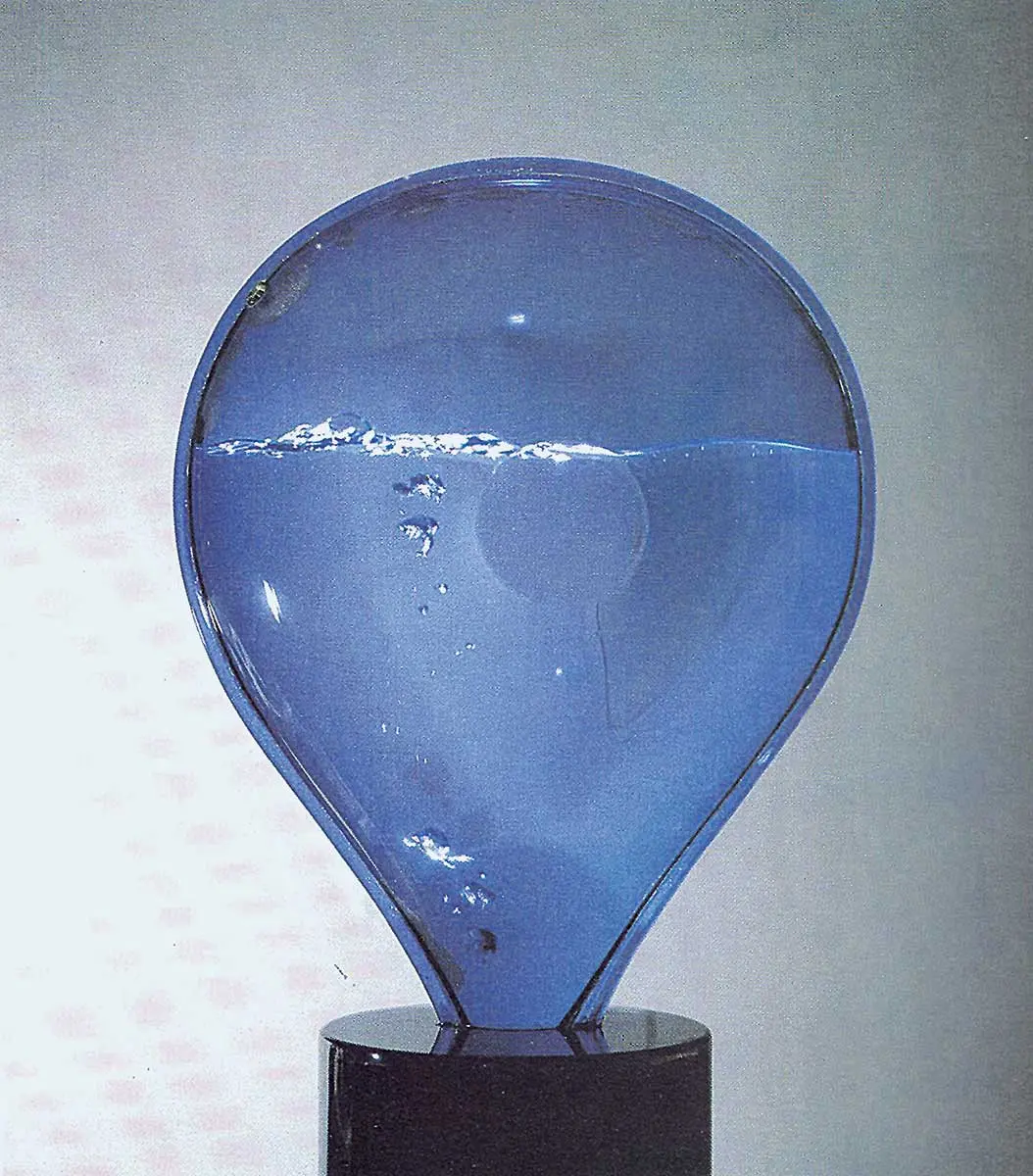
Sulic: In your book Teoría sobre el arte (Theory About Art), from 1986, you devoted an entire chapter to Madí’s style and universalist concept.
Kosice: It was, yes, to the invention of a new kinetic geometry that I have devoted myself; to boot, a polyvalence of artistic proposals: irregular form and mobile plans in painting; articulation and motion of the parts in sculpture.
Sulic: Madí’s invention of the irregular frame is an attempt to liberate painting from the laws of composition.
Kosice: The use of space as an element of the artistic structure is one of my essential concerns.
Sulic: You proclaim a permanent renewal of techniques and styles.
Kosice: Against everything, and confirming Man’s fixed, all-absorbing desire to invent and build objects within the absolute values of the eternal, right alongside humanity in its struggle for the construction of a new, classless society that liberates energy and dominates spaces and time in all its senses, and matter as well, to the ultimate consequences.
Sulic: And you assert that all perception is virtual and mediated.
Kosice: Absent any fundamental description referred to the totality of the organization, it is impossible to construct the object or to have it penetrate the constant order of creation.
Sulic: Is it defined then as the concept of invention in the field of technique and in the field of creation?
Kosice: It is necessary to create an aesthetic object freed from intermediaries and linguistic or supra-referential supports.
Sulic: In their paintings, Madí artists highlight the boundaries imposed by the orthogonal frame. These are irregular, articulated, relieved structures.
Kosice: The object of these structures is to create spatial architectures.
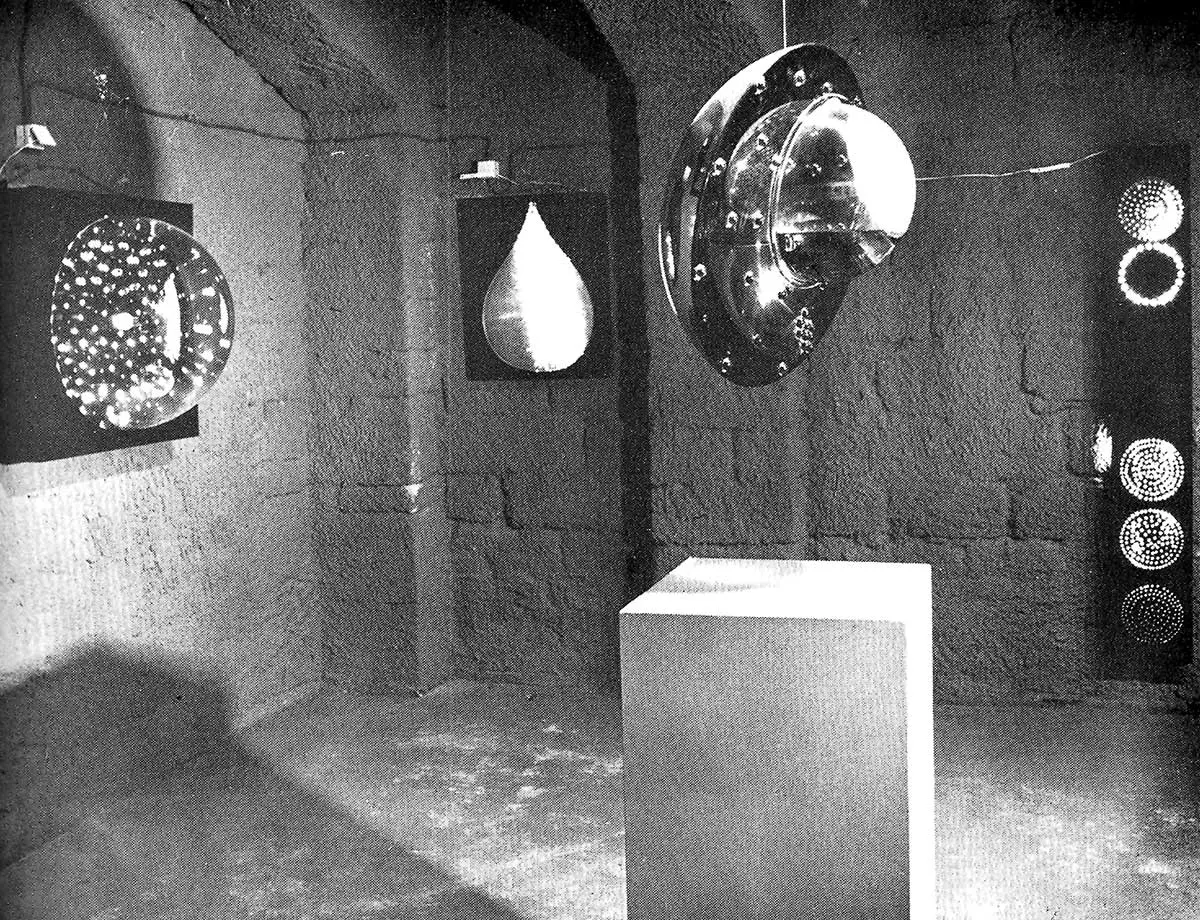
Sulic: The incorporation of art into life is another one of their objectives.
Kosice: Art must regulate life, and this is why a sculptor or a painter must not be subjected to the architect; rather, the latter must follow the former’s suggestions and creations.
Sulic: Thus you created the first Cosmogonía hidrocinética (Hydrokinetic Cosmogony).
Kosice: And I also assert that Man is the culminating point of a transformation, which doesn’t stop with him, either.
Sulic: In that book on Theory, you announced your perspective on history.
Kosice: The era of the art of the Nth dimension thus began, projectable over time and space, corroborating the absolute of the utopia of human creation against the minor concept of the invention.
Sulic: And you planned urban spaces adapted to human needs and sensibilities.
Kosice: The new aesthetics is the city coursing the sky.
Sulic: You repeated that making hydrokinetic art is part of a liberating and revolutionary experience.
Kosice: The full realization of art as a celebration of or will to live.
Sulic: Seeking the integration of art, science, and technique.
Kosice: With the participation of scientific and technological knowledge, the point, in this perspective, is to access a new realm that will make it possible to overcome imitation, allusion, and description.
Sulic: And you propose a new path in knowledge, according to the principle of motion.
Kosice: An aesthetic object that obeys its own laws and must be included in its particular ontology. Water is the most important medium to produce such effects: transparency, ambiguous volumes, weight, and motion.
Sulic: But for you, it was not a driving force in itself.
Kosice: It serves to express scientific content.
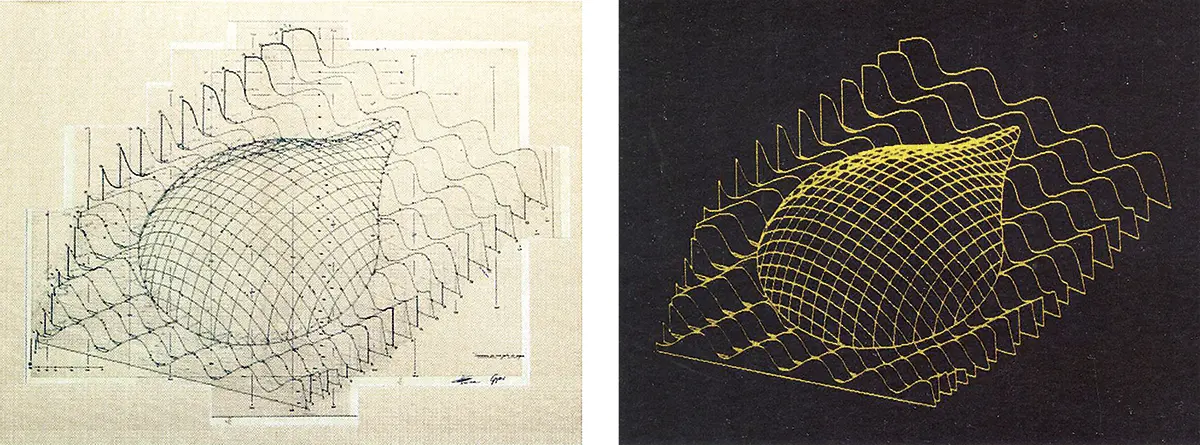
Sulic: Man mustn’t limit himself to the planet Earth… you have argued.
Kosice: The origins of these ideas date from the 1940s and 50s.
Sulic: And there emerged the first signs of your future contributions.
Kosice: From that entire process, from the sculptures with water and light effects, from hydrokinetics and the hydro-spatial cities
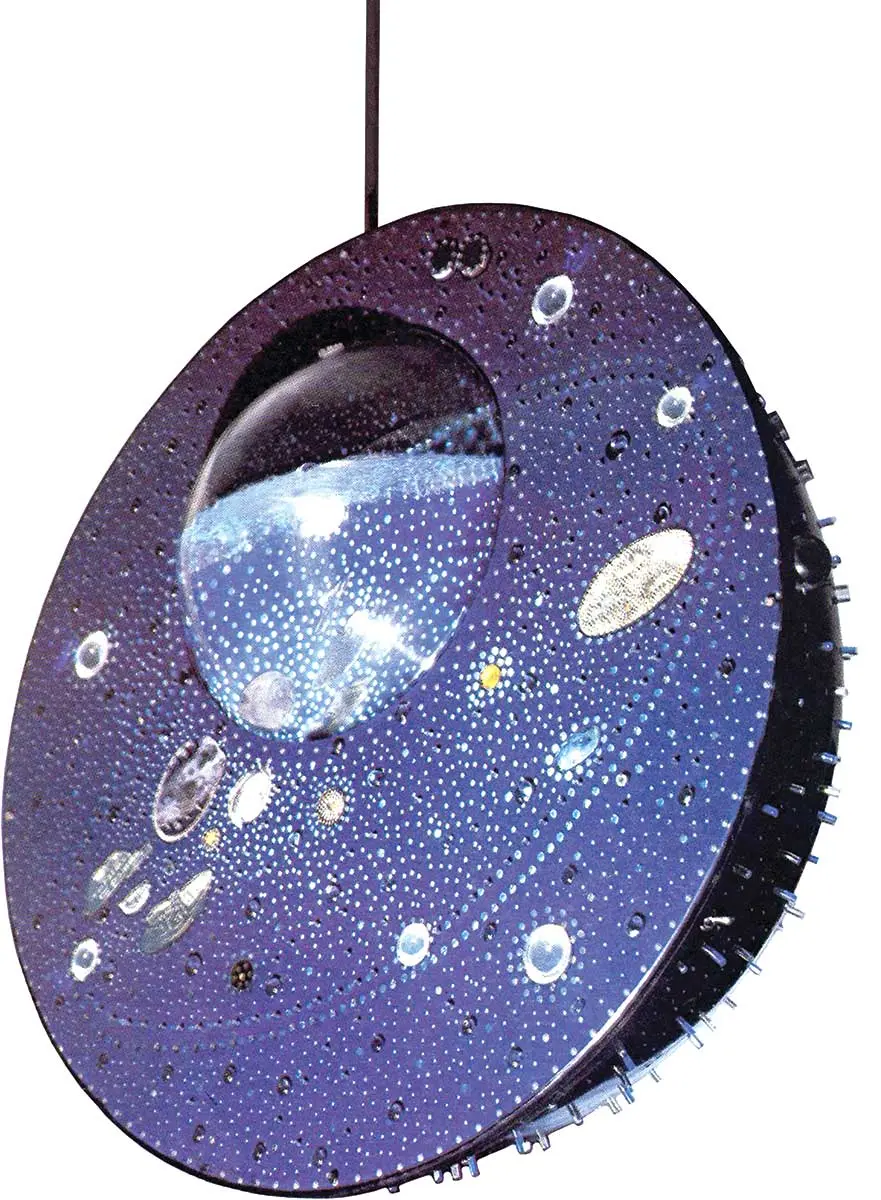
Sulic: Your Cosmogonía hidrocinética, which dates from 1980, is part of the series Ciudades hidroespaciales.
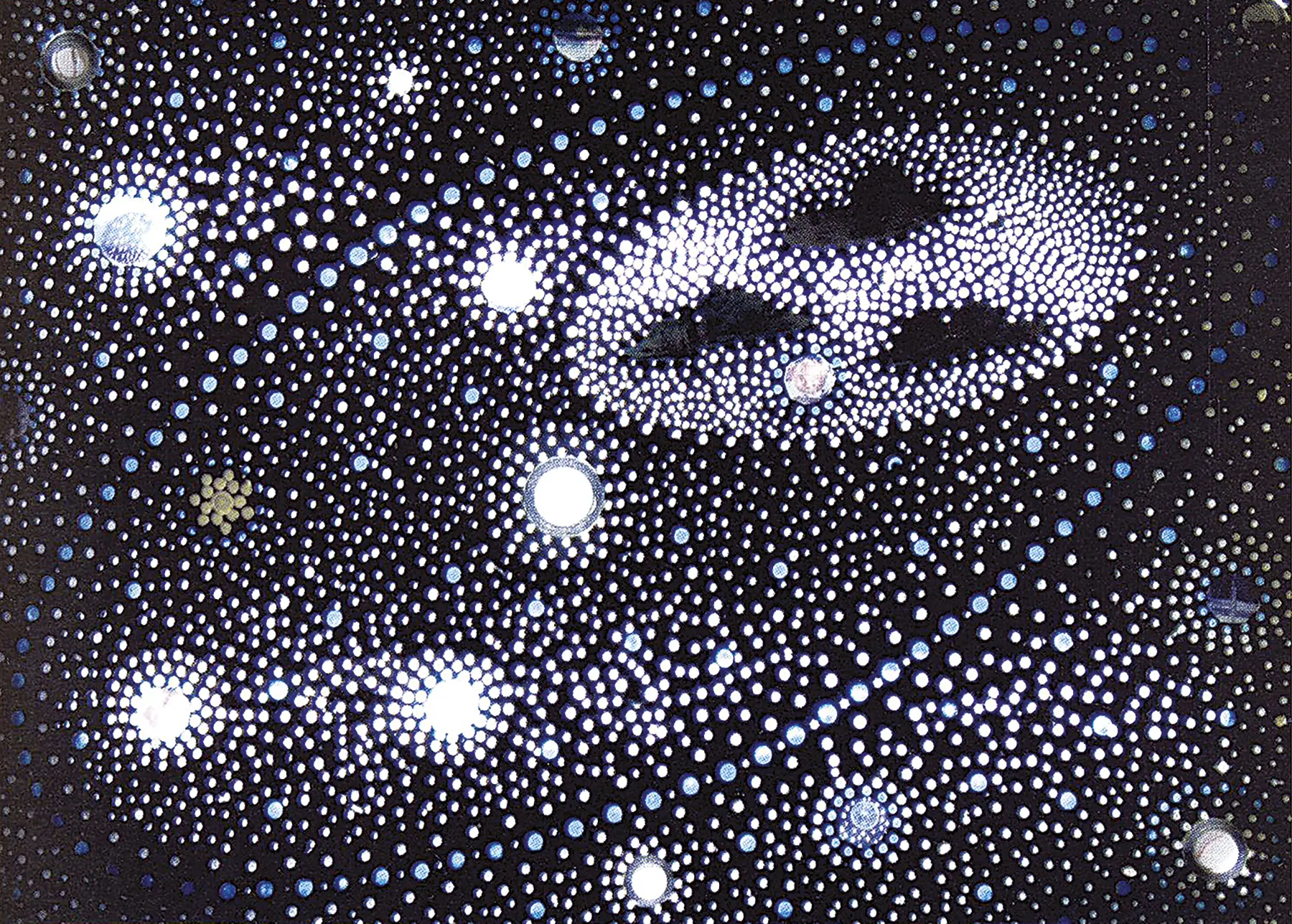
Kosice: It is built on the basis of a hemisphere; it is suspended and in motion. It is structured on the basis of an imaginary frame starting with orbitals around a transparent Plexiglas nucleus half-filled with water.
Sulic: Water is not only a modifier of space but also a symbol for the origin of things.
Kosice: A drop of water also represents the quality of all that is pure and essential.
Sulic: In your projects of cities that travel across the sky, you foresee spaces for reflection, discovery, and creation.
Kosice: The intention is to produce a freeing collective artistic environment, to conquer social and creative freedom, freedom of the imagination.
Sulic: You draw the city like an inhabitable machine.
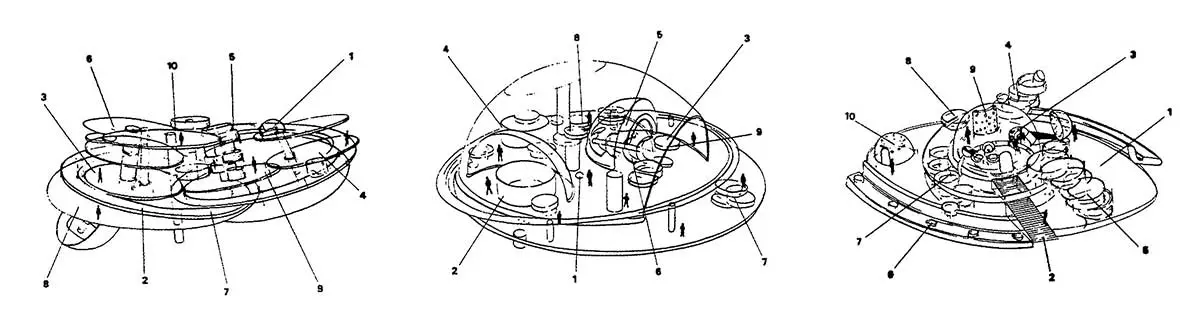
Kosice: In the Maquetas projects, the city is conceived on a suspended ovoid platform, capable of aerial motion. A mobile access ramp responds to remote control requests, which in turn allow for landing, suspension, and motion in space, among other things.
Sulic: And among other things, you projected recreation spaces, and also the installation of infrasound broadcast stations and holographic projectors.
Kosice: The Maquetas describe more concretely the spaces conceived by the art of tomorrow, which means the forgetting of all the arts. A place to create only hydrokinetic art and to dissolve it into the hydro-spatial, liberating habitat…
Sulic: On the day of the celebration of the city of La Plata bicentennial, you gave a speech.
Kosice: It was titled Messages for the year 2082, and it was dedicated to human beings across the universe, and especially to the future inhabitants of the Ciudad hidroespacial.
Sulic: What will be the role of ecology?
Kosice: The energy crisis, the brusque fracture of acquired values and truths, the ecological imbalances that threaten the planet, and also the inferno that the post-industrial era has unraveled, demand bold conceptions from all of us.
Sulic: And what about the role of science?
Kosice: From that point of view, I think that another status of science, with its new ideological and methodological connections, emphasizes biology over form.
Sulic: You propose to integrate all the arts in different points of your city.
Kosice: Today I am more convinced than ever of the need for an art integrated into everyday life.
Sulic: Following these ideas, your own art is energetic and full of life.
Kosice: It should liberate human beings of all their psychological and sociological impediments, of all their fears and prejudices.
Sulic: How do you describe the hydro-spatial city, according to your observations?
Kosice: It is built to rise 1500 meters above sea level.
Sulic: How is the energy obtained?
Kosice: Based on the theories of some physicists, who believe that, given the current state of technology, the project is wholly feasible. Energy can be obtained from molecular fission.
Sulic: It consecrates poetic content.
Kosice: Perhaps in the third millennium we will be able to at the same time think at the speed of light, and listen softly to the pulse of the universe…
Sulic: For you, the main objective of the articulation of science and technology is to preserve the environment, in the ecological sense.
Kosice: The issue is a humanitarian technology, more than an open utilization of cybernetics in the direction of the unknown.
Sulic: So, in concrete terms…
Kosice: The hydro-spatial city encompasses human habitats and their sociological consequences.
Sulic: You reject the view of your project as a utopia.
Kosice: The future of culture will be planetary, open to a new context, and a different modus vivendi. I have been saying this for over half a century.
Sulic: The city in space is a work of art dedicated to all of humanity.
Kosice: The triad of science, technique, and art undoubtedly expresses Man’s and society’s highest capabilities.
Sulic: These projective dynamics have driven you to reformulate the function of art.
Kosice: Which is to serve humanity in the full development of its social, creative, and imaginative freedom.
SUSANA SULIC
Doctor in Aesthetics, Science and Technology of the Image, History of Contemporary Art, Sociologist and Professor of Fine Arts in Buenos Aires; Graphic Arts in Kunstakademie Düsseldorf.