
The work of Lorena Wolffer has been characterized by the exploration of the boundaries of the body in terms of their purpose as borders, extensions, conductors, and containers. Her career as an artist can be regarded—in retrospect—as a replica that gradually grew in scope, going against the objectification of the body, at first as a person and then in terms of cultural stereotypes, the media, and her activism. Wolffer relies on drills and placebos to emphasize gender disqualification, objectification, and violence that prevail in Mexico. In an interview with Octavio Avendaño, curator of the exhibition at the Museo de Arte Moderno (MAM) in Mexico City, Wolffer said that the path that led her to be a social activist and a feminist stem from—through an awareness of the body and its extensions—her first performance, but it was reaffirmed—in political and social terms—upon her return from a two-year stay in San Francisco, when she began working “with feminists, social activists, lawyers, social workers, and academics.”
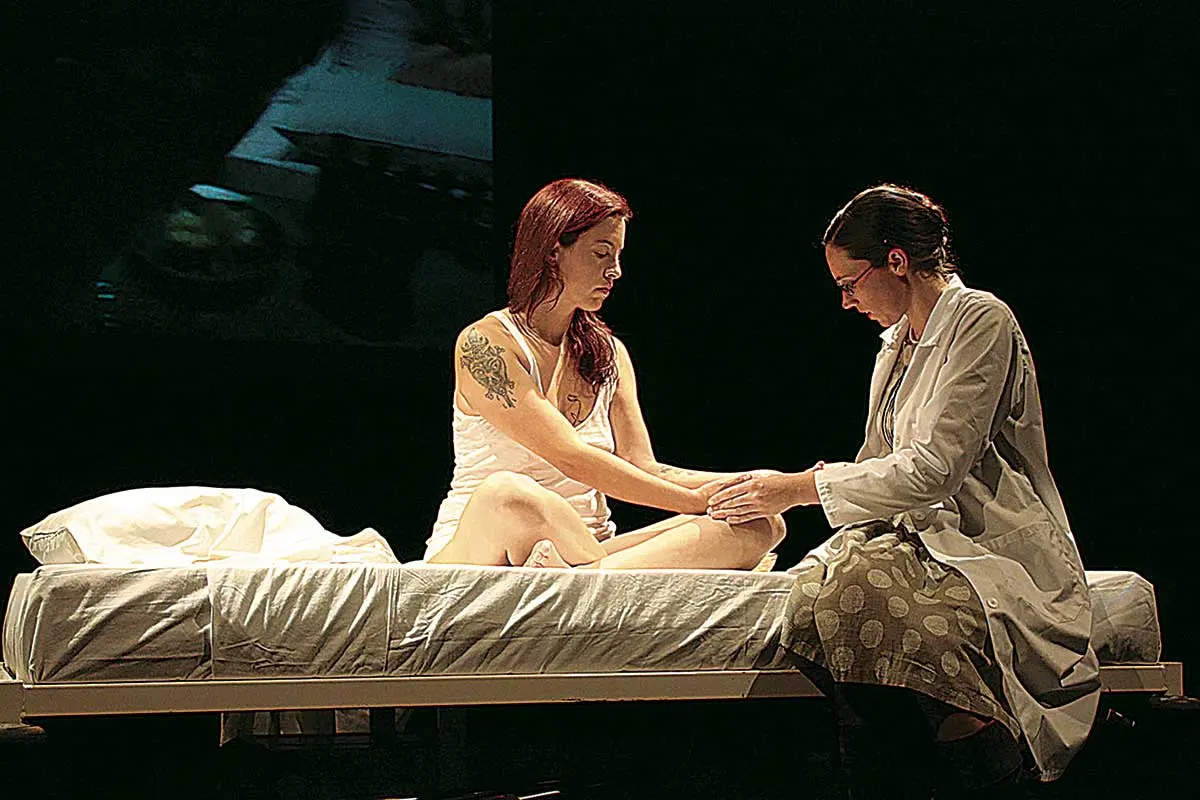
Although the exhibition Exposed: Public Records is not strictly speaking a retrospective, it does collect and review thirteen interventions made by Wolffer between 2007 and 2013 in different public and private areas, in which the idea of action—or performance—extends to—or becomes confused with—public denunciation and social activism. Based on the records from each of these actions the exhibition consists of the works generated from them. In allegorical terms, they are materials in transformation. Actions and testimonies are represented, or assume a magical-religious weight, through other objects (or, again, the body of the artist), based on a resignification or transference activated through the narrative created with testimonies gathered by the artist for this purpose. On the other hand, her work seems to serve as a vehicle in search of other paths on behalf of a campaign (or anti-campaign, as her background indicates) to promote awareness and social work. These actions by Lorena Wolffer have been supported by organizations and institutions like the UN Women, Inmujeres DF, the Ford Foundation, the Fundación Diarq IAP, the Comisión Nacional para Prevenir y Erradicar la Violencia Contra las Mujeres (CONAVIM), the Red Nacional de Refugios (RNR), the Fiscalía Especial Para Los Delitos de Violencia Contra las Mujeres y Trata de Personas (FEVIMITRA) and the Centro de Atención a la Violencia Intrafamiliar (CAVI), who have opened their doors to Wolffer and it made possible for her to perform a large part of the public interventions presented in this exhibition.
If approached in chronological order, these public interventions offer a narrative that, as I mentioned before, derives from public actions, fetishes, and transferences that—in a negative manner—lead to the utilization of propagandistic initiatives and strategies. I describe these below to clarify the point. February 14, 2008, Wolffer distributed chocolates wrapped in fragments of a testimony given by Fabiana, a woman that the artist met in the IAP Diarq shelter who was forced by her husband to sell chocolates on the streets. In addition to the performance records, the chocolates wrapped with Fabiana’s testimony have also been recovered and are displayed in a transparent cylinder.
In the public intervention titled Encuestas de Violencia a Mujeres (Surveys of Violence Against Women), Wolffer, in a stand, interviewed two thousand women surveyed on whether they had survived some type of violence. Women who answered “yes” were given a red button and those who responded “no” were given a green one. This action extends to the museum, where viewers can pick a red or a green button depending on whether they have been victims of violence or not, or know of someone who has been.
Muros de Réplica (Walls to Reply), five photographs documenting an action that Wolffer performed by the flagpole at the Zócalo, (the main square in downtown Mexico City) where women passing by were invited to write on a wall what they wanted to tell their abusers. The 2009 work titled Inventario (Inventory) consists of a series of posters with official data about the most common aggressions perpetrated against women, printed over the silhouettes of iconic actresses from Mexican Cinema.
Acta Testimonial (Testimonial Record) is an installation that counterpoints the verbal abuse—printed on the walls—experienced by the women from the Diarq IAP shelter and their recorded responses to those hurting words. The 2010 work titled Fe de Hechos (Certification of Facts) is a performance in which Wolffer narrated stories of violence against women while she molded black dough, wrapped it, and tied it with pieces of gray felt. This action has been continued in the exhibition where the public is invited to do the same and with the same materials. Conversando la Violencia (Discussing Violence) from 2011, consists of five photographs that document a public collaboration, which took place at the Parque España in La Condesa neighborhood, with eight women from the Diarq IAP shelter. In Evidencias (Evidence), objects used against 103 women—who gave them to the artist for the exhibition—have been numbered and arranged—in the manner of an experiential catalog—inside a display case along with the women’s stories behind them. In Antimemorias: Enmiendas Públicas (Anti-memories: Public Amendments), three series of photographs document a six-hour-long action in a tent at the Zócalo, where the public (around eighty people) used their own experiences to cure through the artist’s body the violence perpetrated against a group of women. This is followed by the women’s accounts of the violent acts that they suffered and their advice on how to best fight such violence. This led Wolffer to the 2013 work titled Mapa de Recuperación (Recovery Map), an action in which healers from China, Wales, and Brazil use her body to metaphorically heal the violence inflicted on a specific number of women. A record of this action is shown in a video, edited by Ximena Cuevas, of the performance in England by Wolffer and Welsh healer Sara Bernard. The last three pieces are Memorial, an interactive work in which the audience (women who have been victims of any type of violence) write their names (this was expanded online); Recetas Contra la Violencia Hacia las Mujeres (Recipes to Counter Violence Against Women), which consists of welcome doormats with recommendations written on them on how to fight abuse; and Réplicas (Replies), an extension of the work Muros de Réplica that reproduce, on the garden lampposts of the Museum, the public responses given by women to their attackers.
RICARDO POHLENZ