
Artist Martín Soto-Climent has been the topic of conversation after opening, along with curator Chris Sharp, Lulú, a space in La Roma neighborhood that favors independent projects. Soto-Climent recently presented an exhibition at Proyectos Monclova, another emblematic venue in the same neighborhood that has been devoted for a long time to the promotion of independent projects. Soto-Climent's work has been characterized, on the one hand, for the exploration—exploitation is another qualifier that can also be used—of the space as an image that, turned into a fold, tenses, rearticulates, and resignifies its materials—which also tend to be its themes—and, on the other, for flirting with projection and substitution strategies from which to develop a narrative inherent to the proposal that unfolds to become multiple narratives. In fact, the fold plays an important role in his work; it distorts and creates new formal and conceptual signifiers that add qualities to an object without making it lose its original nature.
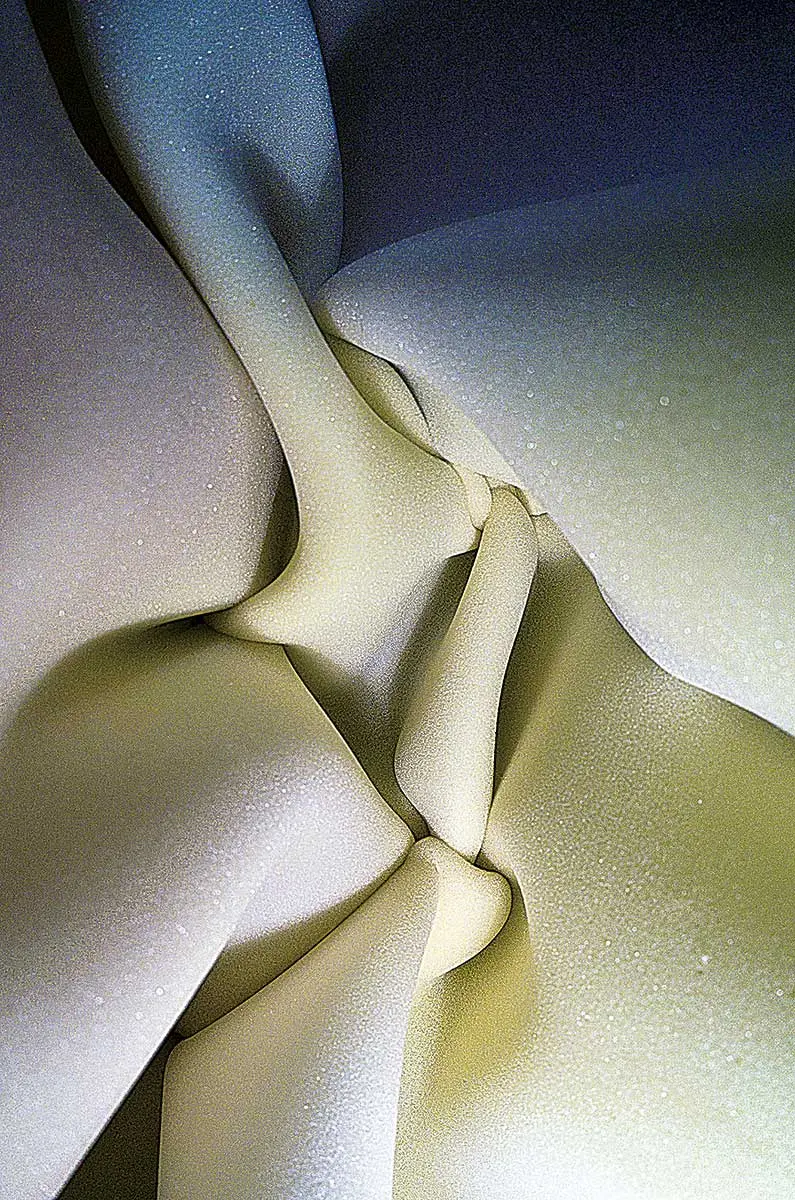
Soto-Climent developed this exhibition from an earlier work, a red purse that was intervened to resemble (or mimic) the folds of a vulva. He has repeatedly referred to this work in interviews as a piece created in collaboration with Caramel Huysmans, one of several imaginary characters with whom he maintains—a little bit in the nineteenth-century spirit of dialoguing with characters—a sort of personal human comedy. This and other fictional characters are given personalities through gestures that are very similar to those used in his work to suggest a dual nature (a perversion). In this manner, Huysmans is the author of Al Revés (Reversed), a novel that definitively breaks with French naturalism to become a model for decadence. Soto-Climent folds or bends references and turns them into something completely different, a conceptual jam that shines between the frivolous and the perverse like a fetish. In the terms that the “purse vulva” is the initial fetish, is also the point of departure of a revision, reformulation, or commentary that the artist seeks to formulate from the outside looking in, as a provocation which is—and is not—narcissistic and schizophrenic. Is not me, is someone else. In his own words (translated from a text by Daniel Garza-Usabiaga published inTerremoto.mx), “They are the result of a dialogue between Caramel Huysmans and myself. We started a long-distance relationship and now I invited Caramel to be the creator of the project [...] My exhibition is an affectionate gesture that tells the story of true love.”
That the exhibition looks smaller than it actually is inside the huge nave of Proyectos Monclova must be intentional. This distancing generates the inherent drama that gives the work its connecting thread; it invites to approach the objects hanging (or that have been hung) against the walls, to thoroughly observe the details revealed by the first strike (by Gestalt) of the compositional and gestural elements of the works; to become enamored with the interplay between the lights and textures, compositions and meanings that exist within the organic interplay of the folds; always between the horror and fascination of their dual nature (they are not quite paintings, but they are not quite sculptures either) as a gesture that serves as hiatus—as an absence—between the first and the second impression. The meaning of the work can be found somewhere between what we actually see and what we believe we see, like a ghost or apparition.
The objects created by Caramel Huysmans are different sizes, depending on the subject of material, and are displayed on different walls at different heights. Two works stand out for their large size; their folds shine amid violets and yellows, conferring an almost liquid quality to the forms that, on the one hand, suggest an almost pop approach to the common places in which bedding products are sold, and, on the other, transform bodies, positions, and genitals into abstractions. The colors and materials used by Soto-Climent are by themselves a provocation; matter that takes the place of other matter and replaces it as an object (of desire). The interplay between sensuality and obscenity created by the artist with these replacements (whether based on the fetish or the character) appeals, most evidently, to the imaginary that luxury brands use to transform their products into the daily paraphernalia of an elusive lifestyle. It is about that which escapes as sublimation but that sometimes can be captured, for example, by someone like Richard Avedon. It may very well be my own speculation, but photographers are undoubtedly one of many referents in visual culture that are synthesized in the work of Soto-Climent.
Displayed on a small pedestal with a black background and illuminated by zenithal lighting, the purse-vulva has a prominent place in the exhibition.
RICARDO POHLENZ