
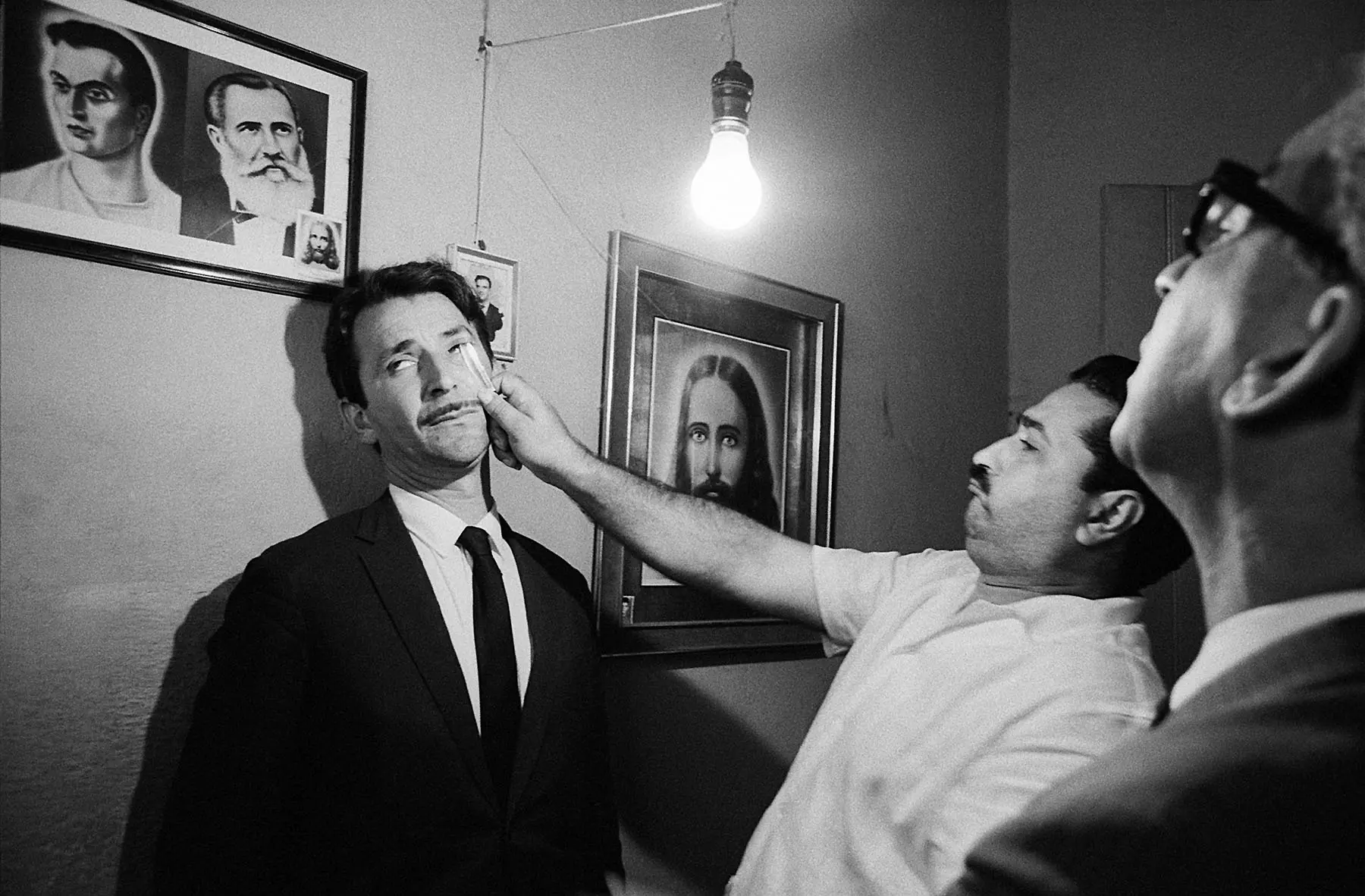
Claudia Andujar’s exhibition No lugar do outro (In the Place of the Other), presented at the Moreira Salles Institute in Rio de Janeiro between the months of September and November, included the publication of a catalog featuring reproductions of the images on display and an exclusive interview with the artist. After answering questions about her childhood, her escape from Nazism, and her journey through Europe and the United States, Andujar spoke about the beginnings of her interest in photography: “My mother had a camera, she shot photographs, like so many people. For me it was a way of connecting with Brazil, I never thought I’d become a photographer. It was only when I started taking pictures and finding great pleasure in it that I met people who encouraged me.” Photography, she says at other points during the interview, was a consequence to her desire to know not only “Brazil”, but “Deep Brazil.”
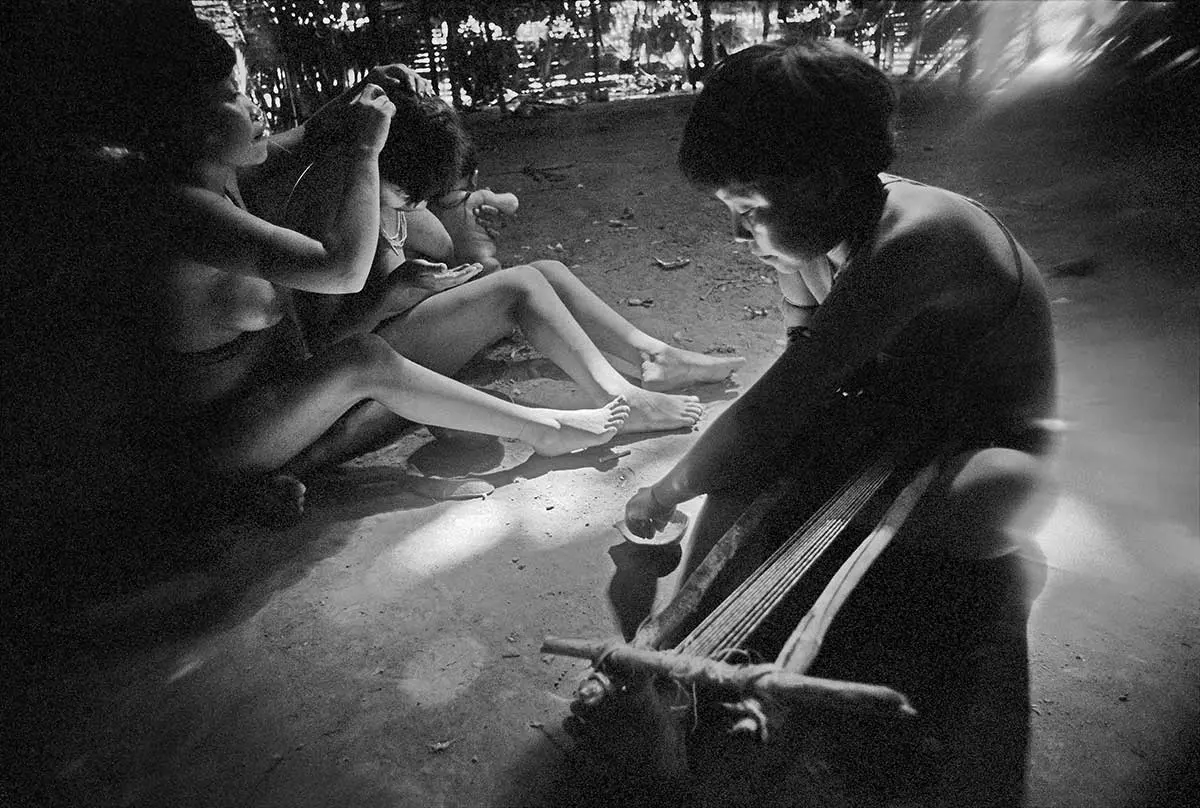
That immersion in otherness drove her, for example, to present hundreds of photographs of her experiences in the Amazon region, in a book—Amazônia—published in 1978, in collaboration with George Love. The product of a grant for the study of the Yanomami ethnic group in the state of Roraima, the experience—which a younger generation would perhaps call a “residence”—resulted in Andujar’s commitment to the struggle for indigenous rights in Brazil. Her decades-long investigations contributed to the diffusion of images in a number of important visual art institutions and made her name synonymous with the photographic documentation and narrative of everyday life in the country’s indigenous communities.
In that sense, the exhibition under review should be lauded for sharing with its audience other interests in Andujar’s work. Bringing together images produced between 1962 and 1972, curator Thyago Nogueira focused on the dense range of contrasting colors present in the way of looking constructed by these photographs; the artist, then, appears well outside her institutionalized place as the “photographer of the Yanomami.”
At the entrance to the exhibition, all of this is made concrete expression in a series of images emblematically titled Natureza (Nature), from 1970-72. Visiting for the first time the Jari river region (between the states of Pará and Amapá) and learning about plans for the construction of hydroelectric plants in the area, Andujar opted for creating small photographic monuments to its still intact natural environment. While some of the photographs in the series depict specific sites at the scale of the artist’s body, other formal constructions are more open, almost panoramic planes of waterfalls experienced in ascending perspectives. The human figure is not yet present, but it will be in the following years, as Andujar’s gaze penetrates the thick forest and observes it at human scale.
Also in the late 1970s, in an interesting counterpoint to this encounter with nature, Andujar shot photographs from the point of view of the of trampled cement and of the cascades that have earned the nickname of “city of drizzles” for São Paulo, the city that embraced—and was embraced for—Claudia Andujar and her mother. The series Rua Direita (Straight Street), besides being a ground-level fragment of time in the life of the city, is an example of the fascination that analog photography exerted during that period. Just like pedestrians interweave their physical trajectories, Andujar proposes fusions of images and creates montages of different architectures in São Paulo. There is no room for the Sun that illuminates Natureza, and we are left with the sensation of the vertiginous enclosure created by industrialization in Brazil’s largest metropolis.
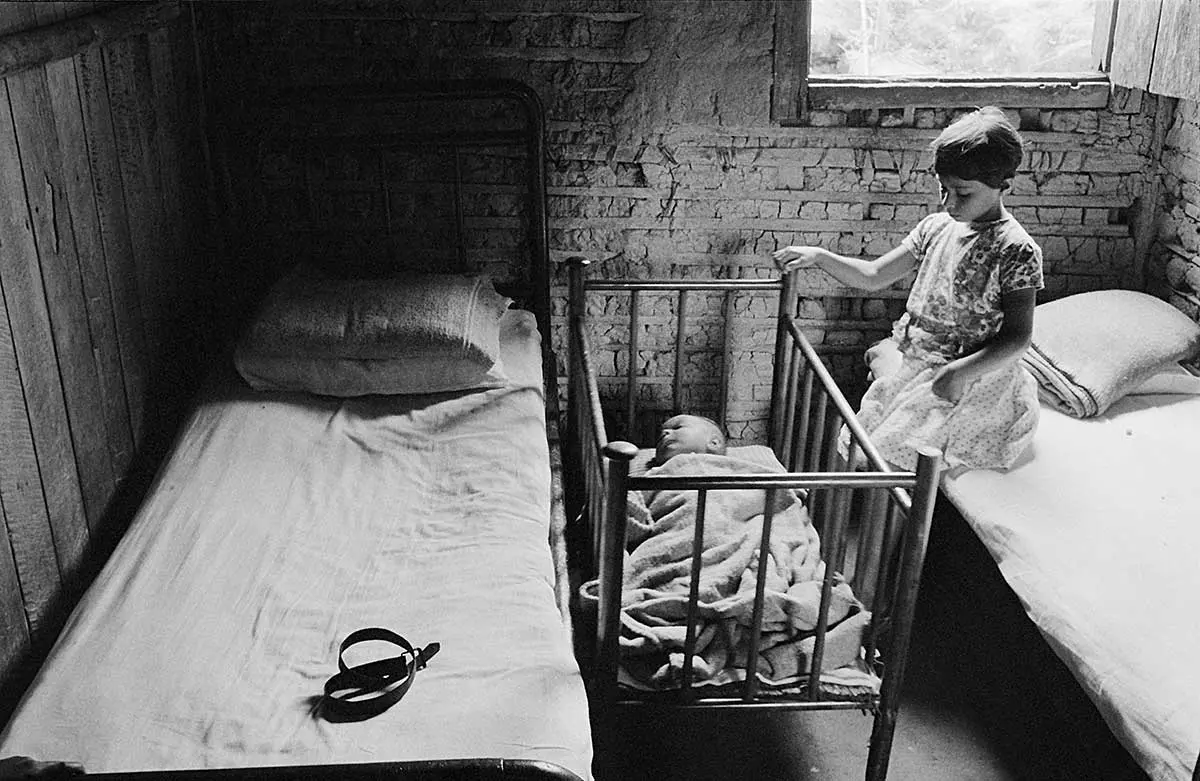
Returning to Andujar’s earlier work in Brazil (1962-64), her interests seem to dialog more with her view of the Yanomami. The very title of the series Familias brasileiras makes clear her apprehension of pieces of Brazil, now in the plural. It does not surprise, then, that she decided to shoot photographs as she traveled through São Paulo, Minas Gerais, and Bahía. The white and black tones of her images are an indirect comment on the social tension explored in photographs focused on topics like social, racial, and urban inequalities across the country’s vast territory. Andujar transformed herself into just another member of the family for a number of weeks and recorded her routine in dozens of shots that are certainly not intended to decorate a living room.
Finally, with the series Histórias reais (Real Stories, 1966-71), visitors were able to better understand Andujar’s role as a photojournalist. The narratives are diverse and the images have greater visual impact due to the precise selection and editing made by the photographer herself, interested as she was in the humanity’s endurance in the face of adversity, in the difficult conditions for giving birth in Rio Grande do Sul or the life led by homosexuals in the country’s major cities. One of her series grabbed our attention and can be read as an allegory of Andujar’s oeuvre and career: E o trem do diabo (It’s the Devil’s Train), photographs of migrants who tried to make a life in São Paulo but were forced by the authorities to return to their cities of origin. Bodies stretched on wooden benches, bathed by the sun, sweating in front of the black and white lens of a woman who has been in a similar position in her life.
No lugar du outro is undoubtedly a fitting title for this selection of photographs by an artist who will always be “other” to Brazilian culture. Perhaps her images are able bring our shared humanity to the fore for the audience. One can only wish that these series continue to be presented to the general public as extensively as her photographs of the Yanomami are, and that Andujar’s investigation is examined from new critical points of view.
RAPHAEL FONSECA