
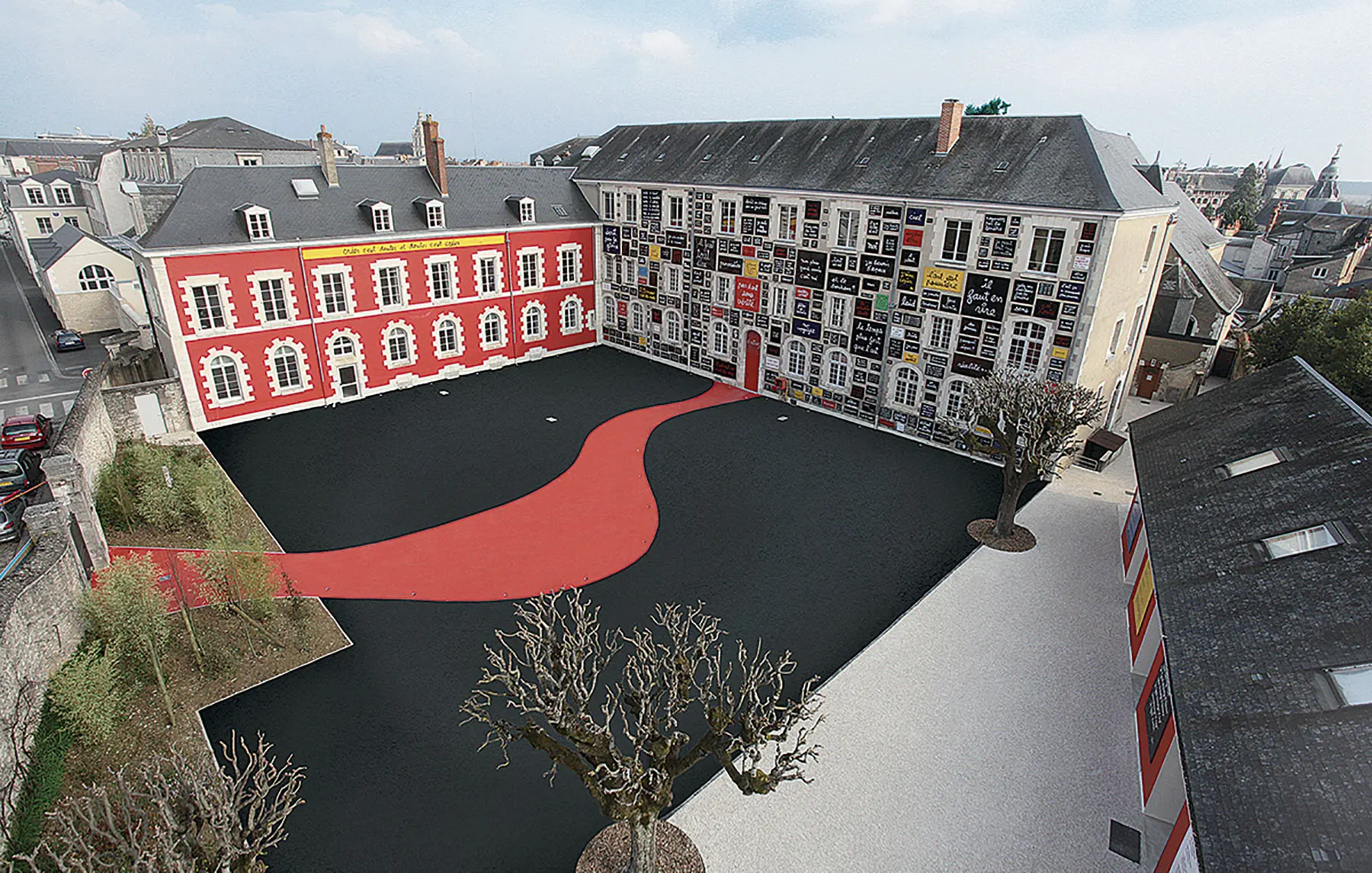
The du Doute foundation, an original institution with no parallel anywhere in the world, opened on August 5, 2013—on the route of the Castles of the Loire—in the city of Blois, internationally renowned for its historical treasures. Great quantities of willpower, passion, adventurous spirit, obsessions, convictions, and transgressions, not to speak of the rejection of all kinds of taboos and prohibitions—especially those of an aesthetic and moral kind—on the part of the actors behind this project, both private, among them its main inspiration and standard-bearer, French artist Ben (Ben Vautier), and public, the city of Blois and the Centre region—for a site in complete break with tradition and entirely unconnected to its cultural context to be established in the a city so marked by its past and the culture of its past. A place that is open to the instability of all certainties, a site that affirms that questioning the arts makes their renewal possible, a place to make the language, the concepts, and the games that art generates one of the living axes of creativity.

The du Doute Foundation is neither a traditional museum nor a conventional art center; rather, it is a space for wondering about art and its borders, a center for expression, creation, and exhibition around Fluxus (international movement) and its spirit. This is a place dominated by the mentality of freedom, exuberantly revitalizing and regenerating at a time when the arts are often pedantic (at the intellectual level) or repetitive and uniform (because of the dominance of the marketplace). The Foundation’s strategic location, at the very heart of this city that boasts a pole of artistic education—the Art School and the Music Conservatory—is not insignificant: their cohabitation fosters dialog, the exchange of ideas, and the mutual stimulation among creators that Fluxus already incorporated in its experimental practice of the early 1960s, with performances at once humorous, provocative, and absurdist of John Cage, George Brecht, or Benjamin Patterson (all of whom played an important role in the diffusion and development of Fluxus) about chance and fortuitousness between the avant-garde, science, art, contemporary music, and the audience.
Between 1958 and 1961, John Cage (1912-1992), who taught at the New School for Social Research in New York City and had visual artists, musicians, and writers among his students, proposed the abolition of the borders between art and life. In this iconoclastic and highly playful practice of the promotion of a non-art connected to Dadaism and its rejection of institutions, the founders of Fluxus—a term used for the first time in 1961 by George Maciunas (Lithuania, 1931-1978)—organized happenings and developed spontaneous events declaring that the notion of a unique, sacred, and inalienable work of art must be banished in order to inscribe the arts into everyday life. Other movements emerged in the same period (new realism in France, conceptual art in the US, etc.), and Fluxus’ axis shifted from North America to Europe, especially Germany, starting in 1962. For some ten years, Fluxus’ activity focused on experimental music, with many concert performances (Yoko Ono, LaMonte Young, etc.) and “neo-Dada” (Nam June Paik), accompanied by exhibitions and happenings. The first Fluxus concert, organized in Wiesbaden in 1962—the “Fluxus International Festpiele Neuester Musik”—marks the launch of the movement.
Ben, a French artist of Swiss background, born in Naples in 1935, is the emblematic figure in this movement that emerged from the trail of Dada and Marcel Duchamp. His postulate is that “everything is art”… His accumulative obsession drove him to gather, over the course of many years, a large number of variegated objects that resulted in the creation of a perpetually evolving sculpture, titled N’importe qoi (It doesn’t matter what); renamed Le Magasin de Ben (Ben’s Store), it was acquired by France’s National Modern Art Museum in 1972. In London in 1962 Ben met George Maciunas and discovered the Fluxus group, which he decided to join. He then promoted the movement’s ideas and spirit in France, organizing exhibitions, forums, and debates in Nice. Ben became the champion of a movement similar to what Harald Szeemann called, simply, “the artist’s activity,” in his famous exhibition Quand les attitudes deviennent forme (When Attitudes Become Form), at the Kunsthalle in Bern in 1969.
When, some years ago, the Blois government-commissioned Ben with creating a Mur des mots (Word Wall), the path was open for what the artist would create in 2013: an “idea center,” a “staging of the Fluxus spirit,” an open and boundless site: the du Doute Foundation. The Mur des mots (1995) is a monumental work, 30 meters long and 12 meters high, comprised of 300 plaques strewn on the façade of the Fine Arts School and the Conservatory, and it dominates the entrance to the Cour du Doute (Courtyard of Doubt) created by Ben in 2012. There, his 300 paintings-writing and an equal number of reflections on life, art, doubt, ego, languages, love… engage visitors and force them to interrogate themselves, to share or reject what they read, but always via an interaction from which none emerges unscathed. “Not everybody can be a genius”; “Time is stronger than art”; “Love is words”; “My main concern is myself”; “Who decides what is beautiful?”; “What about happiness?”; “Everything must be said”; “There is no art without truth”: there are three more or less convincing, occasionally extravagant aphorisms and simple words that show the artist’s inexhaustible veneer and his unfailing sense of the human dimension, of the things of the world, of life and art. The word Entrez (Enter), made in neon on the large red gate in the middle of the painting-writings, turns on and off, inviting visitors to cross the “Word Wall”.
A fervent advocate of minority languages in France and the world, Ben believes that every natural language offers a unique vision, where words transport ideas and cultures. With his Mur des mots, he asks viewers to remain alert, to question themselves and unsettle their certainties. For him, words shine like a prime material, a mass to be ground up and always awaiting invention. Besides the area devoted to his work in the permanent collection, Ben is also responsible for the decoration of the Café Fluxus, located in the Foundation. In this way, the place is entirely permeated by the artist’s verb and verbiage.
The collection, international in its scope, occupies the foundation’s two levels, including the staircase between them, decorated by Arnaud Labelle-Roux (1950), a French artist, essayist, and historian of performance. The collection features nearly fifty artists and some 300 works, as well as documents pertaining to Fluxus and its spirit (archives and videos), from Ben’s personal collection and those of artists like Gino di Maggio (Sicily, 1940) and others like Italian gallery owner Catarina Gualco. The pedagogical element was not neglected: there are tables for reading and reference, computers, Fluxus films, and archival videos of the movement’s historic performances.
“The du Doute Foundation is not only Fluxus, but Fluxus, non-Fluxus, anti Fluxus, Fluxus from here and there, and post-Fluxus. The du Doute Foundation is a disorder that changes the world. There will be a floor devoted to Fluxus and a floor devoted to everything that is living art, doubt, creation; everything that is unsettling and alive and has Duchamp and John Cage at its roots,” writes Ben to describe the place that is his intellectual and aesthetic child.
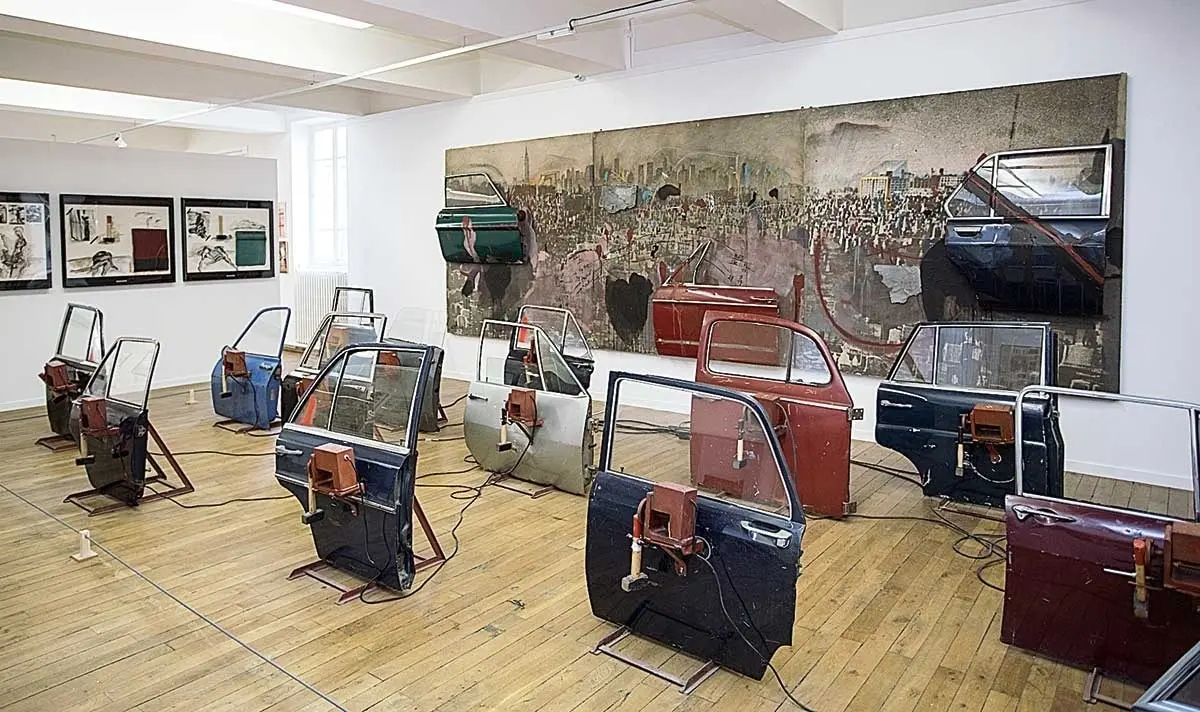
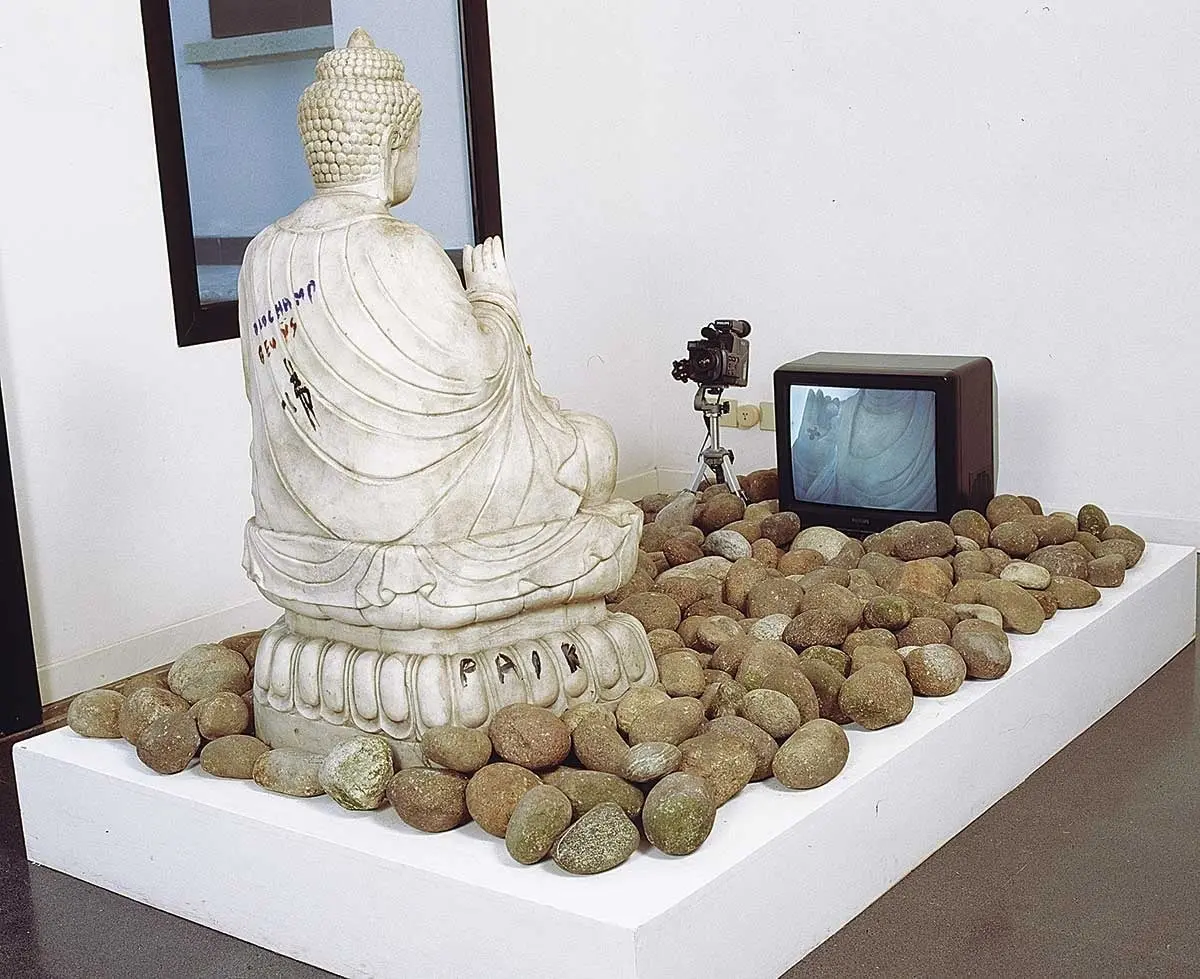
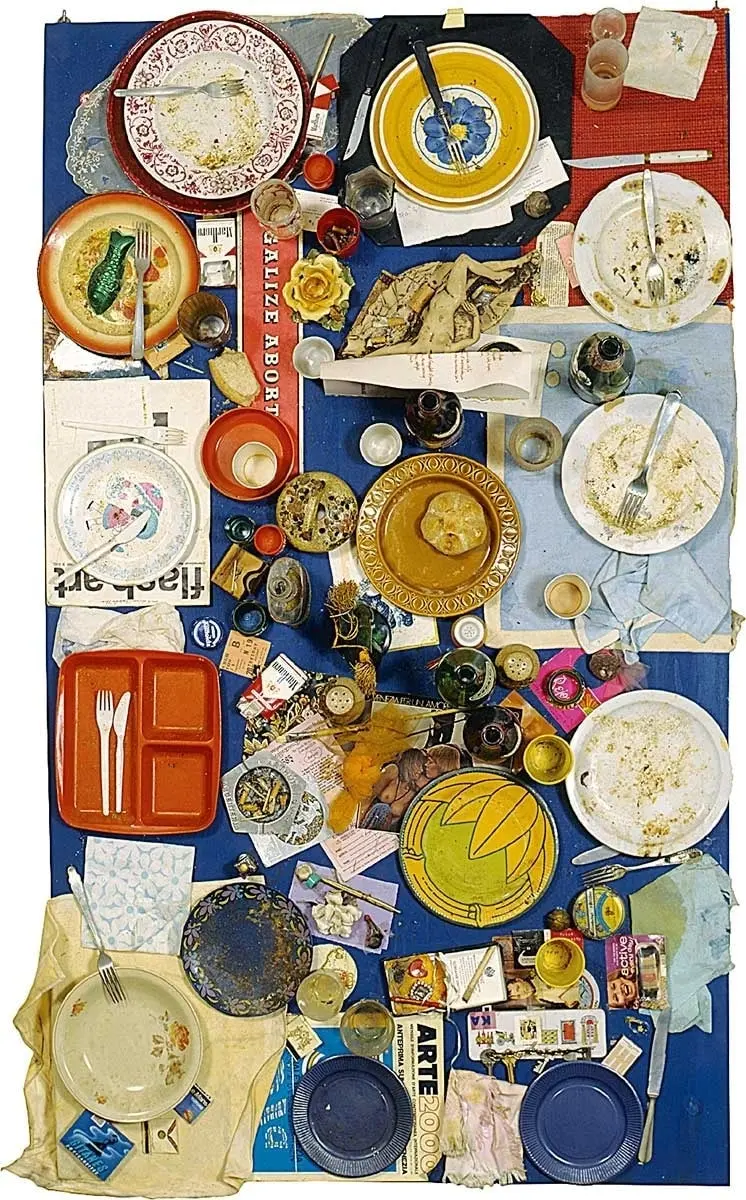
The first floor presents visitors with a labyrinthine ambling from gallery to gallery, with works of the greatest quality, including several installations. Fandango (1074-75-77), an original installation by Wolf Vistell (Germany, 1932-1998) was originally comprised (at the time of its creation for Multhipla Gallery in Milan) of 25 car doors equipped with motors that activated hammers, 9 trunks, a series of watercolor drawings, photographs, objects, three 200 x 200 cm panels, and a 200 x 160 cm canvas. Although reduced in its size in adaptation to the site, it remains impressive. So does an installation by Philip Corner (USA, 1933), two of whose works are included in the collection. Corner’s Piano Activities (1962-2013) features a partially destroyed piano accompanied by diverse objects and framed music sheets; it erodes the sacred codes of classical music and is intended to invite the production of new sounds. An entire gallery has been devoted to Daniel Spoerri (Romania, 1930), with 12 astro-gastronomical painting-traps, collages of objects, and consumed foods from 1975, corresponding to the 12 Zodiac signs. Nam June Paik (South Korea, 1932-3006) is present with two large installations, one of which (Pythagoras, 1989) is a video installation with 13 TV monitors and 13 neons. In TV Buddha Duchamp-Beuys (1989), the artist installed a marble Buddha in front of a camera that films its face in a closed circuit and transmits the image via a TV monitor placed across from it. The whole set is placed on a mat of large river stones.
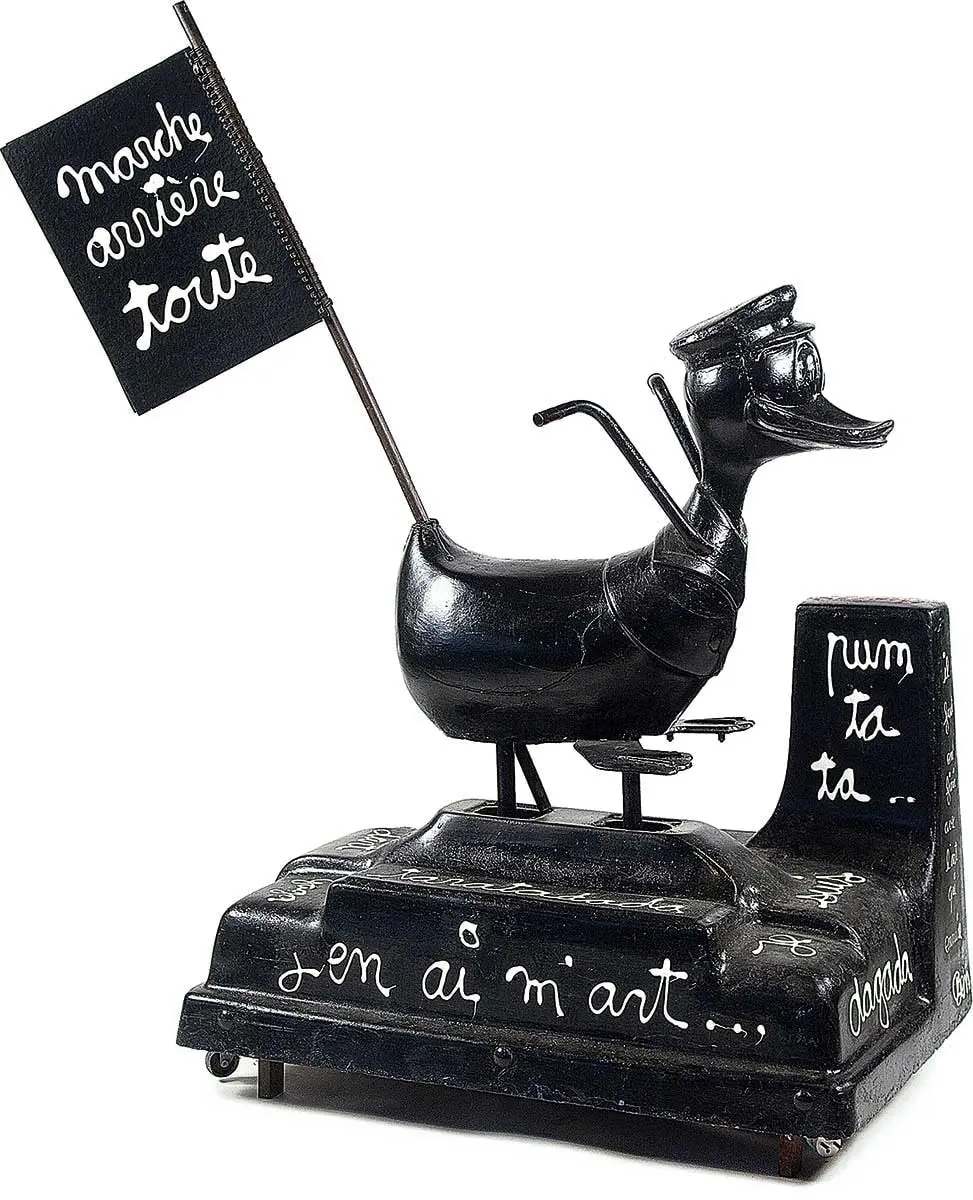
On the second floor, we discover other works of interest, like a series by Allan Kaprow (USA, 1927-2006), ten collages and felt-cloth items dated between 1965 and 1991, set on cardboard panels and intervened by Ben with descriptive comments and translations, or the Fluxbox containing god certified by Ben Vautier, Nice 1961, a box with labels. The Fluxboxes were available at the Fluxshops, with kits for happenings (Fluxkits); so were the Fingerboxes intended to communicate and disseminate the Fluxus spirit (see boxes by Robert Watts, George Maciunas, and Ay-O – Japan 1931). A gallery was reserved for Ben’s more recent works, among them his J’en ai m’art (I Have my Art) from 1990. Ken Friedmann (USA, 1949), with three works in the collection, created his Sans titre (Untitled) in 1990: portraits/caricatures of thirty-five artists in the Fluxus circle labeled with their name in a manner similar to that of La Poste (the French Post Office).
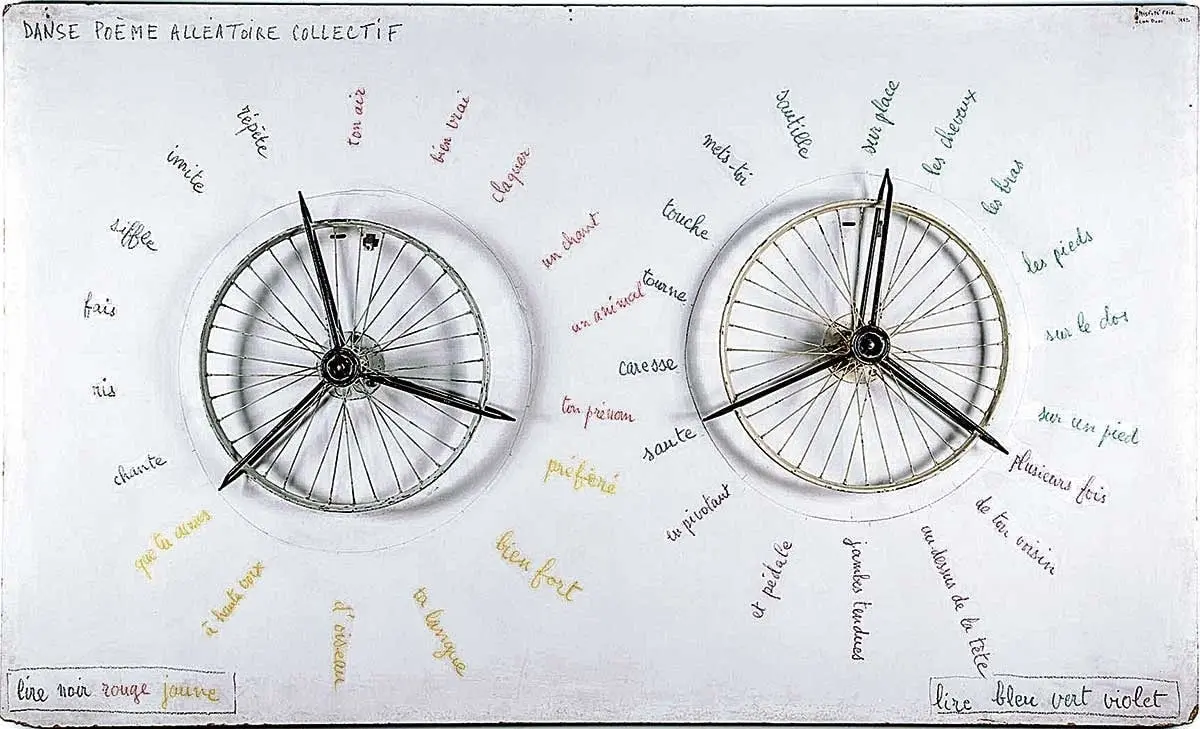
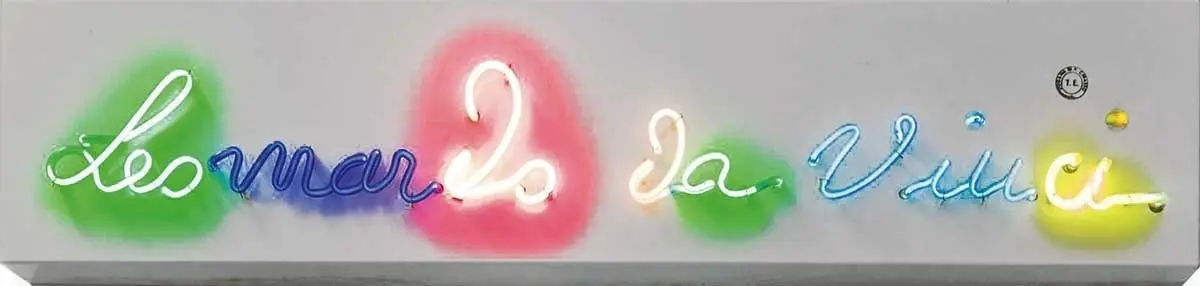
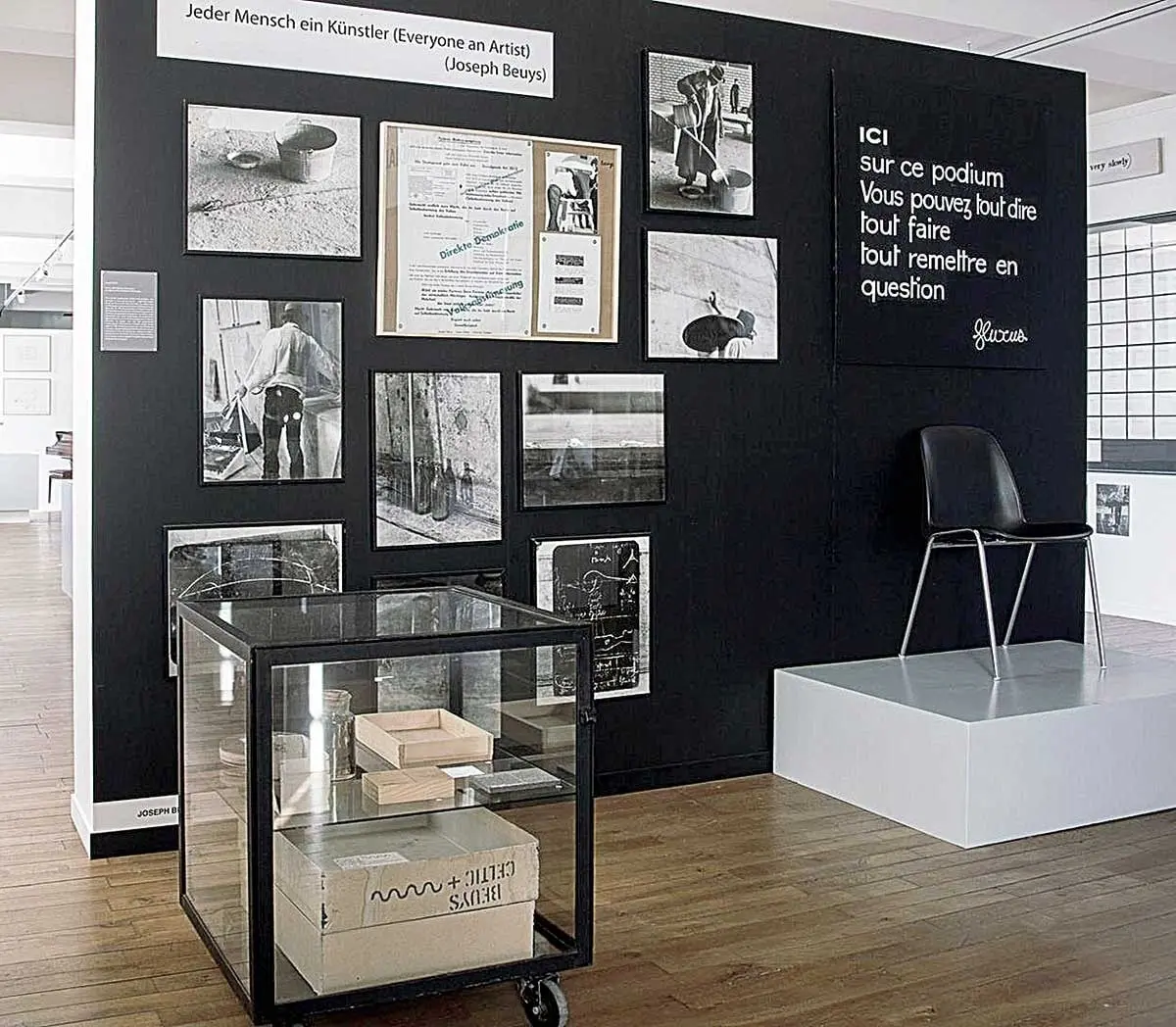
On the third floor, on a large open plan (400m²), the movement’s historical works remind us of Fluxus’ filiations and its complicities, among others, with conceptual art, and with Lettrism. The Fluxus pioneers are there, as are the references to the “founding fathers” with lapidary statements by John Cage (“Even when nothing happens, something happens”), Erik Satie (“Art beshits me”), or Marcel Duchamp. Joseph Beuys (Germany, 1921-1986) joined Fluxus after his encounter of Nam June Paik and Georges Maciunas, with consequences for both his artistic and political commitments. His Celtic + set, from 1971, features ten black and white photographs, a jar, a super-8 film reel, and a metal box. Japanese artist Takako Saito (1929), with four works in the collection, invites visitors to a participatory sensorial experience with a wooden chess game where each piece sends off the aroma of a different spice (Spice Chess, the mid-1960s). Objects are equally present in the work of George Brecht (USA, 1926-2008), who has three works in the collection, and in particular in La machine universelle (The universal machine), a cardboard box with a game board on which various objects are placed, accompanied by a text (edited and published by Karl Gerstner and Daniel Spoerri, issue N°58, 1965, signed by the artist). Also in the box in the Fluxus spirit found in the work of George Maciunas (Flux year box 2), a key artists present in the collection with five works fated between 1967 and 1987. Two American artists are also represented with works from the 1960s. A neon by Robert Watts (USA, 1923-1988; four works in the collection) reproduces Leonardo da Vinci’s signature (1968) and is part of a series of artist’s signatures in their own style, where Watts presents an artist’s signature as an art object in itself. Three important works seek to promote the audience’s participation: Yoko Ono (Japan, 1933), the sole woman among Fluxus’ pioneers, imagined a happening in which visitors are invited to contribute a ladder and place themselves in the same situation of her encounter with John Lennon at a London gallery in 1966, when she was atop a ladder herself. The manuscript text that accompanies the action (“See if the sky is nearer from the ladder”) is dated on 2013. French artist Robert Filliou (1926-1987), another one of the movement’s key figures, invites viewers to play with a device, activating it in several combinations that make it possible to create an infinite number of poems. Danse-poème alléatoire collectif, from 1962 (Random collective dance-poem). An installation by LaMonte Young (USA, 1935), Piano piece for David Tudor #1 (grand piano with haystack, water pool, metal pitchfork, 1960-1990), transforms the grand piano in an object of mockery, thus breaking the object’s symbolic aura and its function.
This collection, presented here selectively, includes the movement’s most emblematic figures and allows us to conclude that, after the United States, Fluxus is most closely connected with Europe and Japan. Nevertheless, it must be noted that the Fluxus spirit had great resonance in Latin America in the 1960s and 1970s, especially in Argentina., Brazil, and Mexico. Besides those Mexican artists directly associated with Fluxus—Felipe Ehrenberg and Marta Helion in the European “exile” in Devon, where they organized the Fluxshoe event and launched Beaugeste Press—or with its spirit—like Ulises Carrión in Amsterdam—we cannot isolate from this rebellious, nonconformist, provocative, and independent such emblematic figures as Argentina’s Alberto Greco and Edgardo Antonio Vigo, Víctor Grippo, Leon Ferrari, Oscar Bony, or Marie Orensanz and, later, Jorge Macchi, among others; Brazil’s Helio Oiticica and Lygia Clark (see their explorations in the 1960s), or Paulo Brusky (who brought Fluxus to Brazil) and Cildo Meireles… all of the artists whose conceptual proximity to and articulation with the Fluxus state of mind are complex and rich, and yet to be studied systematically.
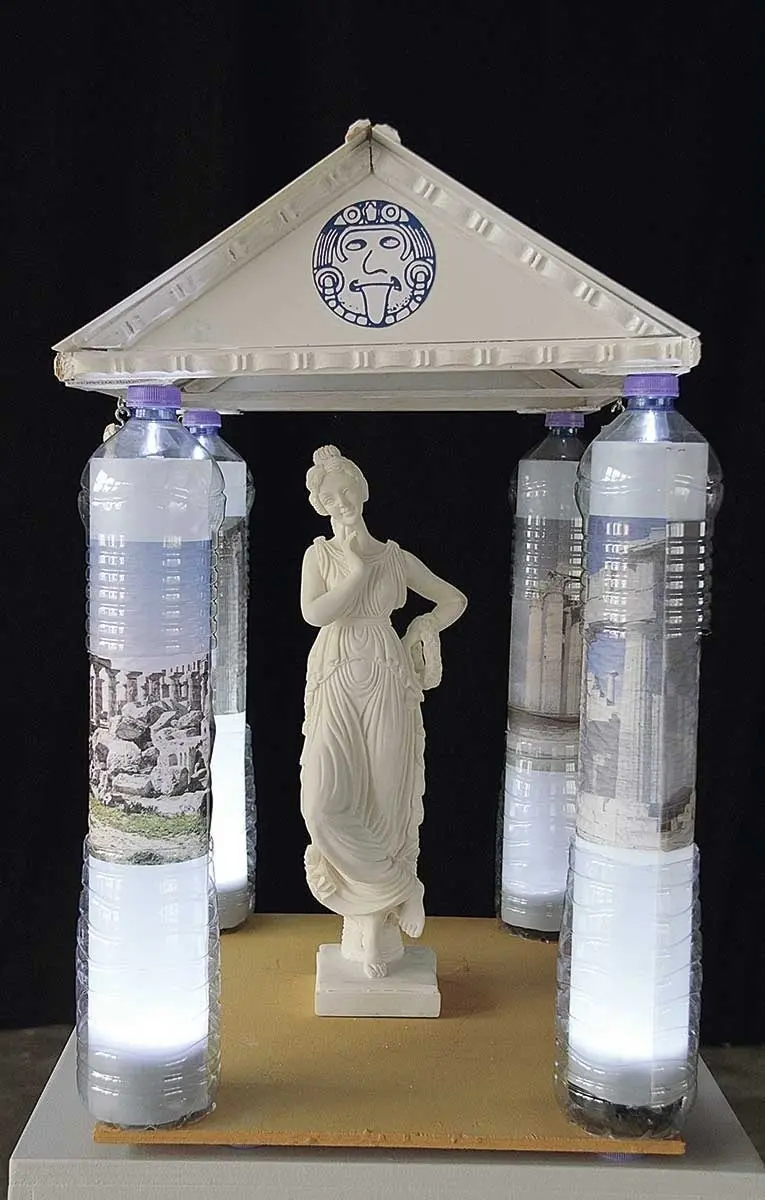
In the foundation’s temporary exhibit pavilion, Ben Patterson (Pittsburgh, 1934), another of Fluxus’ precursors, a musician, composer, poet, and performance-art practitioner, presents the viewer with his most recent production, created during a residence in Blois in 2014: twenty “muses”, objects-sculptures made using objects gathered from fairs around the city, which invite us to “experience” the art object by turning a switch on and off. Lest we forget that Fluxus is freedom in creativity as much as it is humor and the pleasure of invention. “For the ‘muses’ to excite our desire, turn our imagination on, and invite us to always attempt new experiences”.
CHRISTINE FRÈROT
Art Historian dedicated to criticism, research and teaching. École des Hautes Études en Sciences Sociales-EHESS, Paris, France.