
Andrés Burbano’s work is situated at the intersection between research, technical experimentation, and the formal exploration of digital technologies, and it possesses a strongly documentary character derived from the artist’s interest in the production models of documentary and experimental filmmaking. His projects unfold in multiple languages and platforms: conferences, research texts, web-based projects, digital interfaces, and actions that form a complex terrain and generate spaces for reflection, thought, and the exchange of knowledge with their audience.
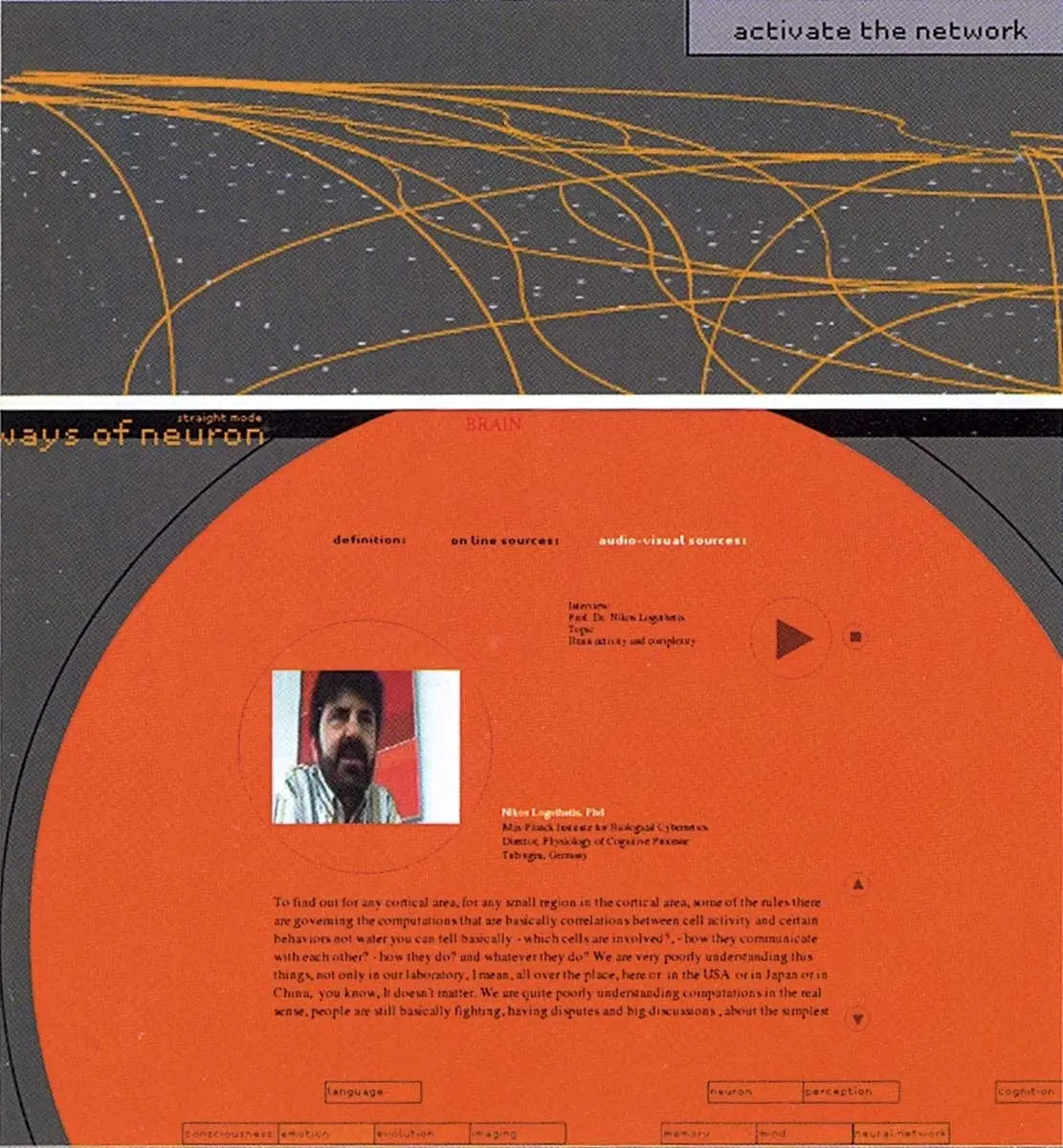
Andrés Burbano studied at Universidad Nacional de Colombia’s Film and Television School, and his work developed in the fields of experimental video and video art. Burbano established a place for himself in the local art scene in the 1990s.1 Neumonía afección por el aire (Pneumonia affliction caused by air,”1994), TV or not TV (1996), and Sanguíneo (Blood-related, 1996) are examples of his work in those areas and of his exploration of computer-based production. Around the same time, Burbano found on the Internet a new, fresher platform with an infinite potential for creativity and a reception clearly differentiated from that of video art.2 This new space demanded a progressive deepened of his knowledge of computers and other digital systems, as tools for the production of his art. Thus, Burbano found in computer programming a key language for the development of his ideas, and his work moved towards what he at the time dubbed “experimental web,” or simply “experimental,” a field that is now known as Net Art, a term coined by artist Vuk Cosic around 1995. This potential was reflected in projects of technical and visual exploration such as Typovideo (2001), an internet-based video-transfer system that translates the file’s visual information into alphanumeric symbols in ASCII code, or The Ways of Neuron (2003-2005), an online documentary about the impact of neuroscience on contemporary society, which explores the features of non-linear narrative and information visualization that are inherent to the web. This exploration of different media was interrupted for the 40th National Artists Salon of 2005, giving way to two works which Burbano considers the most interesting he has produced in Colombia, and which are also the seed for the later development of his oeuvre and the projection of the concerns and methodologies of his research over the past decade: his technological exploration and his interest in the development of a documentary language.
Telegrama (Telegram, Tunja, 2005) and Excavación (Excavation, Bogotá, 2006) contain elements that are further developed and deepened in later explorations, bringing Burbano’s work from the domain of audio-visual production into the hybrid terrain of transmedia documentary making.3 Notable in both is the limited nature of technological means deployed and the simplicity with which the work unfolds. One perceives a reduction of technical experimentation and audiovisual display, so important in his previous work, which emphasizes the documentary intent and the interactive nature of these works, as it displaces the artistic object from the visual to the experiential.
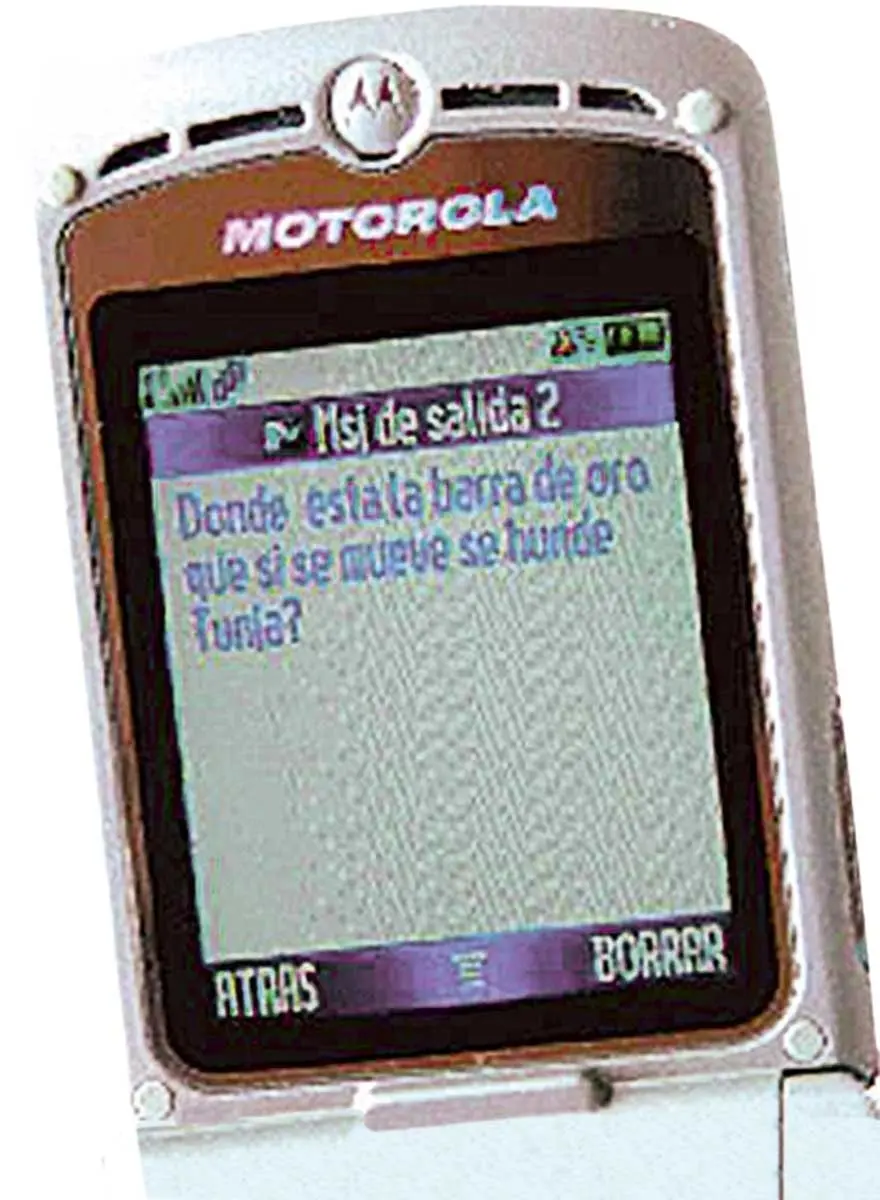
In both Telegrama and Excavación, the potential of the computer, the Internet, and programming itself is set aside in favor of simple gestures that generate socio-cultural spaces for communicating and interacting with the audience. In simplifying technological development, Burbano is able to emphasize important elements in his work that can on occasion be obscured by the fascination that digital technologies still generate in the audience. In this way, these works, devoid of complex graphics, synthetic images, and technological devices, are presented by means of everyday interfaces with which the viewer can easily relate: cellphone text messages in the case of Telegrama and a surveillance monitor in the case of Excavación.
Telegrama is a participatory project with the community of Tunja, located 130 km northeast of Bogotá and one of the Americas’ oldest cities. Over the course of several visits to the capital of the department of Boyacá, Burbano’s fieldwork involved the local population, presenting them with a platform for raising questions about their city. On the basis of informal conversations with citizens, questions and doubts the citizenry had about Tunja and its culture emerged; these were recorded by Burbano and later distributed back to the community in the form of mass text messages, thus generating a circular communication chain where citizens were actually interrogating themselves. In this project, the distribution of the messages is delegated to an advertising company, setting aside all technical development and experimentation in order to focus on a strategy that is closer to the documentary, through direct communication and interaction with the community. The information compiled undergoes a transformation from the moment when a citizen formulates a question, to its systematization and its distribution via text message. In this process, the private communication that the artist maintains with any one individual becomes public and generates a space of reflection about the city and the social uses of technology.
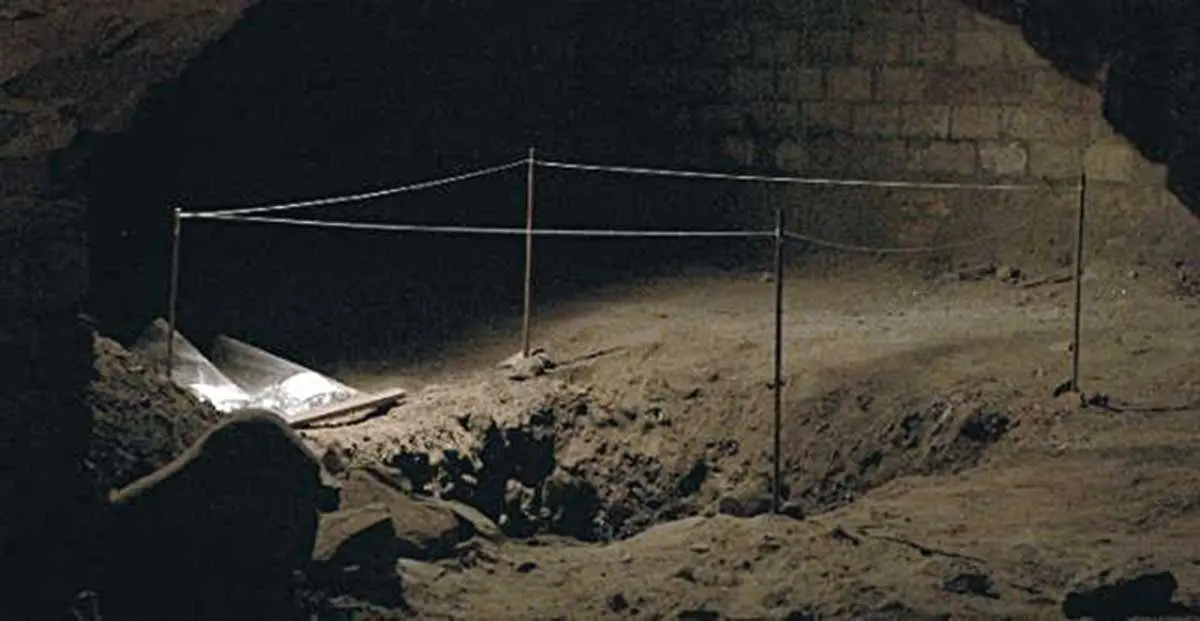
As in Telegrama, in Excavación the artist sets strict limits to the influence of digital technologies, using a closed surveillance circuit as the work’s sole media element. Excavación evolved from Burbano’s interest in the appearance of a number of bones (human and animal) during the excavation work carried out at the Colón Theater in early 2005 in order to check the structure’s anti-seismic resistance. The bones were found by a guard in the building, which is located in Bogotá’s historic downtown and for a while became an archeological zone (and potentially a crime scene, if the remains proved to be of recent date). The project planned by Burbano was to invite anthropologist Andrés Barragán, in charge of assessing the bones, to reconstruct the archeological dig and re-deposit the remains found there. The reconstruction was broadcast via closed-circuit to a monitor located on the guard’s desk, and viewers were able to access the building’s underground level to visit the reconstructed dig, or they could watch it in the monitor by the exhibition’s exit. With this installation, Burbano adds another layer of meaning to the excavation and brings into the public sphere a private event whose meaning shifted as it touched on different realms of knowledge. The use of a closed surveillance circuit is a wink to the circumstantial agent who found the bones, and to the latter’s potentially violent character; it illustrates the transformation of reality, and of our perception of it when it becomes mediated. In Excavación, Burbano connects with the strategies and methods of archeology, using them as a means of research, production, and visualization in the context of the arts, an experience that would later reappear in new projects and as a practical point of reference for his research in the field of media archaeology.
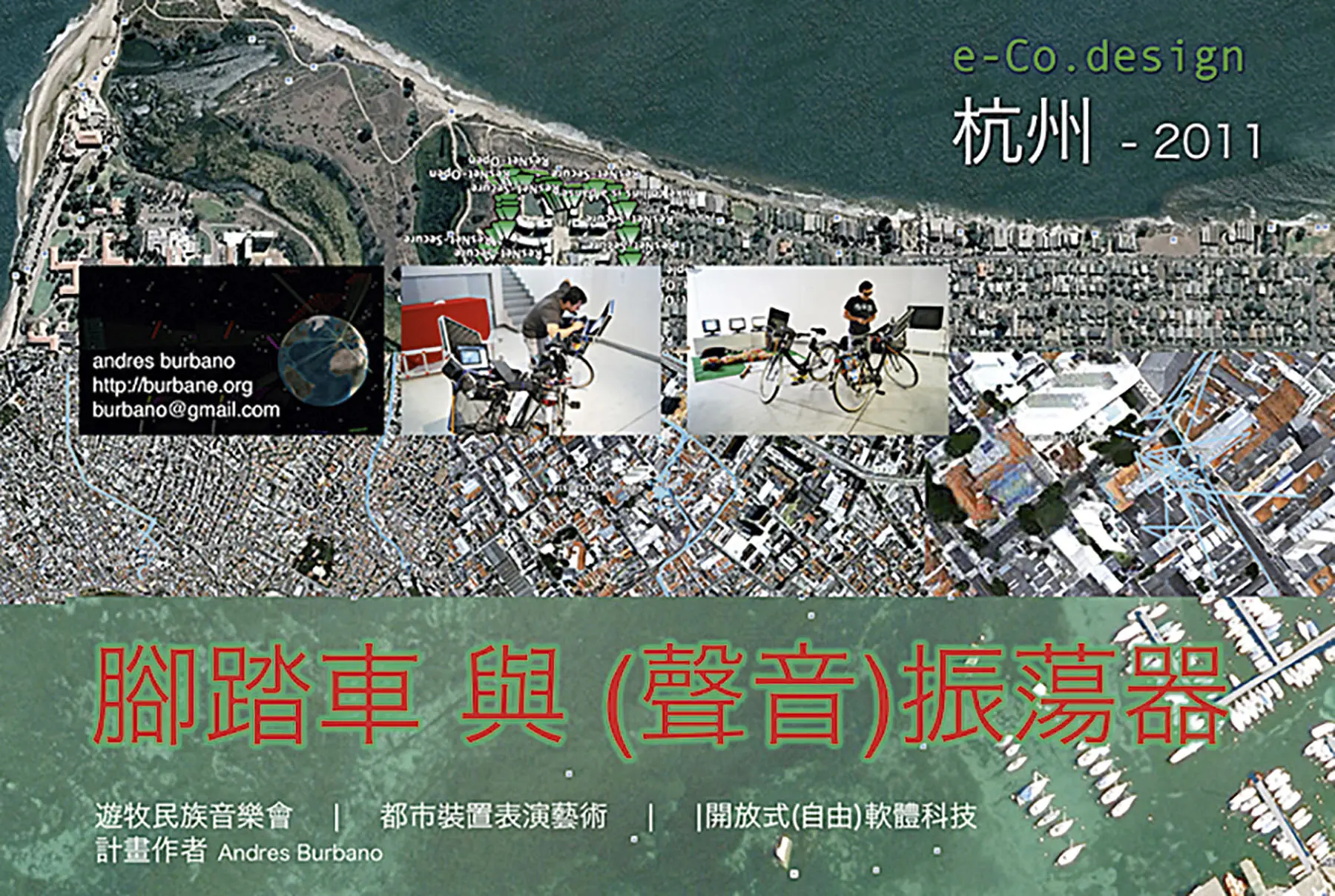
Throughout the last decade, Burbano has carried out a series of research and creation projects that incorporate the strategies used in these two works, bringing them into his process of technological experimentation and the development of a practical concept of media archaeology. Between 2008 and 2011 he took his traveling performance Two Cycles to several cities around the world, among them Santa Barbara (California, USA), Geneva (Switzerland), Madrid (Spain), Guangzhou (China), and São Paulo (Brazil). The project deals with two technical aspects, data-collection and sound-production, and it points out the dynamics between people and their environment in large cities. In Two Cycles, the data collected are traces of that interaction, transformed into sound in order to momentarily return to the urban context and turn pollution particles, which are harmful but imperceptible for human beings, into sensible elements that acquire relevance and bodily presence by their break with the city’s everyday dynamics. As in Telegrama, information collected in a specific site is the project’s lifeblood; it flows towards the technological structure and returns to the city, creating in its path a space to reflect about the urban space and our relationship with it. The dynamic nature of both projects prioritizes interactions with the audience and the flow and transformation of the data, over the informational potential of their collection and storage. Both the collection of questions in Telegrama and the environmental measurements in Two Cycles are freed of their documentary load by their becoming text messages in one case and sounds in the other and by their return to the flow of sensorial stimuli that comprise the urban environment without being permanently recorded on any support that would facilitate their analysis. They become, thus, fleeting signals that provide the audience with a moment’s pause and reflection, only to disappear again into the city. These projects are designed with the goal of generating spaces of social interaction where the dynamic and ephemeral nature of communication prevails over the static, testimonial nature of the information.
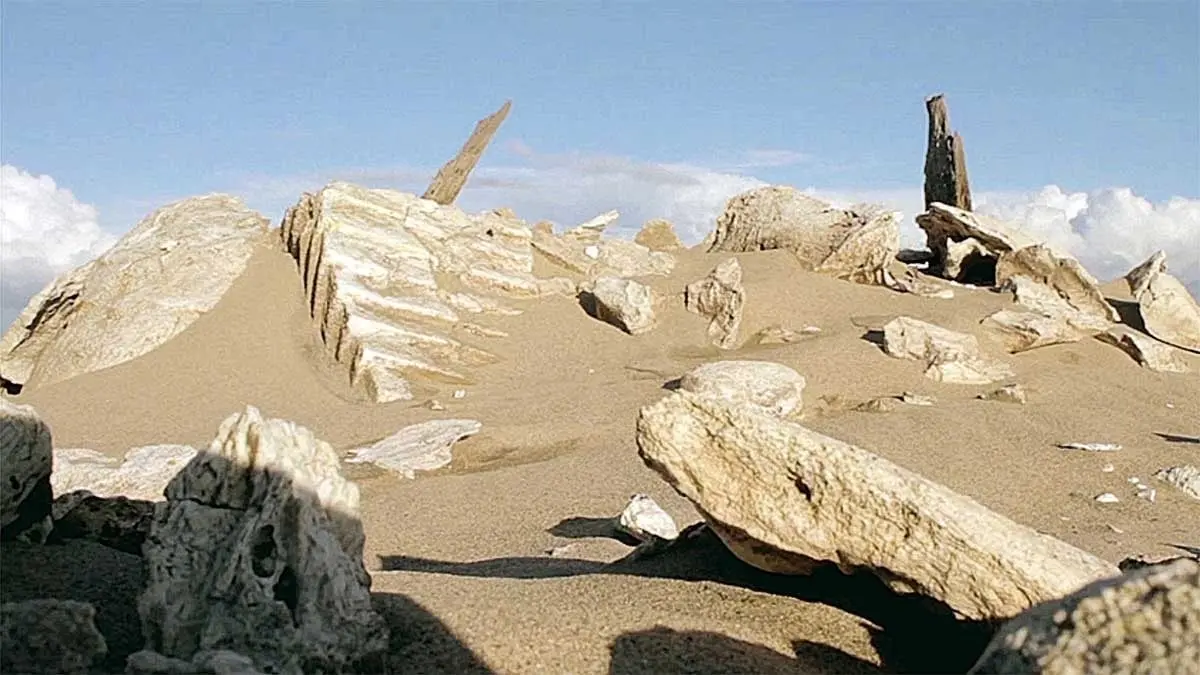
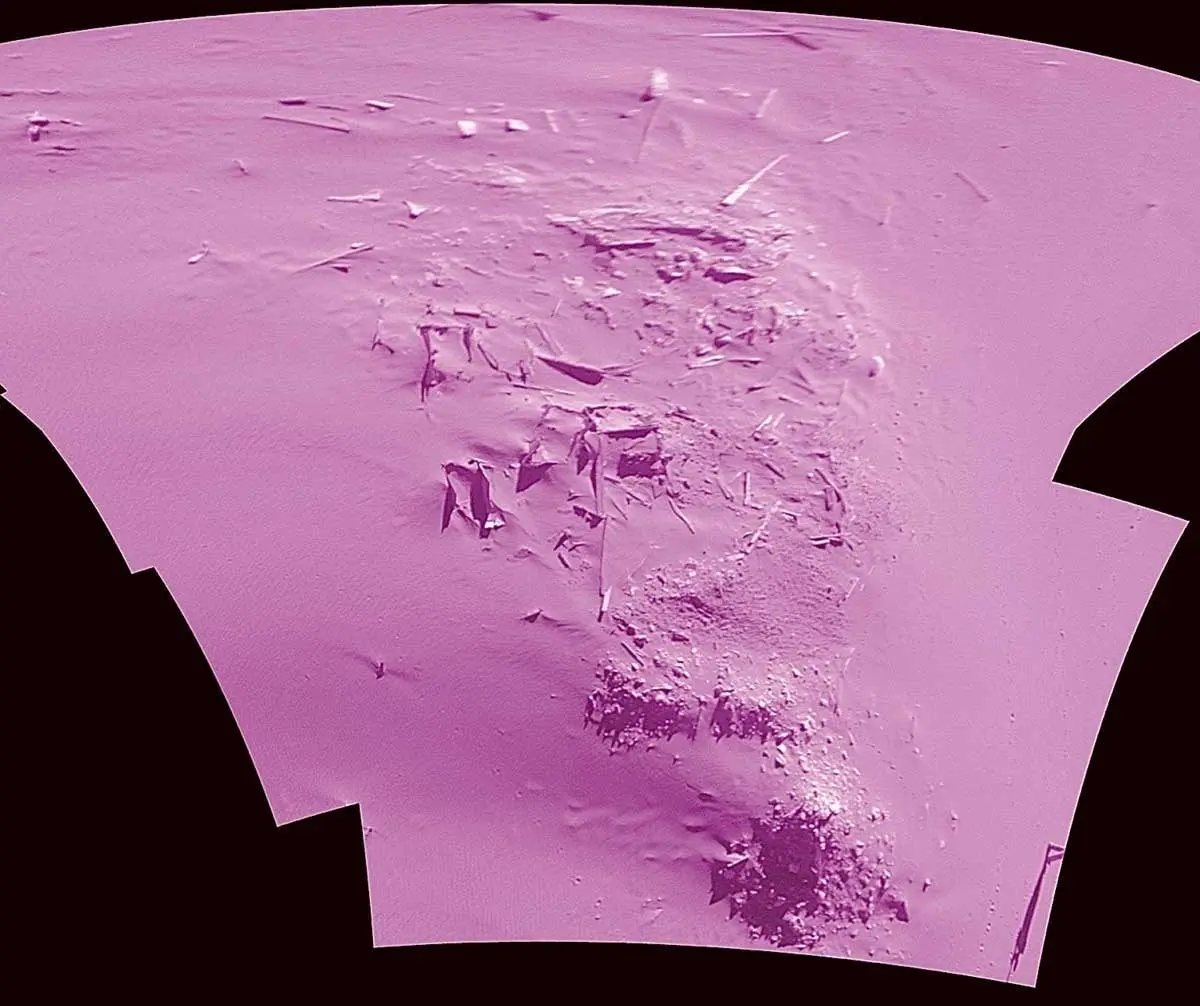
The New Dunites (2011) is a research and creation project developed by Andrés Burbano, Danny Bazo, and Solen Kiratli DiCicco, in collaboration with a multi-discipline group of researchers. It points towards a particular phenomenon where seemingly unrelated cultural systems collapse into each other. An ecology of interfaces emerges from this clash, Burbano says, which functions as a practical experiment—with a certain degree of irony—in the fledging field of media archaeology. The trigger for the project was the world’s largest coastal-dune ecosystem: the dunes at Guadalupe-Nipomo Natural Park, south of San Francisco, California. It was here that Cecil B. DeMille shot the first version of his The Ten Commandments, in 1923. The largest soundstage in history was built for DeMille’s production, consisting of two cities. The first is a 1:1 replica of an Egyptian city, and the second was used as temporary quarters for the production crew during filming. After principal photography was completed, the studio, Paramount, decided to protect its investment from the use by its rivals by partially destroying both cities. Given that the dune ecosystem is naturally unstable and that the dunes themselves slide and move over time, the ruins were covered by sand and only emerge partially at intermittent intervals. Later, they were declared archeological landmarks, and now several layers of legislation protect the site, including laws for natural parks, ecological sanctuaries, and archeological landmarks.
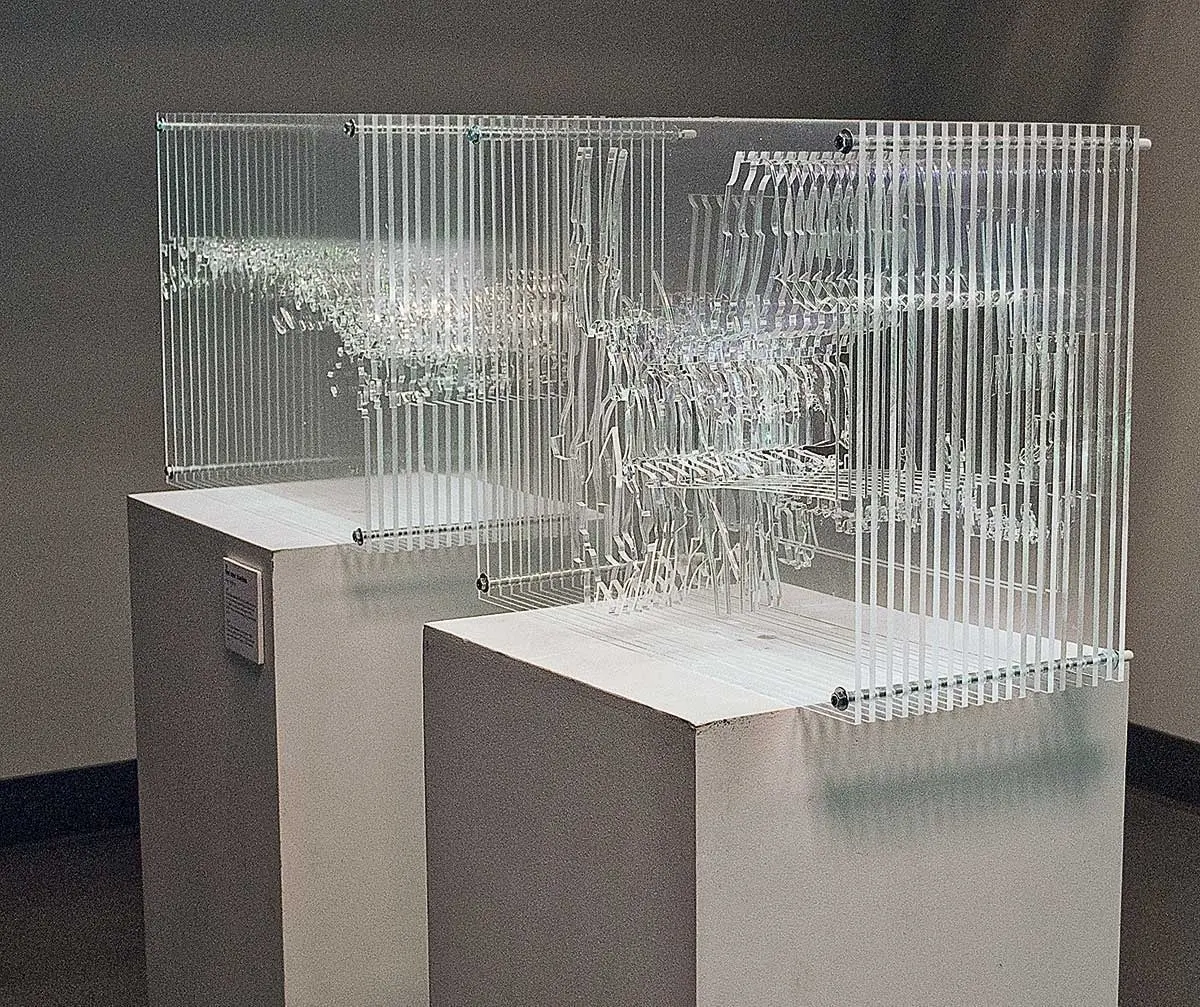
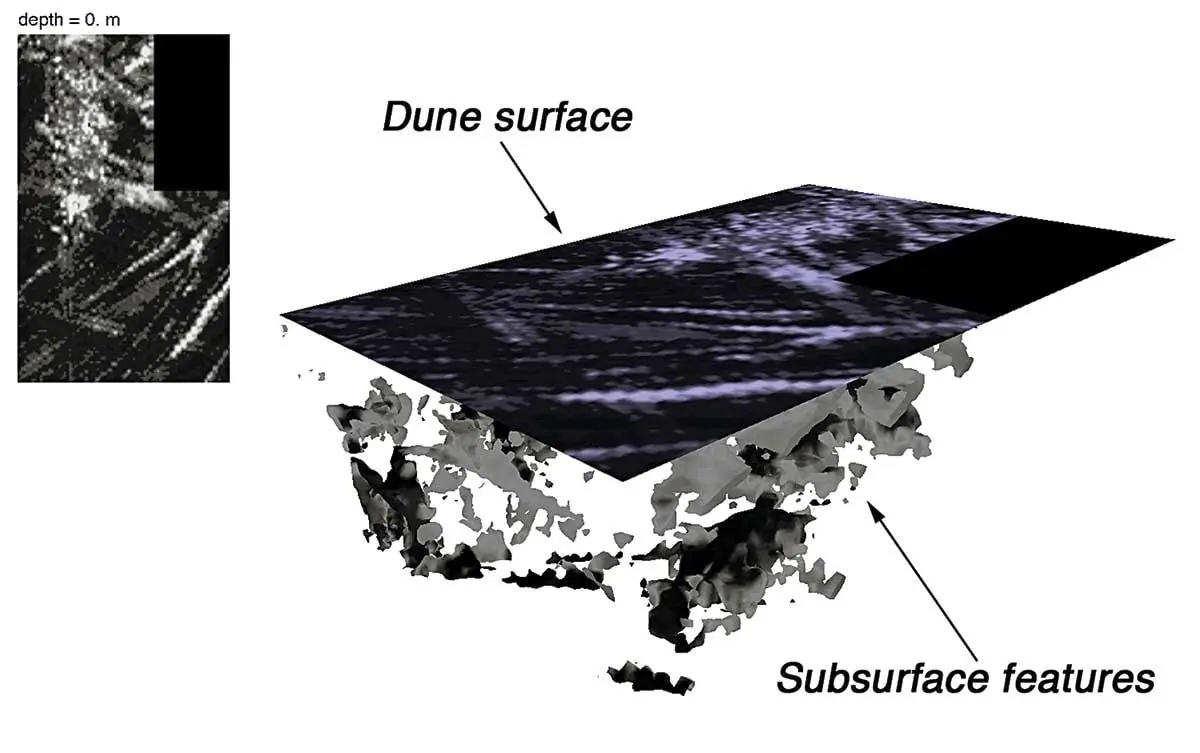
The confluence of systems and the implicit contradiction in the conferral of archeological status to construction dating from less than 100 years ago are both parts of this project, which has at its core the conceptual juxtaposition of media archeology as a field of study, the use of digital technologies in archeological science and in art production. As in Excavation, archeological methods are implemented in the exploration of a site whose meaning changes as it is analyzed from different epistemological standpoints, including the experimental use of technology never before used in this kind of ecosystem: Ground Penetrating Radar (GPR). Information was first collected about an almost unexplored terrain, covered by concentrated layers of nature, science, and fiction. Burbano says: “[for the project] part of its lifeblood are those [collected] data, how they are processed, visualized, represented, and shared, and how they become interactive (…). What was explored are the ruins of fiction, and this is like doing archaeology of fiction.”4 What Burbano calls an ecology of interfaces was created based on the data collected. This ecology of interfaces includes the following three elements: first, an iPad app that allows users to explore the data of the ruins under the dunes; then, a three-dimensional navigation app to explore two digital objects: one created on the basis of the GPR-collected information, and another one based on stills from a sequence in the movie; finally, two sculptures created from the two digital objects and 3D-printed using a laser cutter.
In projects like Two Cycles or The New Dunites, Burbano is able to bring together his interest in the exploration of digital technologies and the implementation of scientific strategies in order to develop investigations that explore the documentary character of art and are successfully inscribed in different areas of knowledge: academic, technological, scientific, and artistic. Burbano’s process is fueled by all of these fields, and it explores the convergent nature of digital technologies in order to produce hybrid projects that interact with their audience from inside and from outside the conventional art circuit. In this way, Burbano created communicating bridges between art and society that are highly stimulating in an era when both are in the process of adapting to the changes wrought by profound technological transformation.
NOTES
1. The history of video art in Colombia as well as Andrés Burbano’s role in this context, are developed in the web project Historia del Videoarte en Colombia, by Guilles Charalambos.
2. Unpublished interview with Andrés Burbano, April 8, 2014.
3. The concept of transmedia narrative is developed by Henry Jenkins in his book Convergence cultures.
4. Unpublished interview with Andrés Burbano: May 24, 2013.
ESTEBAN GUTIÉRREZ
Artist and researcher. Teaches Photography and is a doctoral candidate in Art and Architecture at Universidad Nacional de Colombia.