
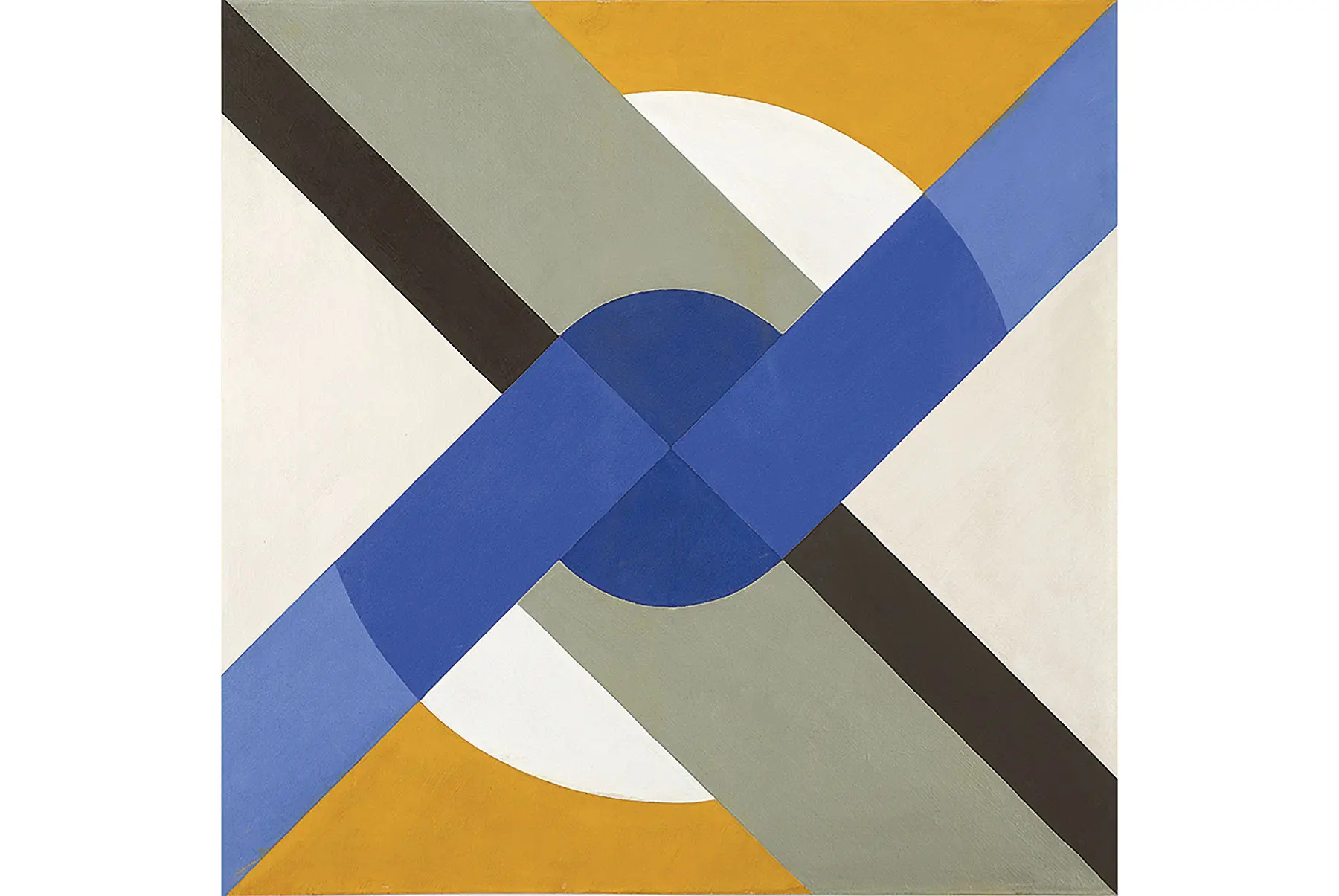
At the dawn of the Twentieth Century, the intellectual movements that had emerged in Paris and were destined to transform our culture gained presence in Chile thanks to the poet Vicente Huidobro.
A calligram is a way of using words to form images, a complement for what the artist wished to express. Huidobro used this technique in the writing of his Triángulo armónico (Harmonious Triangle), which launched a whole new period in his career.
Vicente Huidobro is considered the first avant-garde poet in the Spanish language. He was born in Santiago de Chile in 1893 and died in Llolleo (Chile) in 1948. He was not only the creator of the calligrams, but a writer who devoted his entire life to leading a transformation in thinking, intended to change the dominant culture of the early Twentieth Century.
Huidobro founded Creacionismo, one of that era’s central movements in poetry, in Paris in 1916. Later, the movement would reach Spain and influence the poets of the 1927 Generation, especially Federico García Lorca. Huidobro belonged to the era’s intellectual elite, along with artists like Juan Gris, Pablo Picasso, Tristan Tzara, Robert Delaunay, and Jacques Lipchitz, and writers like Guillaume Apollinaire, Max Jacob, Rafael Cansinos-Asséns, Pierre Albert-Birot, Paul Dermée, and Pierre Revendy.
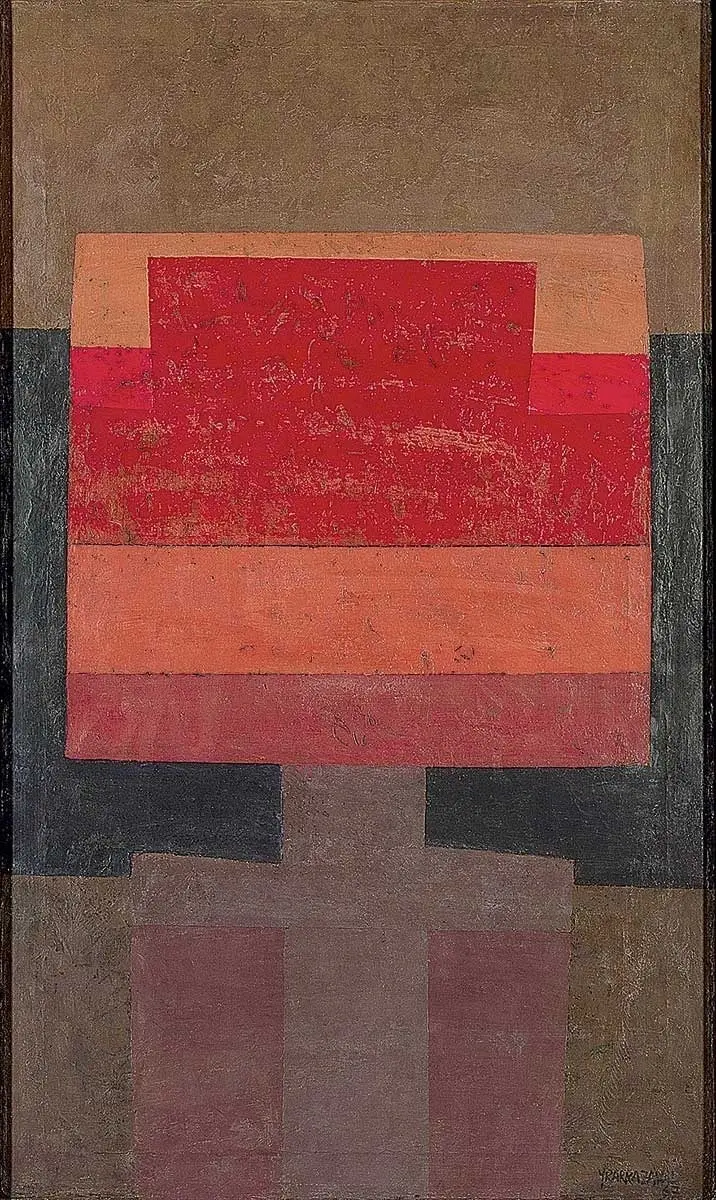
In 1912, the sixth issue of Musa Joven, a journal established by Vicente Huidobro, printed on page 43 the Triángulo armónico, inaugural of a singular poetics, according to Rosa Sarabia.1 The Triángulo armónico was published again the following year, under the title Canciones de la noche (Songs of the Night).
There can be no doubt that Huidobro was a precursor of geometric art; in his poems, he created a new way of seeing and understanding it, and we shall see that this saga evolved over the following years when Huidobro’s followers attained a local, distinct way of thinking about art.
In May 1922, in Salle XIV of the Edouard VII Theater in Paris, Vicente Huidobro inaugurated the exhibition of his 13 painted poems. It was a fleeting and unique occasion. In 2001, the artist’s adventure was presented in facsimile at the Reina Sofía museum in Madrid. This is one of the landmarks in the history of geometric art; others were yet to come, as we will see in what follows.
The Precursors of Geometric Art in Chile
Huidobro continued to work on the calligrams he had created. In two of them, in Paris, he had the collaboration of artist and art critic Sara Malvar (1894-1970), inarguably a pioneer in Chilean art. She showed the path of the avant-garde in the pages of La Nación, where her Notes on Art displayed the idea of a geometric country.
Malvar was the first Chilean artist to theorize about geometric abstraction. An admirer of Picasso, Juan Gris, and cubism, she said: “I feel love for the idea of the square, the clearest, most impassible and serene. If we came into this life with a geometric, well-balanced conscience, where everything was smooth, clear, continuous, then we would have a white, straight city of precise lines. The Geometric Country where we would want to live.”
Meanwhile, Huidobro’s manifestos have special significance in the history of Chilean visual arts, recognized as the country’s earliest writings in support of cubism.
In 1922 came Moulin and Paysage, a testament to the Calligrams, points of origin of visual poetry.
The figure of Hernán Gazmuri, an artist and student leader who questioned the dominant order, broke into the scene in 1925. Gazmuri traveled to Europe, and in Paris, with André Lhote, studied the foundations of cubism. Later he returned to Chile and was appointed a professor at the National Art School, where he taught cubism and suffered the rejection of the rest of the faculty, who did not share his avant-garde ideas and pushed, successfully, to have him fired.
A Failed Project
The group of neo Cubist painters sponsored by Huidobro included María Valencia, Gabriela Rivadeneira, Jaime Dvoretzky and Waldo Parraguez. In 1934, the painter Carlos Sotomayor joined the Decemberist group. In December of 1933, they had presented an exhibition, also sponsored by Huidobro, at the Walton bookstore, and he intervened in the event to express his surprise at the apparition in Chile of individuals who had been able to assimilate the new trends in the arts. He stated that the work of these four artists could very well have been front and center in any Paris, London, or Berlin exhibition.
Carlos Sotomayor had his first formal exhibition in what was known as the “September exhibition,” in 1934, at the Chilean Student’s Federation (FECH, in its Spanish acronym).
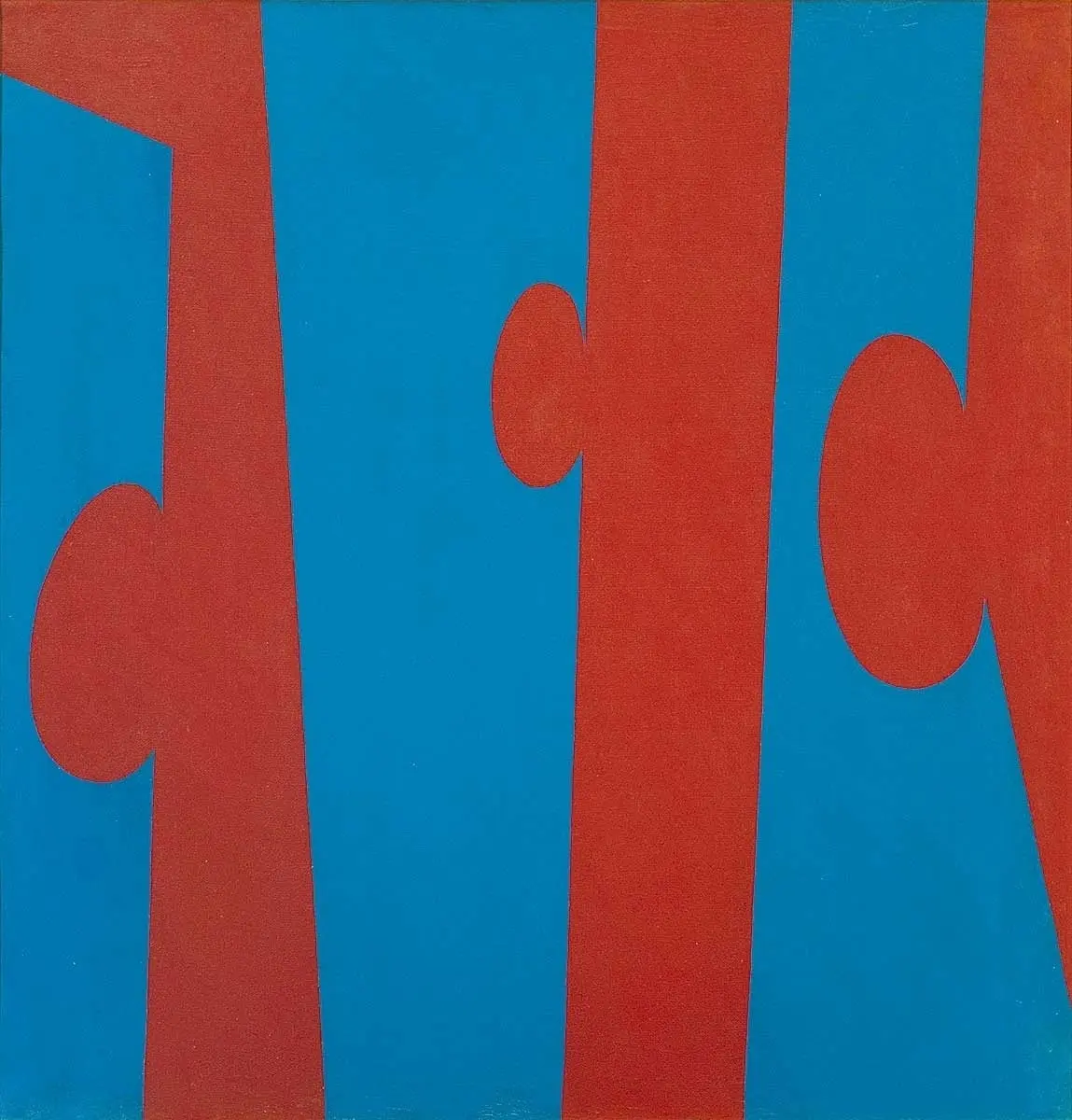
These artists developed a project that traveled to Lima, Peru, where they exhibited alongside the surrealist poet César Moro. The result was a debate between Huidobro and Moro, which put an end to the project. The works are now lost, but the episode deserves to be recovered from oblivion, given its importance in the history of Chilean geometric abstraction.
Later, the four artists left the Decemberist group, which sounds like a product that didn’t blossom.
Architect Jaime Dvoretzky immigrated to the United States, where he died. Waldo Parraguez became an important figure in the renewal of architecture education in Chile, after experimenting with kinetic art. Gabriela Rivadeneira became the muse of the celebrated poet Jean Emar, her husband. Later she abandoned the practice of art and devoted herself to her marriage. María Valencia immigrated to Venezuela and became a renowned visual artist and teacher there.
Emilio Pettoruti Visits Chile
The famed Argentine painter Emilio Pettoruti visited Chile in 1950. His exhibition at the Museo Nacional de Bellas Artes was well received both by critics, with some fifty articles in the local press, and by artists. The following year Pettoruti returned and taught for the summer at Universidad de Chile. The presence in the country of a contemporary of the cubists and of the Italian interwar avant-garde greatly influenced those Chilean artists who participated in his workshops and had an impact on the formation and development of the Rectángulo group, in the mid-1950s.
Pettoruti’s visit was a new landmark in the acceptance of geometric art in Chile. It is worthwhile noting that the Argentine artist married Chilean critic María Rosa González, who has a long career in journalism both in her native country and in Argentina. González’s writings on Piet Mondrian and abstract art are key for our understanding of the era.
The Group of Five
Ximena Cristi, Matilde Pérez, Aída Poblete, Sergio Montecino, and Ramón Vergara Grez, all of them brought together during the 1950s by their quest for a renewal in painting, formed the Group of Five.
The group’s proposal was expressed in the catalog for their 1953 exhibition. It came, above all, from the individual need to create a new artistic language and to find new avenues for creativity.
The Rectángulo Modern Art Group2
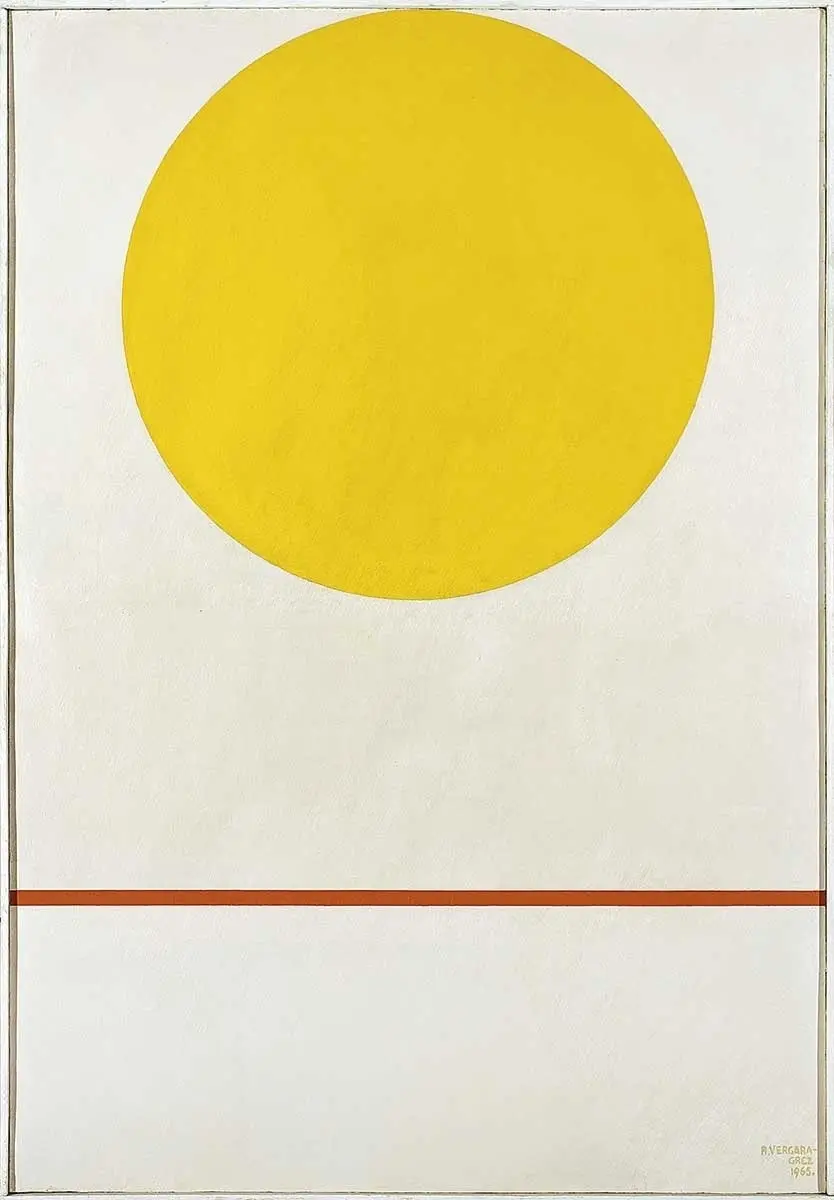
Ramón Vergara Grez, who was its ideologist, and included Matilde Pérez, Elsa Bolívar, James Smith and Gustavo Poblete established it in 1955. On a geometric and abstract foundation, the Rectángulo group sought to eliminate the referential nexus between reality and the work of art. “Art is an art of ideas,” they liked to say, in an exploration that moved away from “the natural” and centered on lines, plans, and colors that launched a “new visual language.”
In 1956, the catalog for the first Rectángulo exhibition proclaimed the group’s theoretical basis: “The artists featured in this show put their emphasis on concepts of order and geometry; they work with schematic, plan-like draftsmanship to facilitate the measurement of the parts and their relation with the whole; they replace traditional touch or brushstroke with color planes.”
That same year, and as a result of this exhibition, the group organized a forum to clarify some of the concepts at play in this new “abstract art.” In those years, when the theoretical consideration of the arts was almost nonexistent, the group’s purpose and techniques were anything but evident to audiences.
The arrival in Chile of Mario Carreño, who came from Cuba, gave support to the group’s postulates and contributed to focus their work on abstraction as “a rationalist, considered kind of painting, where all the elements are part of a hierarchy; there are no accidental factors, or they exist only as residues that remain in the work, which will progressively disappear as the refinement process moves forward.”
Six years later, Luis Oyarzún, then the dean of the Universidad de Chile’s Art School, wrote for the catalog of the international exhibition Forma y espacio (a name later adopted by the Rectángulo group): “These artists want to give new value to painting’s initial gesture as a will to intellection, this is to say, creation in the sense of the ordering of chaos.”
The Rectángulo Group’s expressive quest, which in Europe had begun thirty years before, never unmoored itself from the pictorial support; thus the fact that all of the group’s investigations happened within the framed painting. This rigidity in not moving away from oil and canvas, in the end, constrained and diminished their potential.
However, despite the limitations of the local scene and a production system that was very different from that of other parts of the world, the emergence of the Rectángulo group contributed to a significant renewal of pictorial language in Chile.
This “new image” was comprised of geometric figures and pure, flat colors, articulated as schematic representations of the visual elements of nature since the study of “external reality” and the need to subject their compositions to the rigor of intellectual speculation were also part of their aesthetic principles.3
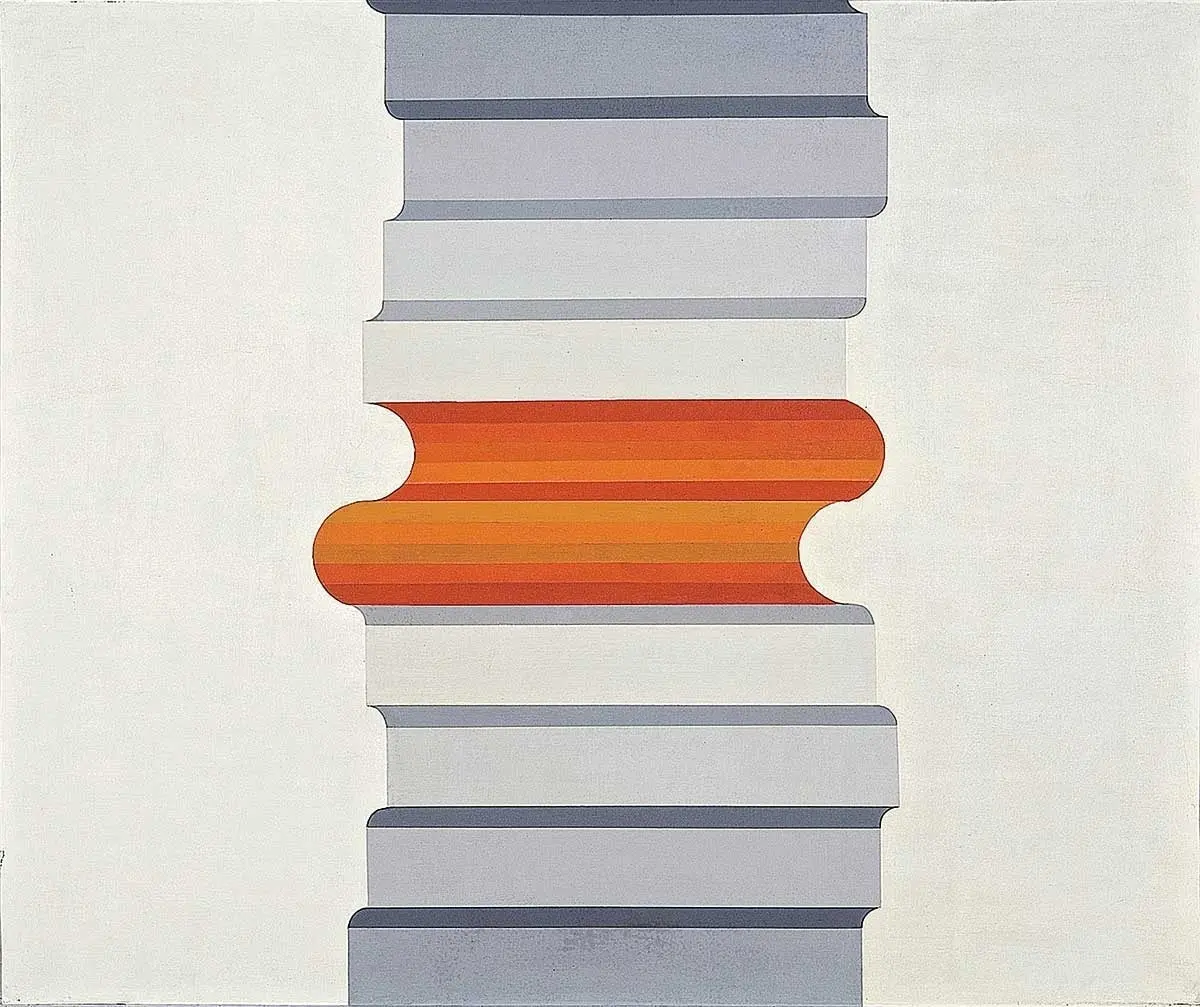
In 1970, the group made an appraisal of their beginnings and their development and presented their objectives and achievements in a catalog.
They aspired to:
1. Create an eminently conceptual art, as a reaction to the emotionalism and sentimentalism that dominated the visual arts in the country.
2. Give greater depth to the image of Chilean reality through direct visual means (lines, planes, colors, etc.). Not in order to represent, but to symbolize the image of Chile’s people and space.
3. A society where art, painting, sculpture, architecture, and urban planning are integrated into programs for social enhancement, transformed into an entire plastic-functional reality. A new environmental reality for a New Man.
They were able to:
1. Conceptualize reality as a whole. Integral reality as a work of art. Develop an artistic sensibility with which to contribute to a new social atmosphere.
2. Develop a plastic concept that can be applied to the entirety of environmental reality (household items, furniture, rooms, housing blocks, urban solutions, etc.).
3. Works with the arts with new communication media. Explorations of motion (use of the brush for the creation of the work of art, where, if the work itself doesn’t move, the eyes grab shapes and send to the mind the sensation of a fantastic velocity). Use electronic media for the production of light and color, etc.
In the following years, the group, which in its beginnings adopted Piet Mondrian’s ideas and techniques of Neo-Plasticism, explored Latin American sources of inspiration.
In 1985, Ramón Vergara Grez wrote a definitive discourse about geometric art, which he extends into the pre-Columbian period and makes reference to the origin of its culture. Vergara Grez notes artists’ subservience to the culture of hegemonic countries, and calls “(…) to create new aesthetics and ideologies that contribute to the demystification of the alienating systems for the production and consumptions of works of art in our continent, and to create conditions and institutions of our own that promote the liberation of our spirituality.”
These are the sources on which our artistic expression feeds, according to Vergara Grez:
1. It uses ancient pre-Columbian cultures.
2. Latin American folklore, especially Chilean.
3. The diverse expressions of geometricism in economically developed societies.
4. Lived experience in today’s world, both national and Latin American. The relationships between our citizens, our citizens themselves, and the landscape.
One of the most unique ways of engaging geometric art, connected to pre-Columbian traditions, was developed by Ricardo Irarrazábal and Patricio Court.
For Chilean poet and artist Cecilia Vicuña, a thread becomes a metaphor for the poetic word. Influenced by native arts or shamanic chants, Vicuña has focused on the creation of shapes that emerge between the resonance of the poetic work and the visual object: a “palpable poetics,” to use Kenneth Sherwood’s typology.
A frank use of the reticule also appeared in Argentine artist Alejandro Puente’s paintings of the 1970s, which came later than Irarrázabal’s. A practitioner of abstract art of “hard shapes,” he arrived in New York in 1967 and remained there until 1971, thanks to a Guggenheim fellowship.
Matilde Pérez
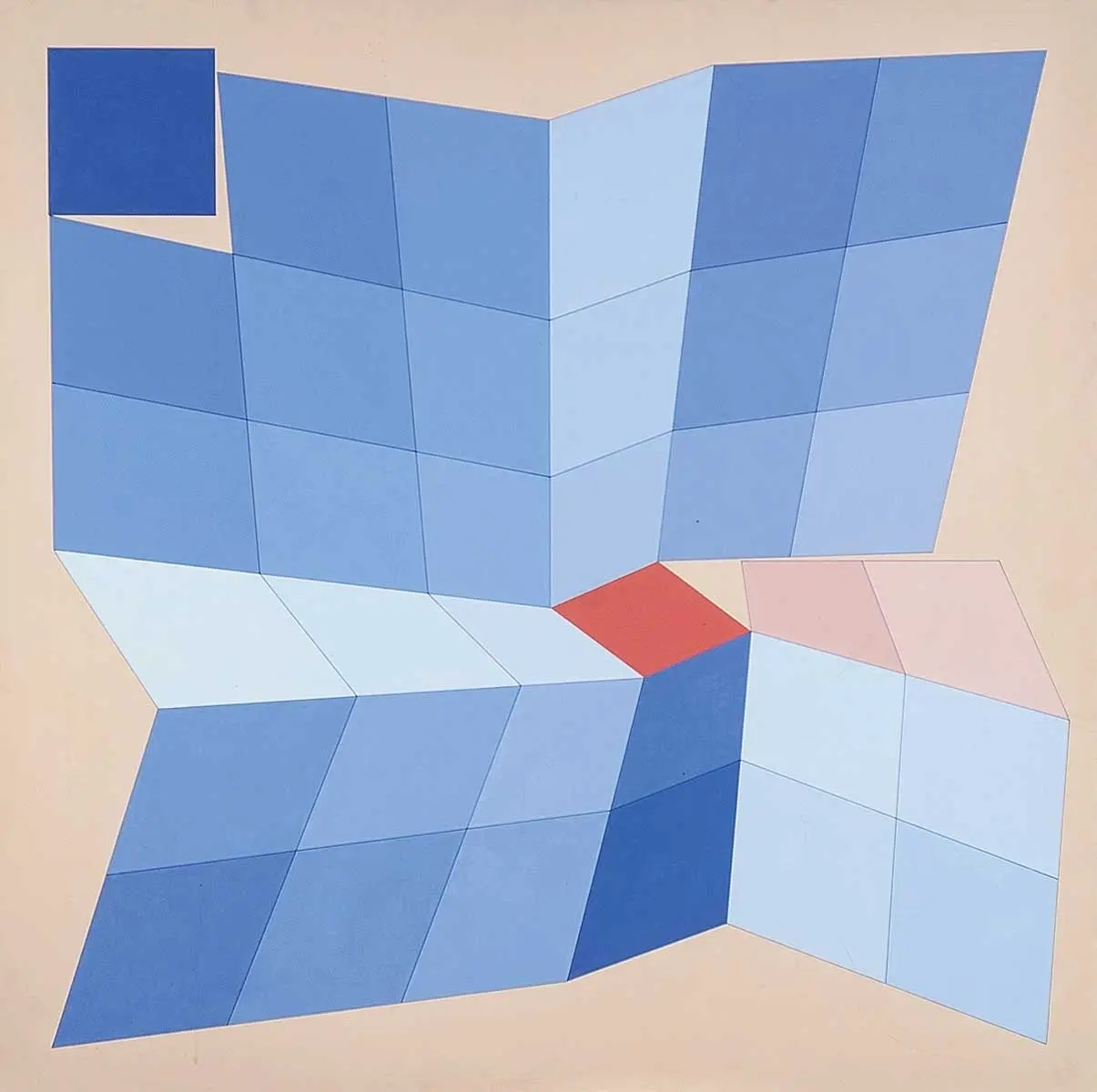
In the judgment of Osbel Suárez, a curator and historian of Cuban art, Matilde Pérez (1916) was a special case in the Chilean art scene. In the late 1940s, she was a member of the Rectángulo group, considered at the vanguard of geometric abstraction in the country. In the 1960s she moved to Paris, where she contacted Victor Vasarely. Upon her return, Pérez intensified her investigations in kinetic art, becoming a local pioneer of this trend. She worked with new materialities and formats, collages, acrylic or metal sculptures, murals, and works in the public space, as well as mobile and luminous objects; she also experimented with the use of electricity, all of this in a context that was resistant to the new.
Pérez was also a professor at Universidad de Chile, a position she was forced to resign after the arrival of the military dictatorship. Her contributions were not properly recognized at the time. It was only in 1992 that Matilde Pérez was rediscovered by a new generation of artists, with the inauguration of the Gabriela Mistral gallery with an exhibition titled “The Emergent Decade.” Later, the Museo Nacional de Bellas Artes devoted an exhibition to her work, under the title of “Mobile Eye.”
At a 1970 exhibition of kinetic art, in Santiago de Chile, Matilde Pérez presented her Túnel cinético (“Kinetic Tunnel”), which generated different light effects as visitors moved into it: it was the beginning of the Environment. Iván Vial, Carlos Ortúzar, and Alejandro Siña also participated in that exhibition. Carlos Ortúzar was a notable sculptor, and his best-known work is the monument to General Schneider in Santiago de Chile. Alejandro Siña later developed his career in the United States. With the support of Universidad de Chile, Matilde Pérez founded the Kinetic Art Group, in which Alicia Blanche and Domingo Muñoz Silva also played a role. Simultaneously, in Paris, Iván Contreras-Brunet worked on a kinetic art that used air to move objects: Aeolian Art.
The Forma y Espacio Group
Established in 1965 after the 2nd National Exhibition (Grupo Forma y Espacio. Integración de las Artes), on the occasion of the 10 years of Rectángulo. Along with Ramón Vergara Grez, its members at various points were Adolfo Berchenko, Miguel Cosgrove, Elsa Bolívar, Gabriela Chellew, Kurt Herdan, Robinson Mora, Claudio Román, and Carmen Piemonte. All of them were seen as geometric painters who used a synthetic, seemingly uniform language where each of them signals a differentiated personality. For them, the image is relevant as a code for an increasingly mechanized world.
According to Ramón Vergara Grez, the movement went through three stages in the development of geometric artistic expression. First, geometric naturalism, where people and objects are alluded to primarily by their shape and later become a plane, becoming the painting’s true protagonists. Next, geometric decorative art, which means the space or the plane of the canvas, and a definitive break with the surrounding world. Finally, the concept of structure or absolute abstraction, where artists work in full with geometry, rhythm, and plastic qualities under the concepts of structure or architecture.
Other artists were invited to participate in the group over the years: Graciela Alemparte, Guillermo Brozalez, and Francisco Pérez.
Geometric Sculpture
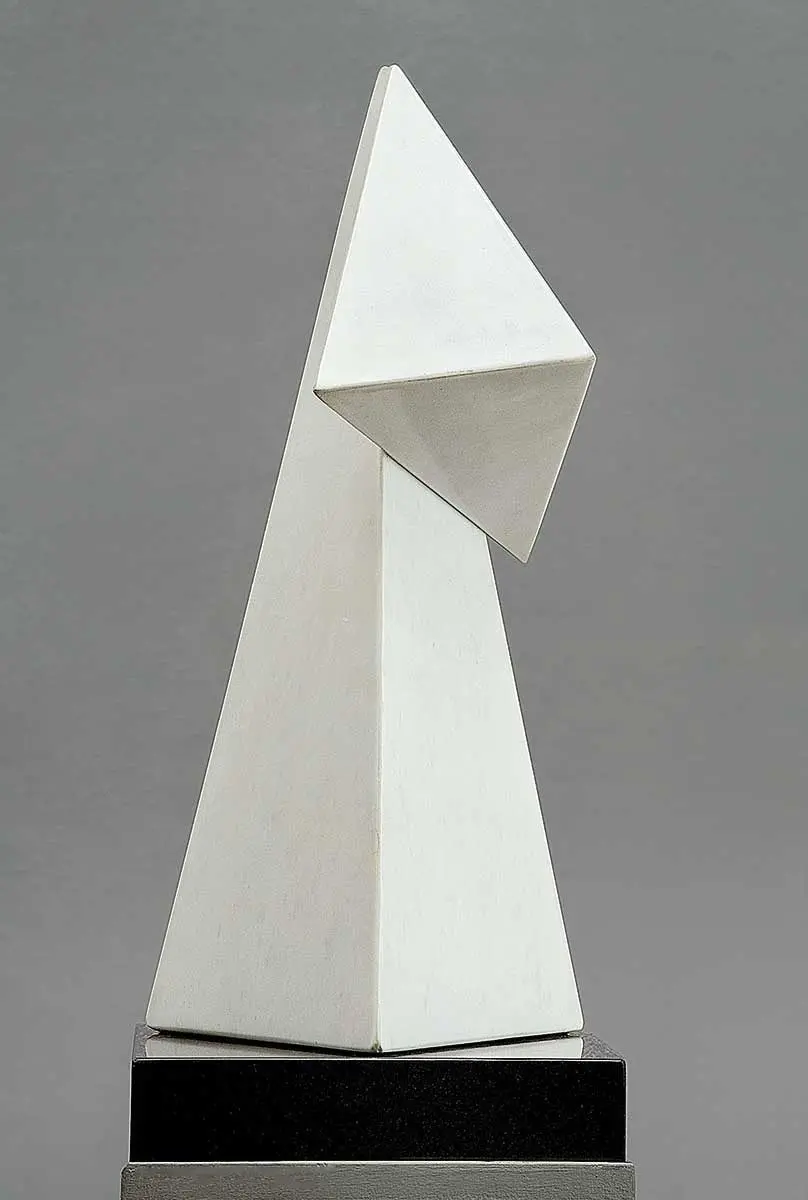
Starting in 1938, when she visited the studio of her celebrated Romanian colleague Constantin Brancusi, the sculptor Lili Garafulic launched an investigation of pure form that would extend throughout her long career.
Lili Garafulic summarized the research of María Teresa Pinto, the Chilean sculptor who, in collaboration with Gilbert Medionni, edited a book on Diego Rivera’s collection of pre-Columbian sculptures. The book’s review of Latin American pre-Columbian cultures was transcendent, and it influenced the work of such sculptors as Lili Garafulic, Rosa Vicuña, Teresa Vicuña, and Marta Colvin.
Important figures in the new generations of Chilean sculptors are Soledad Chadwick and Vicente Fajardo.
The Development of Geometric Art in Chile
Monochrome5
In the arts, monochromes are inevitably associated with modernity. They appeared in painting when the framed works began to be seen as interesting in themselves, independent of representation, which refers us always to a different reality. The earliest practitioners were perhaps the Russian monochrome artists: Kazimir Malevich (White on White, 1918) and Aleksandr Rodchenko (Monochrome Triptych, 1921).
The monochrome, considered an emblem of pictorial modernism, is today much more than a borderline mode of existence for painting. Malevich and Rodchenko were the first to make the decision of rejecting the key basis of the Western visual arts tradition.
Starting in the 1950s, the monochrome evolved notably in a wide array of works of art where speculations of the conceptual order are predominant, while for other painters only color exists as the purely perceptual basis of an immediate experience.
Francisca Sutil is the Chilean artist who has most deeply explored monochrome. Her career became established in the late 1970s, with two-dimensional paper works as an extension of postwar geometric abstraction. Thanks to her experience with paper pulp, which required the accumulation and integration of separate layers, Sutil was able to make inroads into one of late modernism’s most persistent problems: Is it possible to conjugate material, surface, and form without suppressing one in favor of the others?
Other contemporary artists who have developed monochrome works are:
Angélica Quintana. Studied art at Universidad de Chile, where she was an assistant to José Balmes and then a professor herself. Before relocating to Barcelona, she exhibited at the Museo de Bellas Artes in several group shows, and the media at the time deemed her a “young talent.” In Spain, she attained a postgraduate degree in Fine Arts from the University of Barcelona and became a professor at this Catalonian institution’s Massa School.
Ángela Wilson. Studied at Universidad Católica de Chile. She holds a Master’s in Art History from Universidad Adolfo Ibáñez (2010). She studied with Eugenio Dittborn, the visual artist and wined of the National Art Award (1999-2002). She attended the Visual Thinking Development course at the School of Visual Arts, New York (August, 2008).
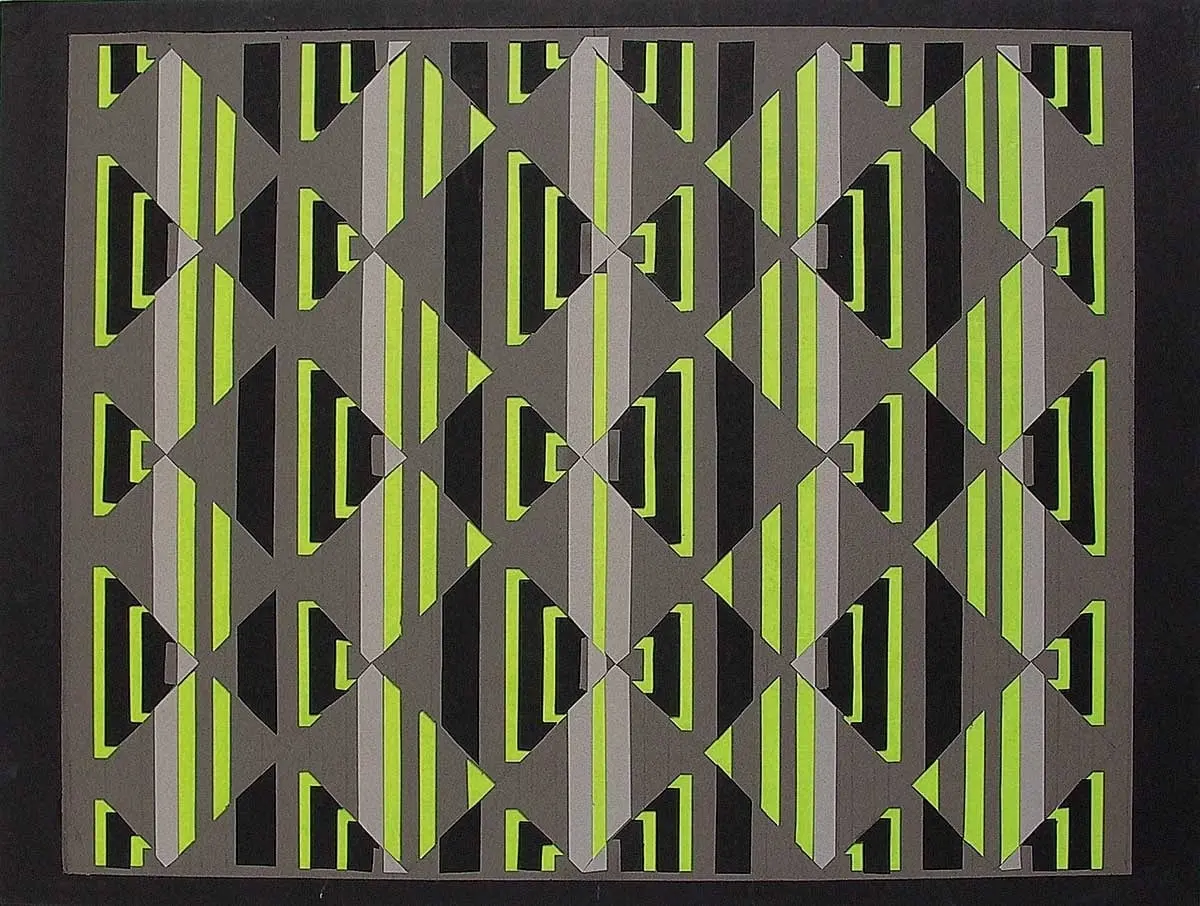
While it is true that during the Twentieth Century geometric art was steamrolled in Chile conceptual and political art, due to the country’s social and political circumstances, it reemerged in the 1990s and it must be considered the style with the longest presence in Twentieth-Century Chilean art when one takes stock of the artists, their works, and their transcendence for the country’s culture.
A generation of young artists emerged in the 1950s that used non-figurative expression in their work, as a consequence of the legacy of Vicente Huidobro and his precursors, and the awareness of what was happening in European art. Geometric art, tending to rupture, helps its practitioners, in one way or another, build a way of looking at reality that was different from its conventional counterpart, excessively stilted and reedited. It is possible to conceive the world from another perspective, different from the classical world.
The work of these artists will endure, without a doubt, and it will enter history as the artistic expression that best represented its era.
NOTES
1. Rosa Sarabia, University of Toronto. “Triangulo Armónico y la experimentación visual de un orientalismo parodiado”, Anales de Literatura Chilena, n. 9, 2008, pp. 15-36.
2. PORTAL DE ARTE.cl
3. Web page of the Chilean National Library.
4. Web page of the Museo Nacional de Bellas Artes.
5. www.culturallascondes.cl/home/la-ruta-geometrica-artistas.html
ERNESTO MUÑOZ
Art critic.