
“The object is considered as an action on the environment, where objects exist as signals and not simply as ‘works’. It is the new phase of the mere visual excercise, where the artist is a propeller of creative activity. The object is the discovery of the world at every instant, it is a creation of what we want it to be. A sound or a yell can be an Object”. H.O.
Forty-five years ago almost to the day, on April 1970, the city of Belo Horizonte would witness the presentation of a series of unusual art demonstrations. Actions, happenings and performances were being held in public space, mainly at the Parque Municipal1 in downtown. Everything was part of the event Do Corpo à Terra [From the Body to the Earth] organized by art critic Frederico Morais. Unusual to that time but revolutionary, the event is today considered a watershed in the experimentation leading to the dematerialization of the object in Brazilian art. The recent exhibition From the Object to the World, organized at Palácio da Artes, serves as a tribute to this episode from the past while wisely updating reflection on the approximation of art and life.
Featuring 29 artists and more than 50 works created between 1956 and 2012, the exhibition was completely drawn from the Instituto Inhotim’s collections. Curated by Rodrigo Moura and Inês Grosso, respectively artistic director and assistant curator at Inhotim, it was divided into two main sections: a narrative core consisting of four thematic rooms, and another sequence of seven one-artist rooms showing recent works in dialogue with the themes of the exhibition. As for the narrative nucleus, four moments of conceptual rupture in twentieth-century art are staged in a trans-historical display. At the same time, each section brings together historical and recent works drawn from different geopolitical contexts. In this way, the display allows for a transversal reading of the works and of the artistic movements on display.
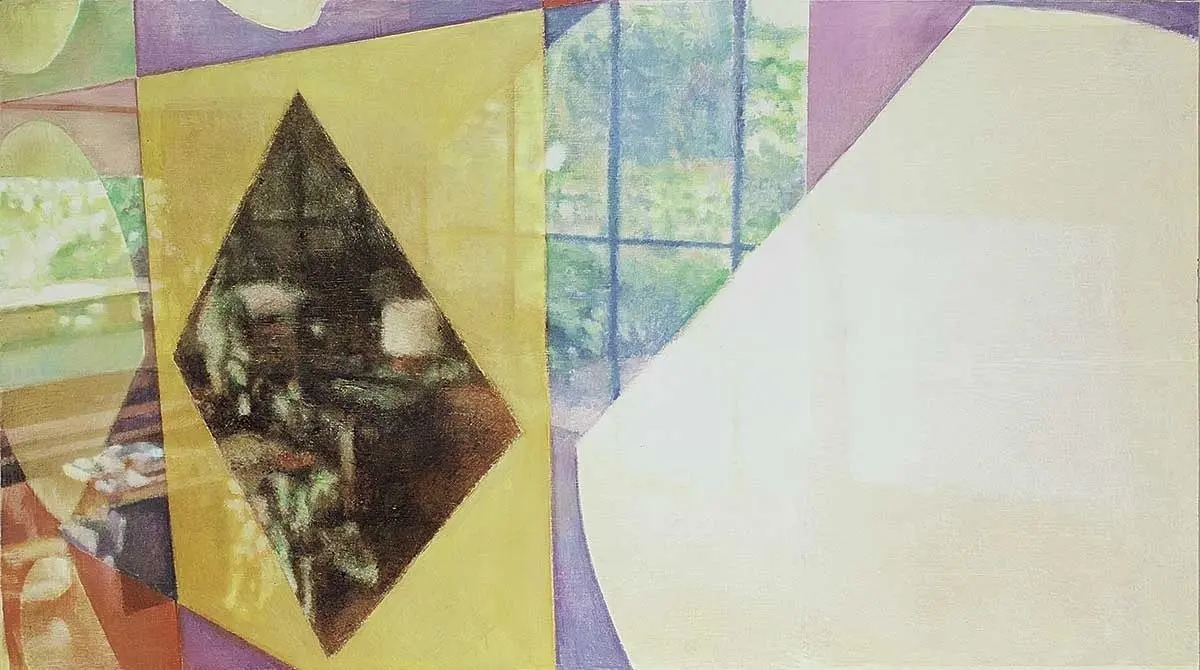
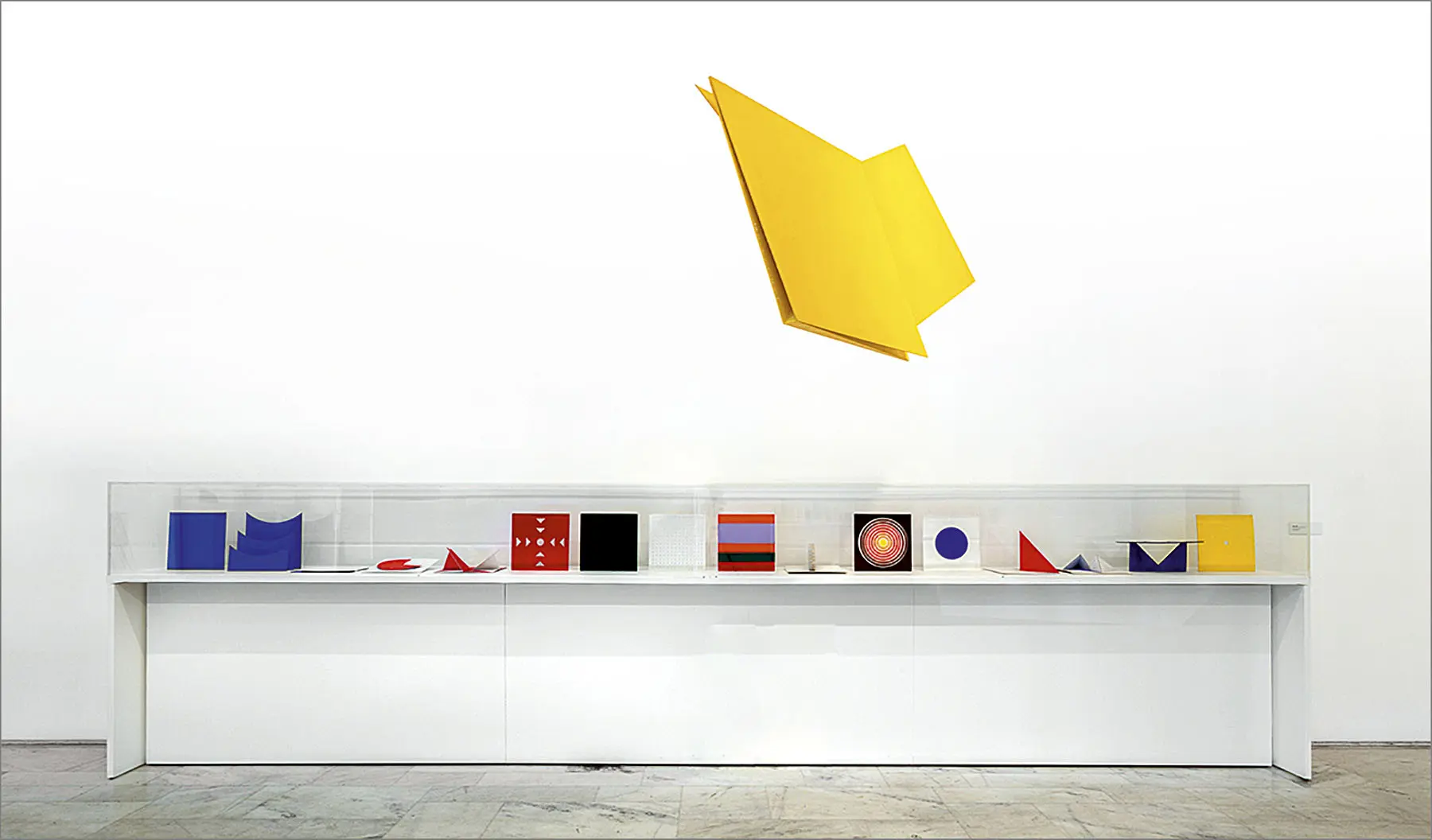
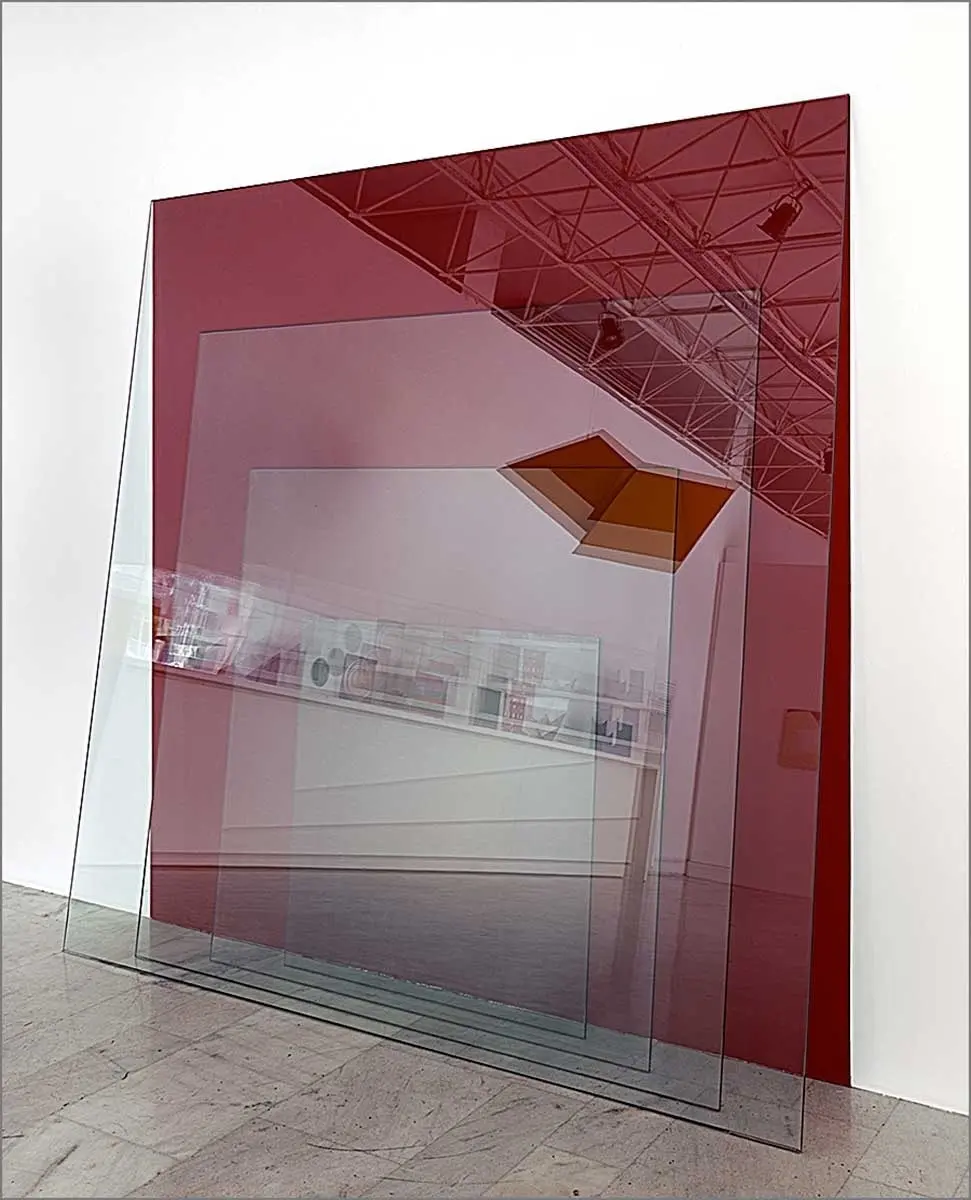
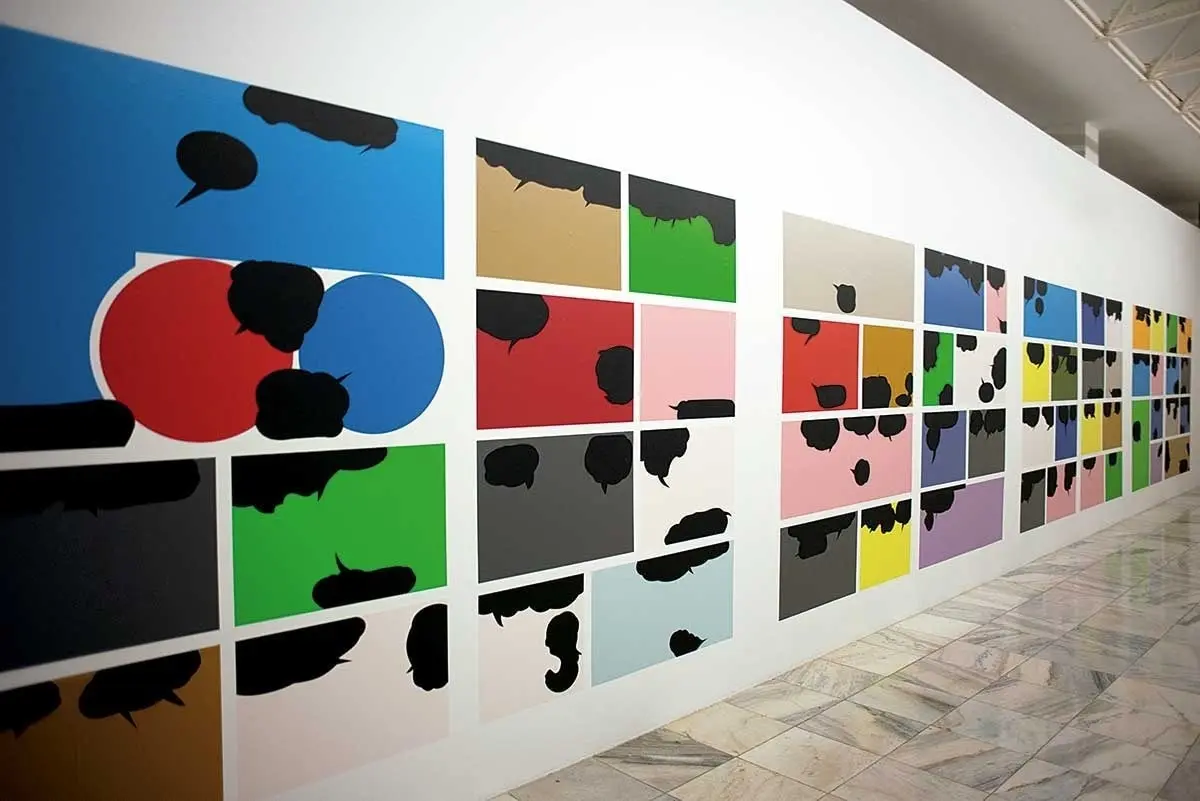
The exhibition starts with a room dedicated to Neoconcretism. The space exhibits key works from the movement placed in dialogue with more recent pieces. The curatorial program effectively demonstrates a reading of the deconstruction of the square and the freedom of the shape in the space while verifying the influence of Neoconcretism on a younger generation of Latin American artists. Three pieces from Hélio Oiticica’s series Relevos espaciais [Spatial reliefs] (1959/1991-2002) float impressively alongside Lygia Clark’s Livro obra, Cópia C [Book Work, Copy C] (1983) and Unidade [Unity] (1959-84), Lygia Pape’s Livro da Criação [Book of Creation] (1959-60), as well as three recent works from Juan Araujo, José Dávila, and Gabriel Sierra. The painting Vasarely-Milan II (2011), by the talented Araujo is a complex construction denoting modernist architecture and reflecting on the uncertainty of the opposition between figuration and abstraction.
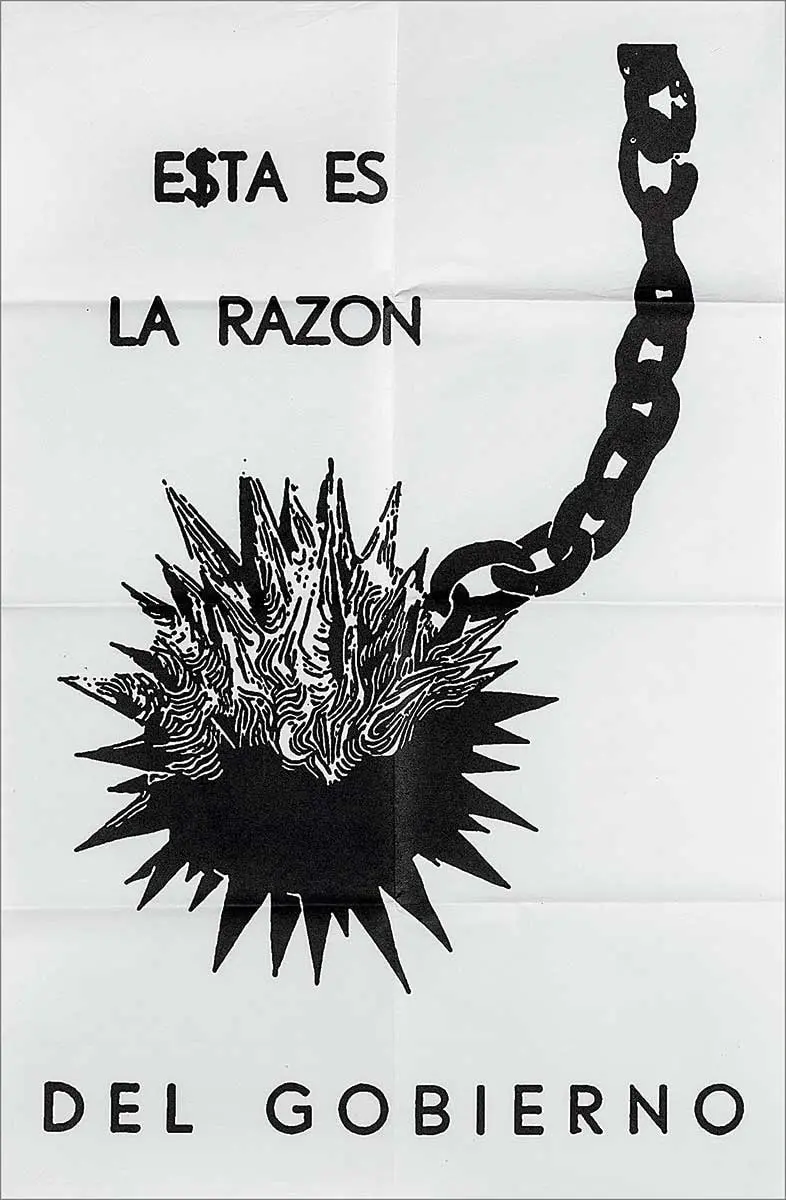
The exhibition’s section Circulation and Virtuality features works referring to conceptual geometry and to the status and ambiguity of the art object. Shown together, the pieces Inserções em circuitos ideológicos: Projeto Cédula [Insertions into Ideological Systems: Banknote Project] (1970) from the Brazilian Cildo Meireles and a piece from the Romanian-Polish André Cadere, Untitled (1975) consisting of one of his colored, hand-made wooden bars, illustrate one of the main topics in Latin American and European art in the 1970s: a calling into question of the workings of the art system and of the art exhibition. André Cadere made approximately 200 wooden bars, painted with household paint, composing a combination that follows a mathematic permutation but with one mistake inserted each time. By introducing his bars in different spaces, Cadere asserts his independence from institutions. Meireles began his series of projects entitled Insertions into Ideological Systems in 1970 for the exhibition Information at MoMA New York with the intent to explore the notion of information circulation and the exchange of symbolic and material values through the dislocation of everyday objects into the art system and back again. In Projeto cédula [Banknote Project], Meireles stamped phrases with political messages on Brazilian banknotes and then conveyed them back into normal circulation, thus creating a circuit for knowledge independent from media and institutions.
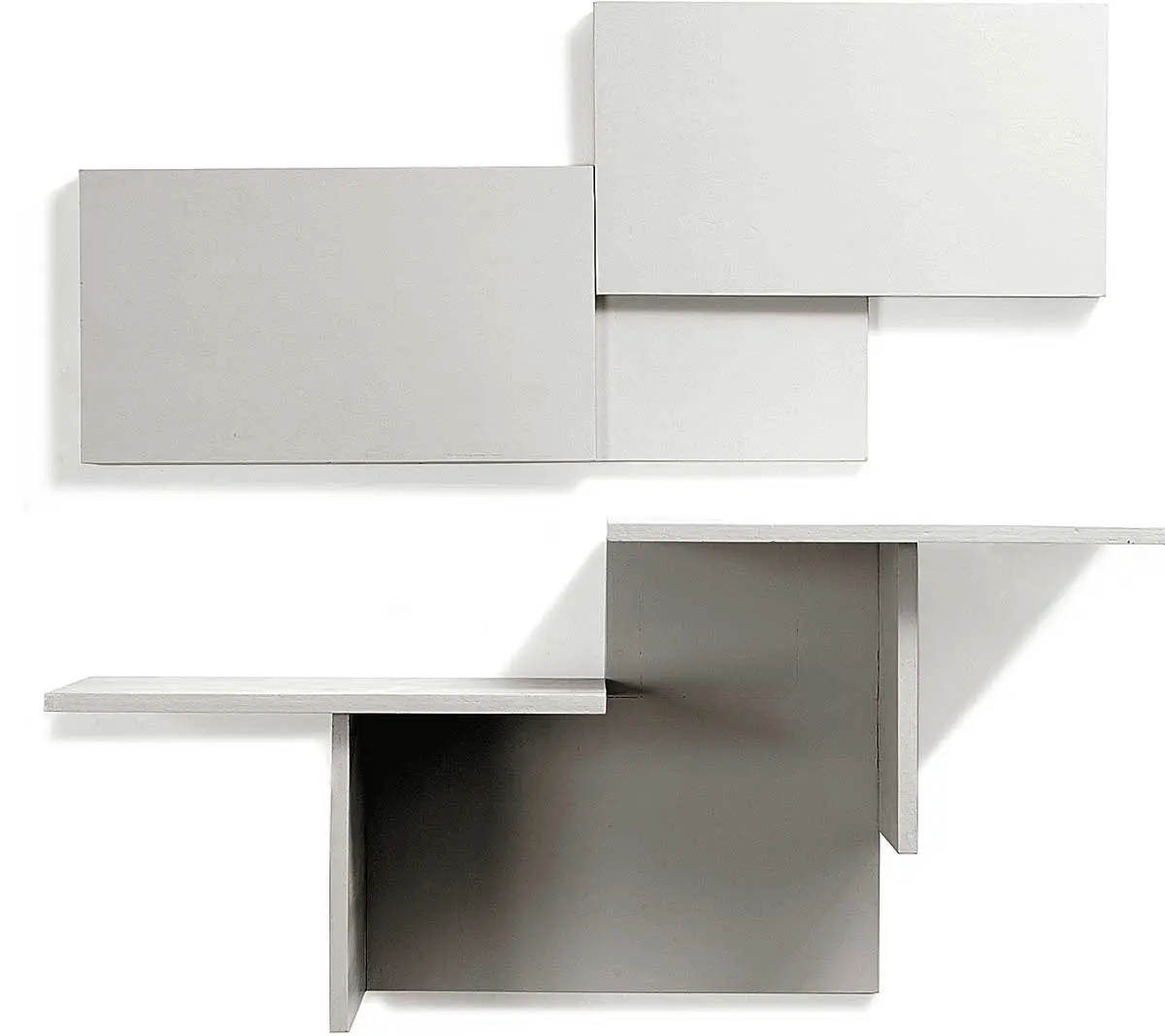
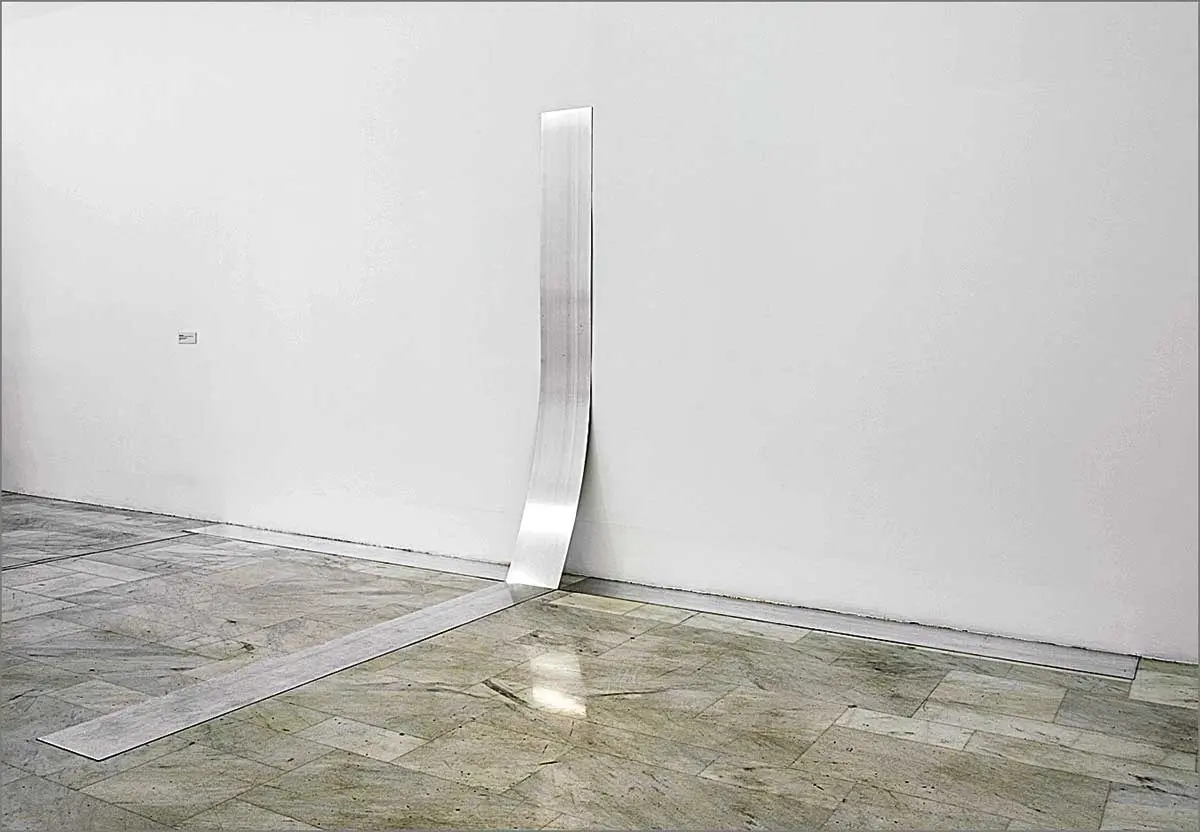
Also in this section of the exhibition, we find an historical piece by David Lamelas, Situación de Cuatro Placas de Aluminio [Situation of Four Aluminum Plates], dating from 1966 and reconstructed in 2014. This early work from the artist seeks to establish a new spatial relationship with the viewer2. Made of flexible aluminum, the work can potentially be rearranged into different forms. A similar operation is suggested by another piece by Cildo Meireles, Espaços Virtuais – Cantos n° VI [Virtual Spaces – Corners] (1967-68/2005). Echoing with those is A uma certa distância (Pinturas de ex-votos) [From a certain distance (Ex-voto paintings)] (2010) from Rivane Neuenschwander where the artist departing from real ex-voto paintings, reconstructs the picture but extracts all the figurative elements from it leaving only the architectonic elements, the background. The space created by this operation, enhances the perspectives, suggesting geometric abstractions and also new relations with the viewer.
Other, more recent works on view reclaim the artistic gesture of displacing everyday objects and bringing them into the art system in a renewed “Duchampian” method. Such is the case of Jac Leirner’s Fase azul (Numbers) [Blue Phase (Numbers)] (1995), in which an expressive collection of used and useless banknotes are impeccably arranged as to resemble a constructive painting.
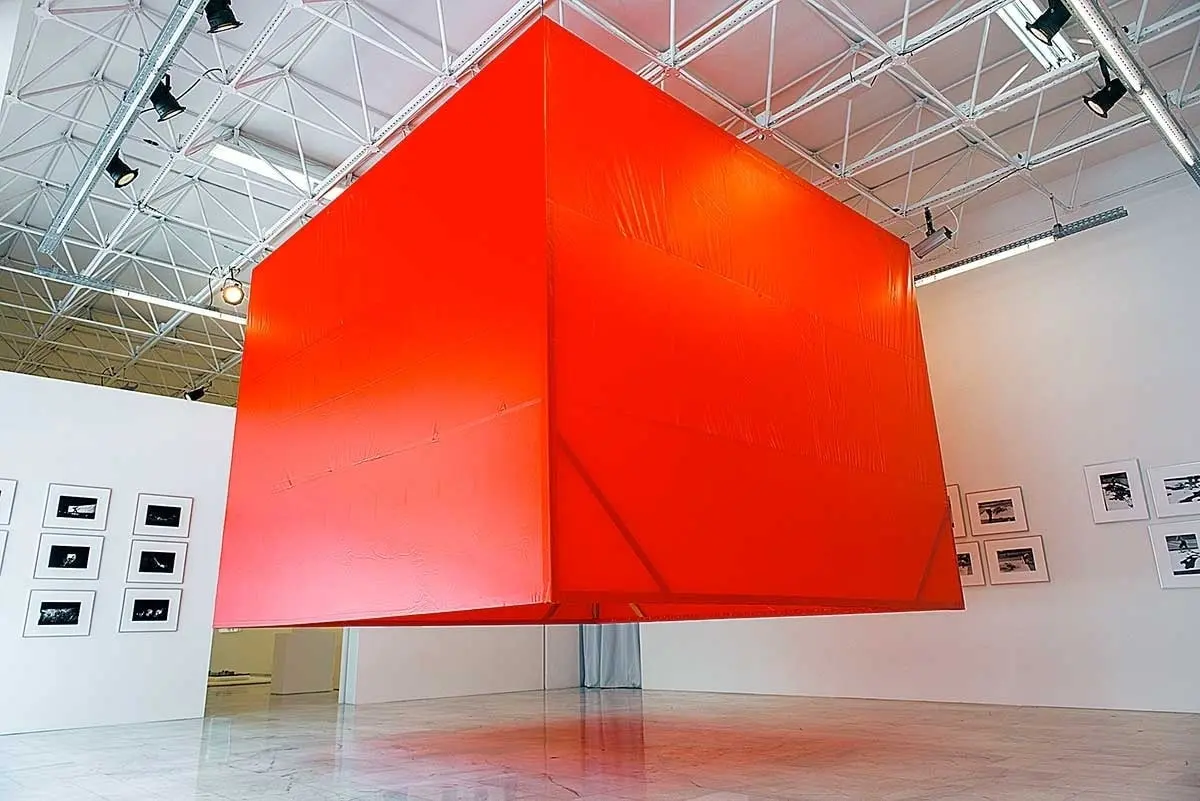
The third section is devoted to the avant-garde Japanese collective Gutai group. Until recently almost unknown in Brazil, the Gutai group was the creator of some of the first “happenings” in art history, and its association with Brazilian art contributes to an enlarged, transnational reading of performance art today. One of the artworks is especially noteworthy: Red (1956/2013), an installation by Tsuruko Yamazaki, an interactive cube-like architecture in red vinyl that reveals itself to be a “penetrable-cube,” invokes a new relationship between body and object and an expansion of color in space. Curatorial choice surely played a role in grouping together two 16mm experimental films in the Gutai section. The beautiful Turning the Arm with a Movie Camera (1972) from Hitoshi Nomura and 16 mm (2008-2011) from Daniel Steegmann Mangrané are poetic exercises on the perception of surrounding space and the progression of nature’s rhythms.
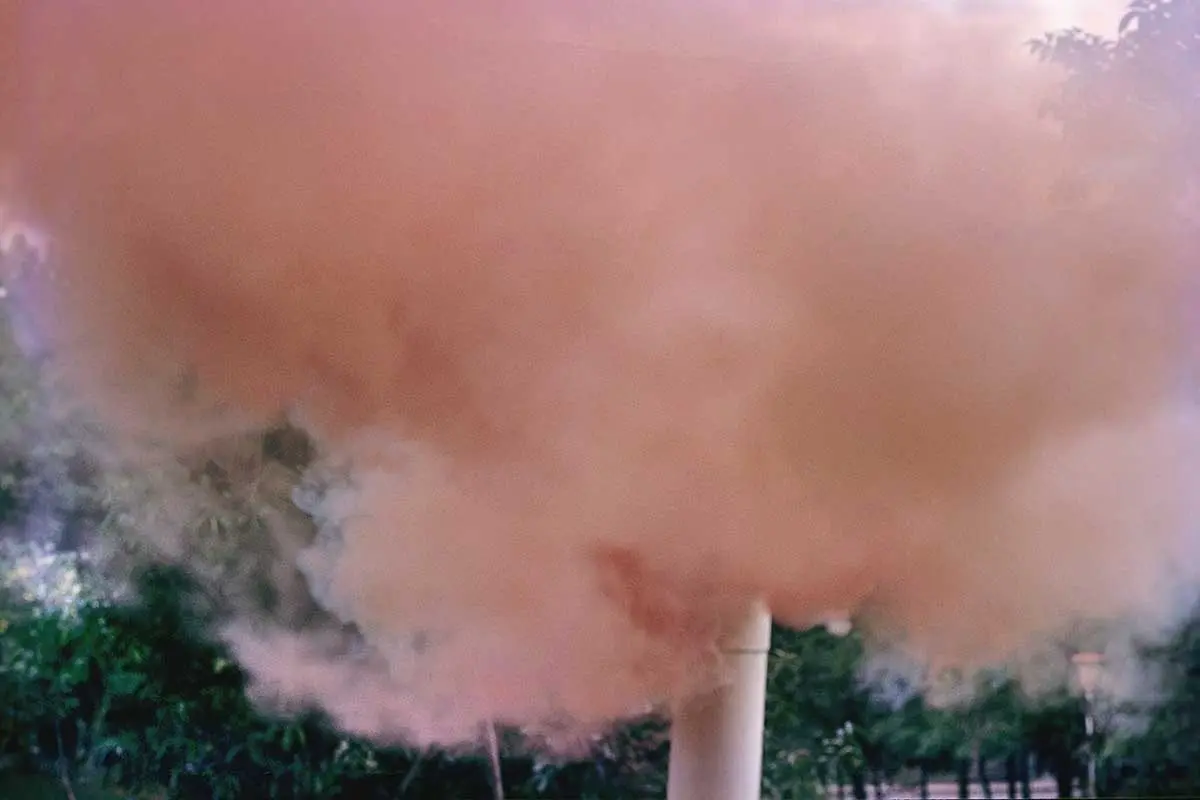
The section Actionisms and Body Arts offers an historical perspective on the 1970 Do Corpo à Terra event by exhibiting photographic documentation of two episodes now perceived as real landmarks. Ação no Parque Municipal [Action in the Municipal Park], a happening by Décio Noviello, consisted in the dissemination of colored smoke in various parts of the Parque Municipal1. By using smoke signals typically associated with military action, Noviello not only made art through the expansion of painting into space, but also performed a political act, especially meaningful at those dictatorial times. The historical work shown in company with Noviello’s piece is Artur Barrio’s now widely known Situação T/T1 [Situation T/T1] (1970), in which the artist places bundles of bloody meat around Belo Horizonte to allude to the violence of the dictatorship. The works just mentioned are shown in dialogue with more recent but no less political pieces: the video Fonte 193 by Cinthia Marcelle, Ink & Blood (1968-2009) by Abraham Cruzvillegas. In Marcelle’s piece a fire truck drives continuously in circles with the water hose pointed at the center of his anticlockwise trajectory suggesting an inverted fountain. By its repeated counter-clockwise movement, the truck draws a circle on the red ferrous soil (typical of Minas Gerais land). The high-angle shot used by Marcelle accentuates the absurdity of the situation. There is in this work an intersection of history, nature and politics as we can recognize also at the actions from Do Corpo à Terra.
How art history is constructed seems to be one of the themes inspiring the exhibition’s curatorial program. The narrative track of the show worked to build dialogue among recent and historical works in an illuminating and clever way. The second part of the show, suggests a more immersive experience. Organized as a series of one-artist rooms, a selection of 5 large-dimension and installations pieces and two video-projections indicate participation and expansion of the object in space. Jorge Macchi’s subtle and illusionist installation Fuegos de Artificio [Fireworks] (2002) as well as Pipilotti Rist’s ecstatic Homo Sapiens Sapiens, 2005 are highlights. The other rooms feature works by Thomas Hirschhorn, Rineke Dijkstra, Mauro Restiffe, Rivane Neuenschwander and Ernesto Neto, bringing different articulations of art in life.
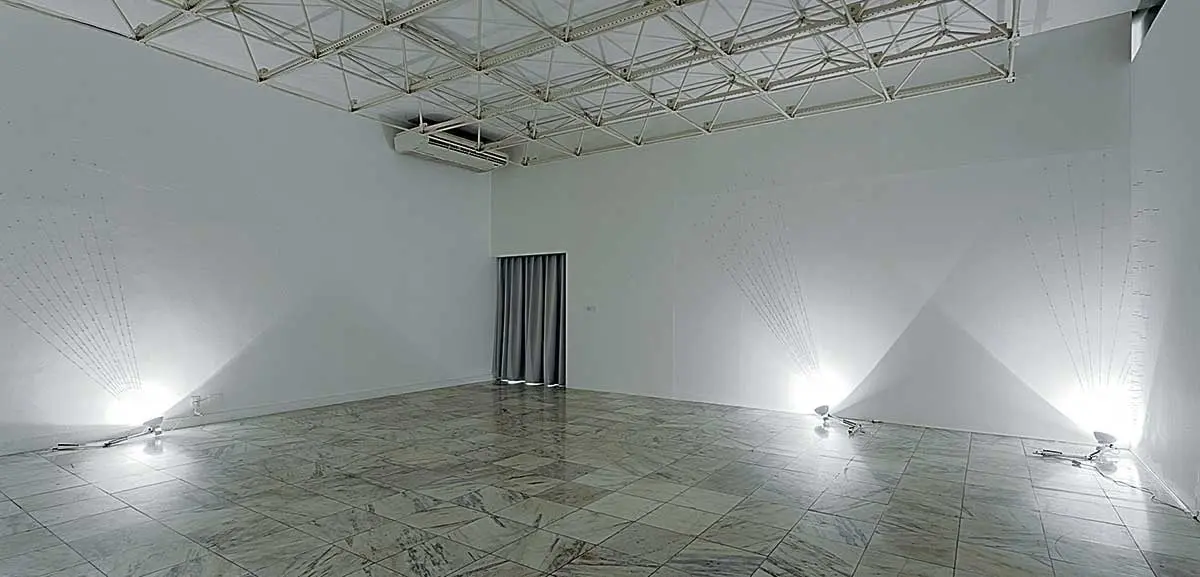
The organization of the gallery space was mostly traditional, but the curatorial decision to leave the glass façade of the main gallery free from any obstruction proved to be an advantageous choice. Whether inside or out, the visitor could experience a visual connection between the urban landscape and the gallery; the artworks seemed to interact with the street.
The significance of this show lies not only in the quality of the works on display and consequently the quality of the collection from which they are drawn but mainly in the conditions it could create to activate the memory of the city and bring the historical events from 1970 to the forefront. With that aim, a public program organized by the curators took place on the first two days of the exhibition. On the second day, Cildo Meireles, Décio Noviello, and critic Frederico Morais, veteran participants from the 1970 event gave moving testimonials and shared their memories, offering the local audience an exceptional opportunity to connect with the past. On the first day, the artists Jorge Macchi and David Lamelas talked about their work and creative processes contribution a very much inspiring time.
A guide to the show distributed freely on the days of the exhibition contained notices on the artworks and on each artist, and a floor plan, but a more complete textual presentation was missing. Nevertheless, the organizers have indicated the upcoming release of a comprehensive catalogue.
NOTES
1. The Parque Municipal is a public park in downtown Belo Horizonte where Palácio das Artes is located.
2. Another of the artist’s pieces from the collection, Time as Activity, 1969-2007, is on view from April 1st to May 30 in the second itinerancy of the show From the Object to the World at Itaú Cultural in São Paulo.
CAMILA BECHELANY
Independent curator and researcher. Doctoral candidate in arts theory, CAPES Brazil fellow. Centre des Recherches sur les Arts et Langages, Ecole des Hautes Etudes en Sciences Sociales, Paris.